By Hektor Jorgo
Red claw crabs are popular for their striking color and active behavior, but their diet leans more heavily toward plant matter than many keepers expect — which makes them a slightly different feeding case than some other commonly kept crab species.
Short Answer
Red claw crabs (Perisesarma bidens) are omnivores with a strong natural lean toward plant matter — algae, leaf litter, and vegetation make up a large part of their wild diet. In captivity, that translates to a diet built around algae wafers, blanched vegetables, and leaf litter (dried almond leaves are a popular choice), with occasional small amounts of protein rounding things out. Calcium (cuttlebone is a simple source) supports molting, the same as for other crab species. Diet is only one piece of red claw crab care, though — they're brackish-water animals, and getting their water chemistry right (covered in our freshwater crabs for aquariums guide) is a separate, equally important consideration.
The Natural Diet: Plant-Heavy Omnivory
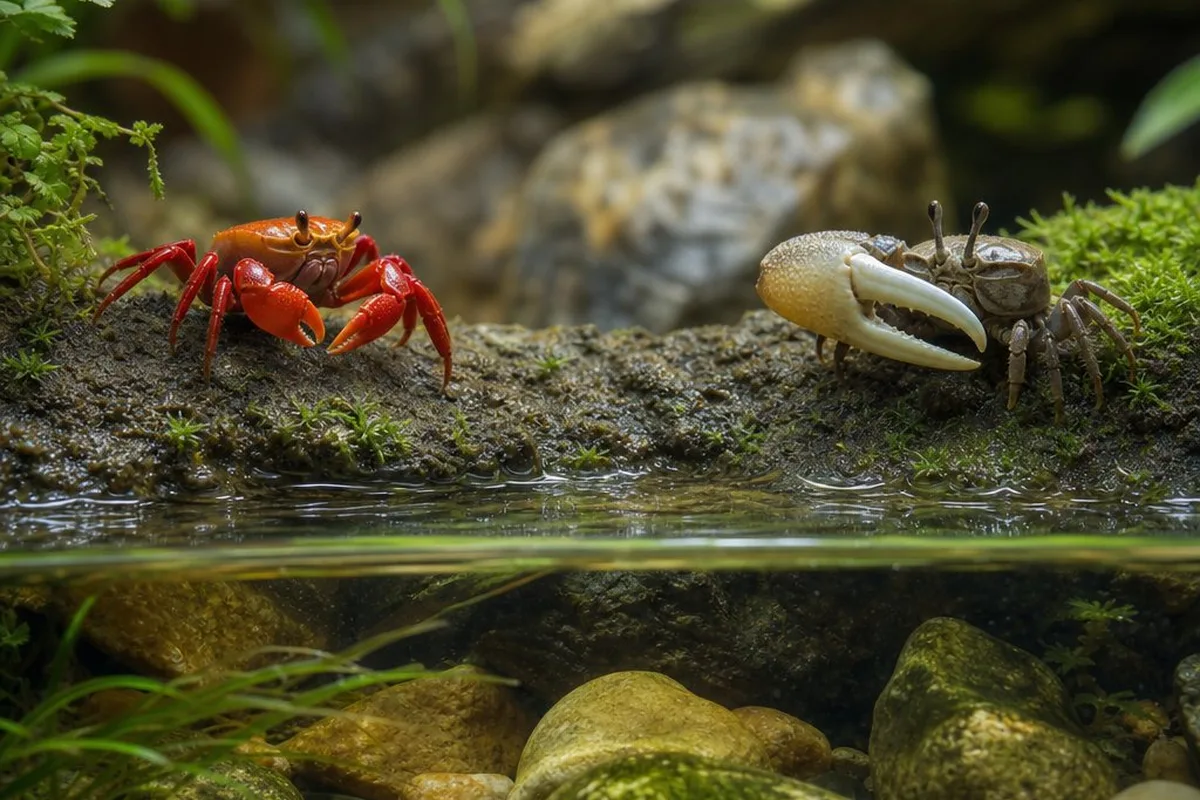
Red claw crabs are native to brackish mangrove and estuarine habitats across Southeast Asia — environments rich in decaying leaf litter, algae, and other plant material from the surrounding mangrove vegetation. Their natural diet reflects that environment: a significant proportion of plant matter, including algae and decomposing leaves, supplemented by detritus and smaller amounts of animal matter.
Compared to some other commonly kept crab species — the fiddler crab diet guide describes a similarly omnivorous but somewhat more balanced detritivore diet — red claw crabs lean a bit further toward the plant-matter end of the spectrum. That's a useful distinction when planning what to actually put in the tank.
What to Feed a Red Claw Crab
A practical diet draws from a few categories, weighted toward plant matter:
- Algae wafers — a convenient base that holds up reasonably well in a paludarium environment
- Blanched vegetables — zucchini, spinach, and similar, offering fresh plant matter variety
- Leaf litter — dried Indian almond leaves (often sold as "catappa leaves") are a popular addition in brackish and paludarium setups, serving both as a food source as they slowly break down and, for some keepers, as a source of tannins that affect water chemistry in ways some species seem to appreciate
- Occasional protein — small amounts of fish flake, shrimp, or bloodworm, reflecting the omnivorous (though plant-leaning) nature of the species
The plant-heavy emphasis is the main thing that distinguishes red claw crab feeding from a more generic crab diet — protein has a place, but it's clearly secondary here.
Calcium for Molting
As with fiddler crabs and crab species generally, molting — periodically shedding and regrowing the exoskeleton — requires calcium, and diet alone doesn't always provide enough. A piece of cuttlebone left in the enclosure is a simple, low-maintenance way to make calcium available as needed, without requiring active dosing or monitoring.
Diet Isn't a Substitute for Correct Water Chemistry
It's worth being clear that getting the diet right doesn't address everything a red claw crab needs. These are brackish-water animals by native habitat — a water chemistry consideration entirely separate from feeding, covered in the context of brackish "freshwater crabs" generally in our freshwater crabs for aquariums guide. A red claw crab fed an ideal diet but kept in fully fresh water without any added salt isn't getting everything it needs — diet and water chemistry are two separate boxes that both need checking.
Quick Reference
- Red claw crabs (Perisesarma bidens) are omnivores with a strong natural lean toward plant matter
- Captive diet base: algae wafers, blanched vegetables, and leaf litter (dried almond leaves)
- Occasional small amounts of protein round out the diet but aren't the main component
- Calcium (cuttlebone) supports molting, the same as for other crab species
- Red claw crabs are brackish-water animals — diet doesn't substitute for appropriate salinity
- Compared to fiddler crabs, red claw crabs lean even further toward plant matter
- Both diet and water chemistry need to be addressed for long-term red claw crab health