By Hektor Jorgo
"Best plants for nitrite control" is a search that makes intuitive sense — plants take up nutrients, nitrite is a nutrient-cycle byproduct, so surely some plant helps with it directly. The reality is a little more indirect than that, but the indirect version is still genuinely useful, especially during the weeks when nitrite is most likely to be a problem.
Direct Answer: Bacteria Remove Nitrite, Plants Reduce How Much Gets Made
Nitrite removal is a bacterial process, not a plant one. Beneficial bacteria — primarily species in the Nitrobacter or Nitrospira groups — convert nitrite into nitrate as part of the aquarium nitrogen cycle, and this conversion is what actually brings nitrite levels down in an established tank. No aquarium plant performs this conversion.
What plants can do is compete for ammonia — the compound that gets converted into nitrite in the first place (by a different group of bacteria, Nitrosomonas). Fast-growing plants take up ammonia directly from the water column for their own growth. Less ammonia available means less ammonia gets converted to nitrite — so plants reduce nitrite production upstream, rather than removing nitrite that's already present. It's a real effect, but it's a different mechanism than "the plant absorbs nitrite," and understanding that difference matters for setting realistic expectations.
A Quick Refresher on the Nitrogen Cycle
The aquarium nitrogen cycle, in brief: fish waste and uneaten food break down into ammonia → Nitrosomonas bacteria convert ammonia into nitrite → Nitrobacter/Nitrospira bacteria convert nitrite into nitrate → nitrate is removed via water changes or taken up by plants. A new tank doesn't have established populations of these bacteria yet, which is why new tanks commonly go through a period of detectable ammonia, followed by detectable nitrite, before both settle to near-zero as the bacterial populations catch up with the tank's waste production. This is the process people mean by "cycling," and it's primarily a bacterial timeline, not a plant one.
Where Plants Actually Help: Ammonia Uptake
The most useful role plants play in this picture is competing with the ammonia-to-nitrite conversion for the same ammonia. Fast-growing stem and floating plants are particularly effective here because they grow quickly enough to take up ammonia at a meaningful rate relative to their size, directly from the water column. Hornwort is a commonly recommended example for exactly this reason — it's fast-growing, doesn't need to be planted in substrate (see our hornwort care guides), and responds well to regular trimming, which keeps it in an actively-growing (and therefore actively nutrient-absorbing) state rather than stalling out. Cabomba is sometimes suggested as a similar fast grower, but as covered in our cabomba vs. hornwort comparison, its higher light and CO2 needs make it less reliable for this specific role in a still-settling new tank.
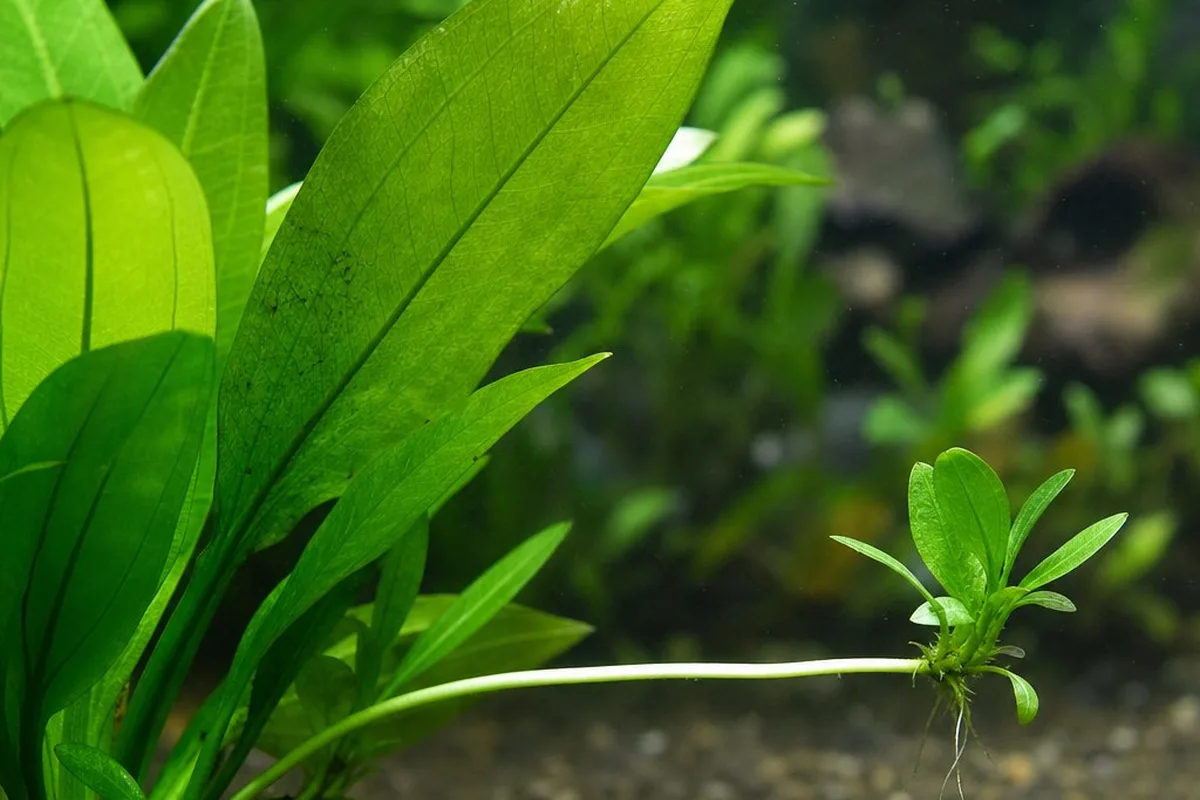
By contrast, root-feeding plants — Amazon swords and similar species, which draw a significant portion of their nutrients from substrate rather than the water column — are less directly useful for this specific purpose. They're valuable for a planted tank's overall nutrient balance once things are established, but during active cycling, water-column ammonia uptake is more relevant than substrate nutrient uptake.
What This Doesn't Mean: Plants Aren't a Substitute for Cycling
It's worth being direct about the limits here: in a typical stocked tank, the rate of ammonia production from fish waste and food usually exceeds what plant uptake alone can offset, especially in the early weeks before plants are well-established and growing quickly. The bacterial colonies that actually perform the ammonia-to-nitrite and nitrite-to-nitrate conversions take time to build up regardless of plant mass, and that buildup — not plant growth — is the core of the cycling timeline.
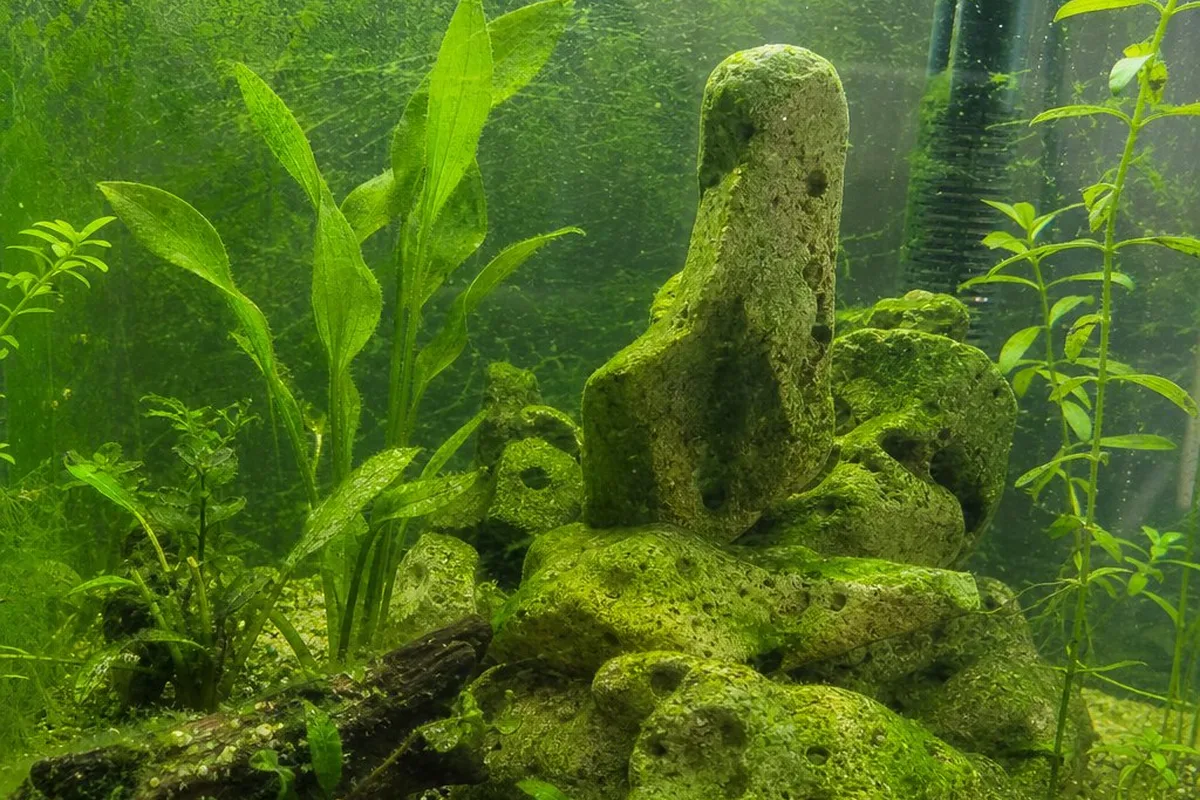
Where plants genuinely help is as a supplement, particularly in "fish-in" cycling situations (where fish are already in the tank while it cycles) — reducing ammonia spikes during this period can reduce stress on the fish, even if it doesn't eliminate the need for the bacterial cycle to complete. For a broader look at what's normal during cycling — including the nitrite spike this ammonia uptake is helping to soften — our guide to nitrite and nitrate during cycling covers the full picture, including other tools (water changes, conditioners, zeolite) that work alongside plants. It's also worth noting that new-tank nitrite spikes and new-tank algae (often a brown diatom film, covered in our algae growth timeline guide) tend to occur in the same general window, for related reasons — both are symptoms of a tank whose biological balance, covered more generally in our algae guide, hasn't settled yet. If the water also looks hazy or dusty during this period, that's a different, particulate issue with a different fix — covered in our review of clarifying filter media.
Quick Reference
- Nitrite-to-nitrate conversion is done by beneficial bacteria, not plants
- Plants help indirectly by taking up ammonia before it converts to nitrite
- Fast-growing stem/floating plants (e.g., hornwort) are most effective for this
- Root-feeding plants are less useful here — they mainly draw from substrate
- Plants supplement, but don't replace, the bacterial cycling process
- New-tank nitrite spikes and new-tank algae often occur in the same early window
- Use plants alongside proper cycling, especially in fish-in cycling situations