By Chris Brady
Good water movement is one of the most underrated requirements in a reef tank — corals need randomized, varying flow to thrive, and a single powerhead pointed in one direction usually isn't enough once a tank matures. Wave makers like the Jebao RW-4 exist to solve this at a fraction of the cost of high-end options like EcoTech's VorTech series. This review covers what the RW-4 actually does well, where it falls short, and who it makes sense for.
What's in the Box
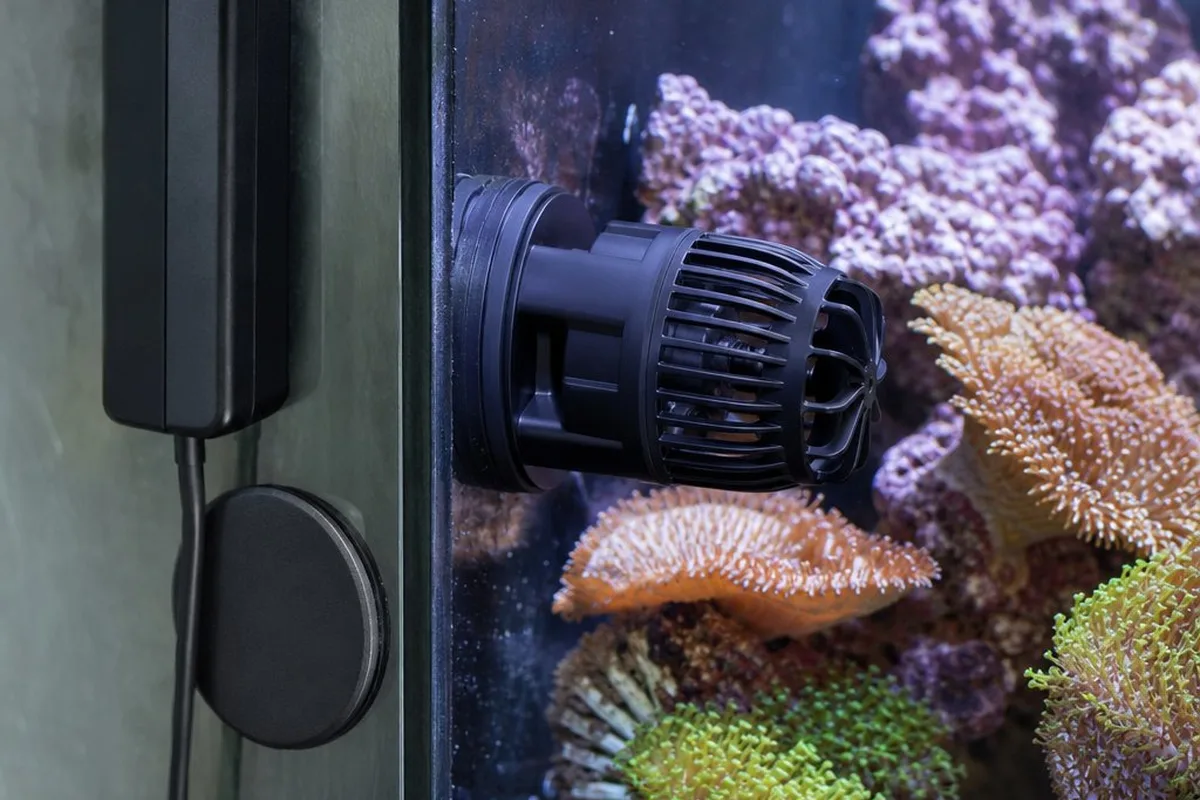
The Jebao RW-4 ships with:
- The pump head (wet side, goes in the tank)
- An external magnetic mount (dry side, sits outside the glass)
- A wired controller unit with wave/pulse/feed mode buttons and flow adjustment
- Power adapter and suction-cup accessories for some mounting configurations
Setup is straightforward: attach the pump to the internal magnet, position the external magnet on the outside of the glass at the same spot, and plug the controller into power. No app pairing, no firmware updates — which is either a relief or a limitation, depending on what you're used to.
Flow Patterns and Controller
The controller offers several modes:
- Wave mode — alternates flow direction/intensity in a repeating pattern, simulating natural surge
- Pulse mode — rhythmic on/off pulsing at adjustable intervals
- Feed mode — temporarily stops or reduces flow, giving food time to settle before flow resumes — useful for feeding finicky eaters like the firefish that might otherwise lose food to current
Flow intensity is adjustable via a dial, covering a meaningful range from gentle to strong. For most reef tanks in the 50-125 gallon range, this is enough to create real flow variation without needing multiple units — though larger tanks, or tanks needing flow across a wide footprint, may still benefit from a second unit on the opposite side.
Noise and the Magnet Mount — The Two Real Caveats
Two issues come up consistently in user feedback, and they're worth taking seriously before purchase:
1. Noise at high flow. At low-to-moderate settings, the RW-4 is quiet — easily drowned out by normal room ambiance. Pushed toward maximum flow, a motor hum/whine becomes noticeable. If your tank sits in a bedroom or a quiet office, factor this into where you set your baseline flow.
2. Magnet strength on thick glass. The included magnet mount is rated for a specific glass thickness. On tanks with thicker glass (common on larger or deeper tanks) or acrylic, the magnetic hold is noticeably weaker — some users report the pump head slipping during algae-scraper passes or if bumped. Check your tank's glass thickness against the magnet's rated range before buying. If you're on the edge or over the rated thickness, budget for an aftermarket high-strength magnet mount as part of the purchase.
Reliability
As with most budget powerheads, the most common long-term complaint is motor longevity compared to premium brands — some units run for years without issue, while others develop bearing noise or reduced output after extended use (more common at sustained high flow settings). This is a meaningful consideration if you're building a tank you intend to run for many years without revisiting equipment, but for most hobbyists the price difference vs. premium alternatives still represents reasonable value, especially if you have a backup plan (e.g., a spare unit or the budget to replace one if it fails out of warranty).
Who Should Buy the Jebao RW-4
Good fit if:
- You're setting up a reef tank in the 50-125 gallon range and need real flow variation beyond a single fixed-direction powerhead
- Budget matters and you don't need app/wireless controller integration
- Your tank's glass thickness is within the magnet's rated range
Consider alternatives if:
- Your tank is in a very quiet room and you'll routinely run pumps near maximum flow
- You have thick glass/acrylic and don't want to budget for an aftermarket magnet
- You specifically want integration with a reef controller ecosystem (Apex, Profilux, VorTech wireless)
Verdict
The Jebao RW-4 delivers the core thing a wave maker needs to do — create varied, randomized flow — at a price point that makes adding (or upgrading) flow in a reef tank accessible. The noise-at-max-flow and magnet-thickness caveats aren't dealbreakers, but they're exactly the kind of detail that's easy to miss until after you've already mounted the thing — so check your tank's glass spec and plan your flow settings with both in mind before you buy.
Jebao's newer WP series addresses both of these caveats to some degree — our Jebao RW vs. WP comparison covers what's actually changed between generations, and whether it's worth choosing WP over RW (or upgrading an existing RW pump) based on which of these caveats matters most to your setup.