By Hektor Jorgo
It's one of the more common small mysteries in a freshwater community tank: a ghost shrimp that was visible and active one day is simply nowhere to be found the next. The good news is that the handful of explanations for this are well understood, and most of them don't involve anything going wrong.
Short Answer
A "disappeared" ghost shrimp usually falls into one of four categories: it's hiding, it molted and the empty shell is gone, it was eaten, or it reached the end of its natural lifespan. Ghost shrimp are small, translucent, and often more active at night, which makes simple hiding the most common and least concerning explanation — many "missing" shrimp turn up again with patient observation. Molting is a close second: a shed exoskeleton looks like a hollow, shrimp-shaped shell and is often eaten quickly by other tank inhabitants, leaving nothing behind to find. Predation by tank mates and a relatively short natural lifespan (often around a year) round out the list. In most cases, there isn't one single "correct" explanation you'll be able to confirm — but understanding the range of possibilities usually puts the mystery in perspective.
Start by Looking Harder (and Later)
Before assuming the worst, it's worth a more thorough search:
- Check among plants, decorations, and substrate — ghost shrimp often wedge into small spaces
- Check filter intakes and any other gaps where a small animal could end up
- Try looking at night with a dim light — ghost shrimp activity patterns can shift toward nighttime, meaning a shrimp that seems absent during the day might be active and visible after lights-out
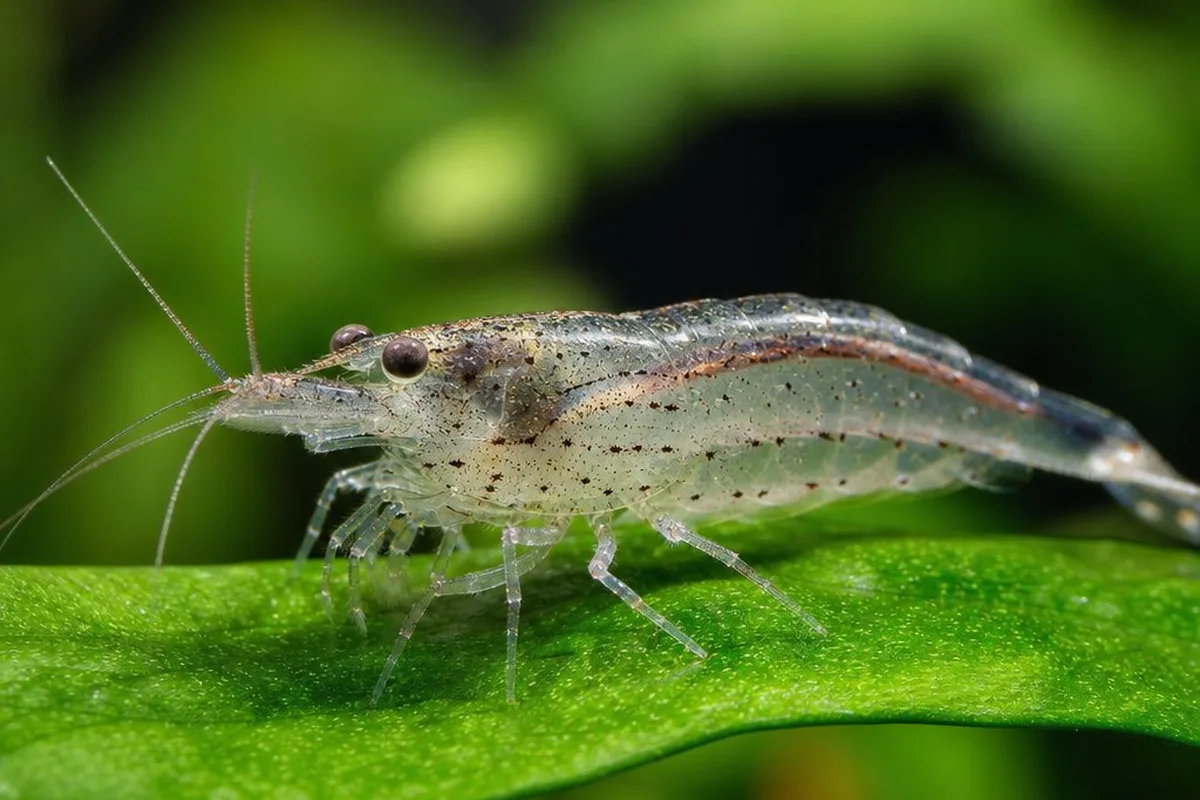
Their near-transparent bodies make this harder than it would be for an opaque animal — a ghost shrimp tucked against a similarly-colored background can be very easy to miss even when it's right there.
The Molt That Looks Like the Shrimp Itself
One of the most overlooked explanations is molting. Like all crustaceans — a group that also includes crabs and crayfish — ghost shrimp periodically shed their exoskeleton as part of normal growth. The shed shell is a complete, hollow replica of the shrimp's body, including legs and antennae, and because it's now empty, it can look even more ghost-like than the living animal.
What often happens next is that this shed shell gets eaten — by the shrimp itself, by other shrimp, by snails, or by fish — as a way of recovering calcium and other minerals used to build the new shell. This can happen within hours, meaning there's sometimes nothing left to find by the time you notice the shrimp is "gone." This exact phenomenon — an empty shell mistaken for a dead or disappeared animal — is also well documented for emerald crabs in reef tanks, and it's the same underlying biology at a different scale.
Predation: A Realistic Possibility in Community Tanks
Ghost shrimp are inexpensive, widely available, and — frankly — often used as feeder animals in some contexts, which says something about how readily many fish will eat them given the chance. In a community tank, certain fish may see a ghost shrimp as food rather than a tank mate, particularly:
- Larger or more predatory fish species
- Fish that wouldn't bother a same-sized fish but will still target a shrimp
- Any fish encountering a recently molted shrimp, whose soft new shell offers little protection during the vulnerable post-molt period
If you notice a pattern — multiple shrimp disappearing over a short time, with no shed shells found — a predatory tank mate becomes a more likely explanation than coincidence, and it may be worth reconsidering whether shrimp and the existing fish are a realistic long-term combination.
Natural Lifespan: Shorter Than Many Keepers Expect
Ghost shrimp often live around a year in typical home aquarium conditions — shorter than the lifespan many keepers associate with other small invertebrates. If a shrimp has been in the tank for close to a year or more, a natural death is a real possibility. And because tanks rarely leave dead animals visible for long — snails, other shrimp, and bottom-feeders tend to scavenge quickly — a natural death can look exactly like a "disappearance" with no further clues.
A Related Question: Water Conditions
If you're keeping ghost shrimp in a tank with water parameters that are shifting — for example, a setup with some salinity — it's also worth considering whether water chemistry itself is playing a role in shrimp health and activity levels. Our guide on ghost shrimp and brackish water covers salinity tolerance specifically, which is a separate consideration from the disappearance scenarios above but can compound with them.
Quick Reference
- Search thoroughly among plants, decor, substrate, and filter intakes before assuming the shrimp is gone
- Try checking at night — ghost shrimp activity often increases after lights-out
- A shed exoskeleton (molt) looks shrimp-shaped and is often eaten quickly, leaving no trace
- Predation by tank mates is realistic, especially for recently molted (soft-shelled) shrimp
- Repeated disappearances may point to a predatory tank mate worth reconsidering
- Ghost shrimp often live around a year — natural lifespan end is a real possibility
- Dead shrimp are often scavenged quickly, leaving little visible evidence either way