By Hektor Jorgo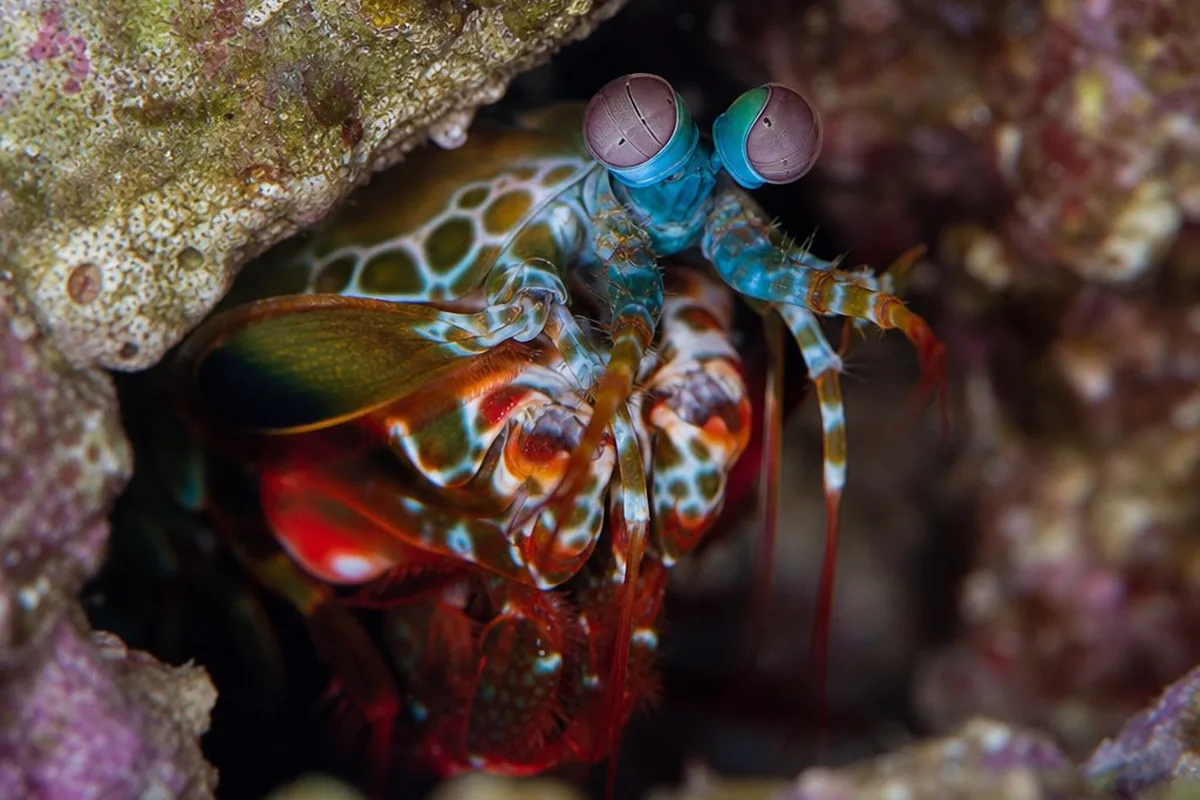
A mantis shrimp is one of the more dramatic "surprise" hitchhikers a reef tank can produce — and one of the few where the question isn't really "is this reef-safe?" so much as "what, if anything, is safe from this?"
Short Answer
Mantis shrimp are effective predators, and in most home reef tanks, the realistic list of safe tank mates is very short to nonexistent. They typically arrive unintentionally as hitchhikers on live rock, often going unnoticed for weeks or months while quietly working through a tank's cleanup crew — snails, hermit crabs, amphipods, and small shrimp are all within their prey range, and smaller fish can be too. If you've discovered a mantis shrimp in your tank, the two realistic paths are removing it (typically via a baited trap) or setting up a dedicated species-only tank if you'd like to keep it intentionally — "finding the right tank mates" for an existing community tank generally isn't a workable middle ground.
How Mantis Shrimp Usually Arrive: The Hitchhiker Problem
Few reef keepers set out to buy a mantis shrimp — they show up as stowaways on live rock, often as small juveniles that burrow into rock crevices and go undetected for a long time. Common signs that a mantis shrimp has been present for a while include:
- Cleanup crew disappearing faster than expected — snails, hermit crabs, or a previously healthy amphipod population thinning out
- An audible clicking or popping sound, particularly associated with smasher-type species striking prey or defending territory
- Eventually spotting the animal itself — often at night, with its large folded raptorial claws visible from a rock crevice
By the time any of these signs is noticed, the mantis shrimp has typically had time to grow and become well-established in the rockwork, which is part of why removal can take some persistence.
Smashers vs. Spearers: Why "Tank Mates" Is the Wrong Question for Most
Mantis shrimp are broadly divided by the type of raptorial claw they use:
- Smashers — deliver extremely fast, powerful strikes capable of cracking open hard-shelled prey (snails, crabs, hermit crabs); in rare cases, strong enough to crack aquarium glass or acrylic
- Spearers — use sharp, barbed appendages to impale soft-bodied prey like small fish and worms
Both types are effective predators of the animals that make up a typical reef tank's population, which is why "best tank mates" doesn't really have a satisfying answer for most setups — almost anything small enough to share a tank with a mantis shrimp is also within its prey range. This is a different situation from genuinely reef-safe invertebrates like porcelain crabs, where the question of compatibility has a real, positive answer.
If You Want to Keep a Mantis Shrimp Intentionally
Some keepers do choose to keep a mantis shrimp as a display animal in its own right — they're active, visually striking, and have genuinely interesting behavior. If that's the goal:
- A dedicated species-only or solo tank is the standard setup — no cleanup crew, no other fish or invertebrates expected to coexist
- Tank security matters more than usual — particularly for smasher-type species, given the (rare but documented) potential to damage glass or acrylic with a direct strike
- Feeding is typically via target-feeding meaty foods (shrimp, fish pieces) rather than relying on the mantis shrimp to find food incidentally, since there's no cleanup crew or fish population for it to hunt
Removing an Unwanted Mantis Shrimp
For keepers who'd rather not run a dedicated mantis shrimp tank, removal is the more common path:
- Baited traps — a PVC pipe trap (or a similar one-way-entry design, sometimes improvised from a cut soda bottle) baited with meaty food and left overnight near where the mantis shrimp has been active is the standard approach
- Multiple attempts may be needed — mantis shrimp can be cautious, and trapping success often takes several nights
- Avoid handling by hand, especially for suspected smasher-type species, given the speed and force of their strikes
- Rockwork disassembly is a more disruptive last resort if trapping repeatedly fails and the mantis shrimp's continued presence is causing ongoing cleanup crew losses
Quick Reference
- Mantis shrimp almost always arrive as unintentional hitchhikers on live rock, not as planned purchases
- Disappearing cleanup crew, clicking sounds, or spotting large folded claws at night are common discovery signs
- "Smashers" have crushing claws (rare glass-cracking risk); "spearers" target soft-bodied prey — both are effective predators
- Realistic tank mates for most home setups: very few to none
- Keeping one intentionally means a dedicated species-only/solo tank with target feeding
- Removal is typically via a baited PVC pipe trap, possibly over multiple nights
- Avoid handling a suspected mantis shrimp by hand, particularly smasher types