By Hektor Jorgo
Of all the corydoras species kept in home aquariums, panda corydoras are among the more frequently bred — not because they're unusually eager, but because the standard corydoras spawning trigger (a cool water change) is well-documented and reasonably reliable. If you've been wondering whether breeding pandas is realistic for a home tank, the short answer is yes, more so than for many other species.
Direct Answer: A Reliable Trigger Makes This Achievable
Panda corydoras breeding has a genuinely reliable trigger — a cool water change that mimics a rainfall event — which puts it on the more achievable end of breeding projects compared to species like otocinclus, where no such reliable trigger is known. Courtship includes the distinctive "T-position", after which the female carries and deliberately places adhesive eggs on glass, leaves, or decor. Eggs hatch in roughly 3-5 days, and fry are generally ready for microworms or baby brine shrimp soon after — a less demanding start than species requiring infusoria.
The Trigger: Cool Water Changes
The single most useful piece of information for anyone wanting to breed panda corydoras is the cool water change trigger. In the wild, corydoras populations respond to seasonal rainfall — a sudden influx of cooler, fresher water. Replicating this with a water change using water a few degrees cooler than the tank, ideally with reasonable volume and some flow, is one of the most consistently reported spawning triggers across the corydoras group. A well-conditioned group — fed varied, high-quality foods in the days beforehand, with a healthy ratio of females to males — tends to respond most readily.
Courtship and Egg-Laying: The "T-Position"
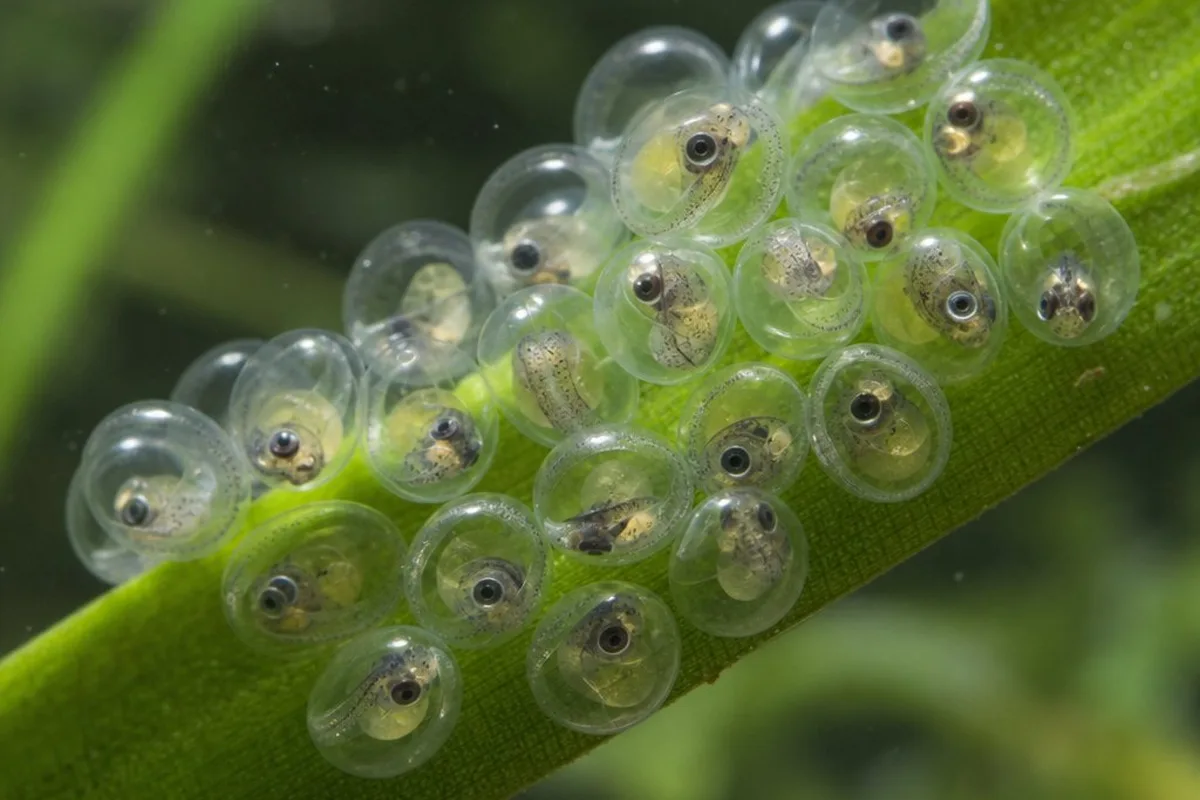
If a cool water change does trigger spawning, the behavior is fairly distinctive. A male will position himself perpendicular to a female, forming a rough "T" shape — this courtship behavior is one of the most recognizable spawning signs in corydoras. Following this, the female carries a small clutch of adhesive eggs in her pelvic fins and deliberately places them on a chosen surface — glass, a broad plant leaf, or a piece of decor — repeating this across several spots rather than scattering eggs broadly the way rainbowfish do. Spotting this T-position behavior is usually a strong sign that eggs will appear within the next short while.
Protecting the Eggs
As with most corydoras, adults will eat eggs if left in the main tank. The standard approach is to gently move eggs to a separate container — either by relocating the leaf, glass section, or decor piece they're attached to, or by carefully transferring eggs by hand (corydoras eggs are reasonably firm and tolerate gentle handling better than many fish eggs). Eggs hatch in roughly 3-5 days, in line with the general corydoras range covered in our guide to fish egg hatching times.
Raising the Fry
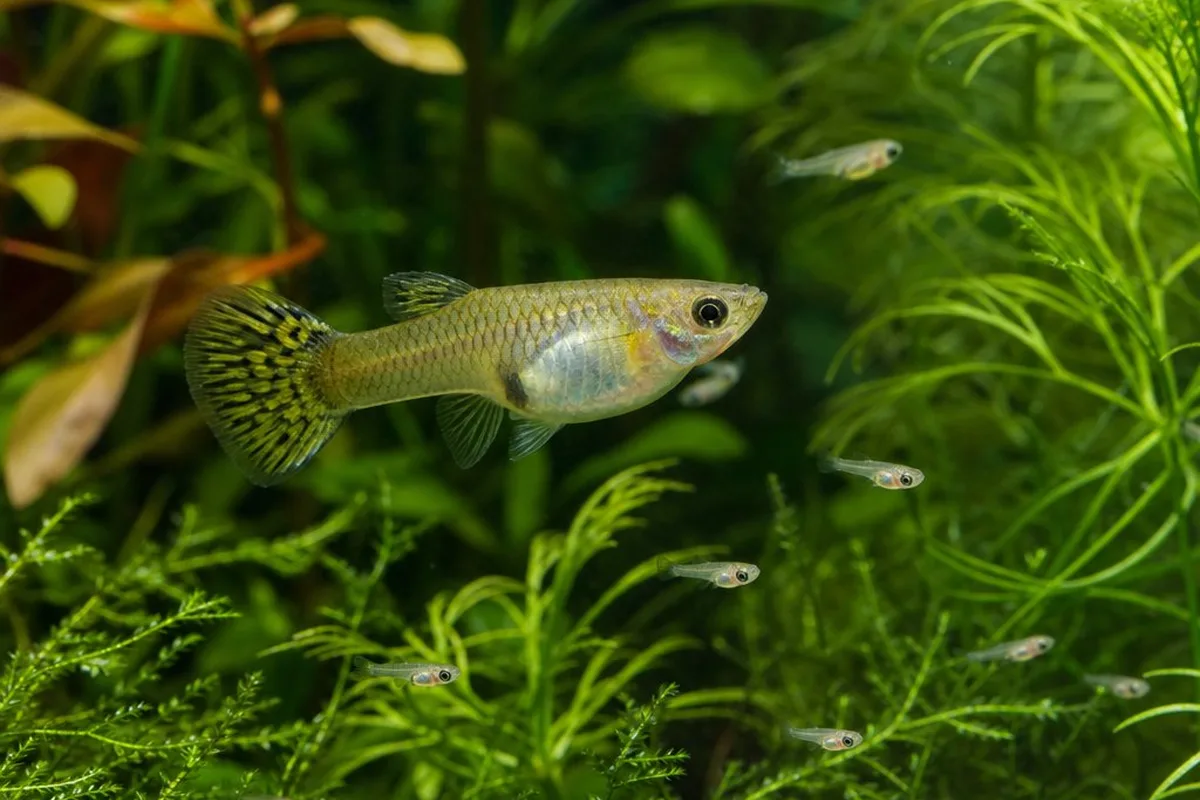
Once hatched, panda cory fry are generally large enough to take microworms or baby brine shrimp nauplii fairly soon after hatching — a notably easier starting point than the infusoria-dependent early stage required by rainbowfish fry or the biofilm-dependent start needed by otocinclus fry. This relatively forgiving food situation is one more reason panda corydoras sit toward the achievable end of the breeding-difficulty spectrum, alongside the livebearers covered in our guide to the easiest freshwater fish to breed — though corydoras still require the egg-collection step that livebearers skip entirely.
A Note on Telling Eggs From Illness
A female heavy with eggs can sometimes look, at a glance, like a bloated cory catfish showing signs of illness. The main differences: an egg-carrying female is rounded but active and behaving normally, often noticeably more so right around a spawning event, while illness-related bloating tends to come with lethargy, appetite loss, or other symptoms. Recent cool water changes and a mixed-sex group both make "carrying eggs" the more likely explanation for sudden rounding.
Quick Reference
- A cool water change mimicking rainfall is the most reliable panda cory spawning trigger
- Watch for the "T-position" courtship behavior as a sign spawning is imminent
- Eggs are deliberately placed (not scattered) on glass, leaves, or decor
- Move eggs to a separate container — adults will eat them otherwise
- Eggs hatch in roughly 3-5 days
- Fry can usually take microworms or baby brine shrimp soon after hatching
- A rounded, active, egg-carrying female differs from a lethargic, bloated, unwell one