By Hektor Jorgo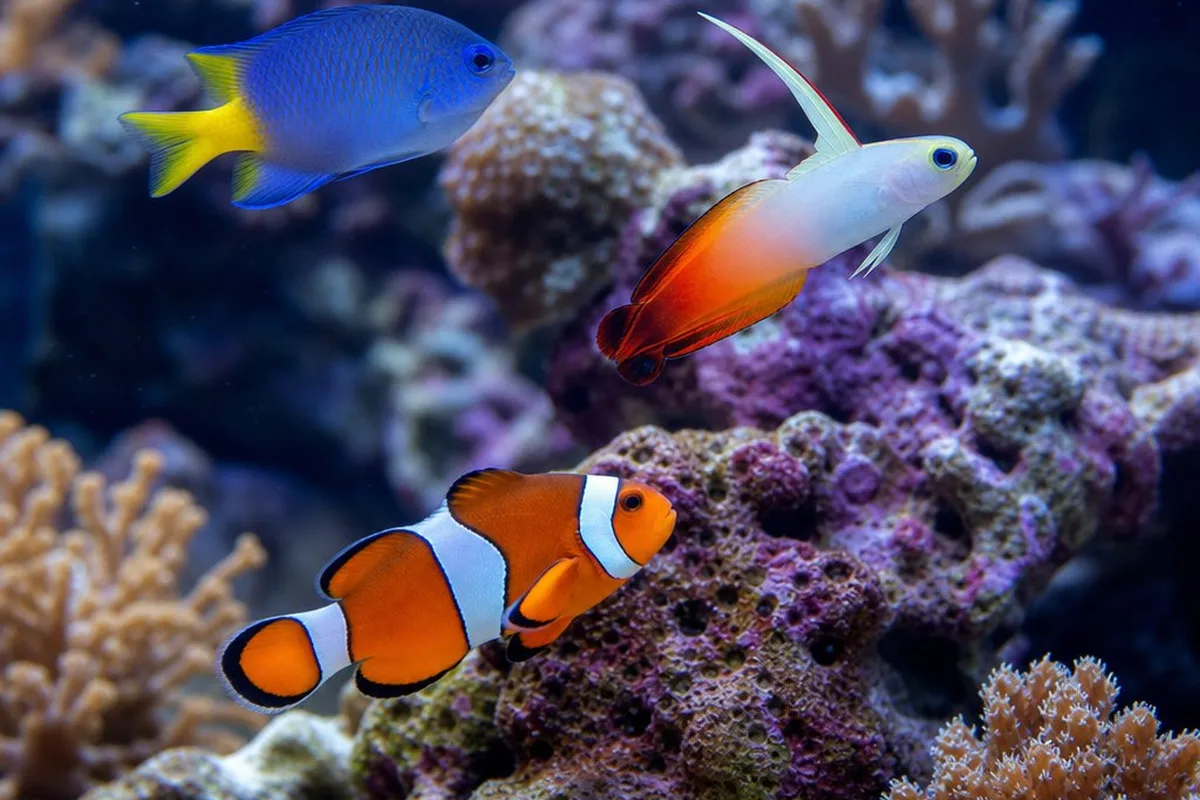
The saltwater hobby has a reputation for being unforgiving, and to some extent it is — but the gap between "easy" and "hard" fish is much wider than most beginners realize, and the species marketed hardest to newcomers aren't always the ones that actually deserve that label. This guide covers the fish that genuinely tolerate a beginner's learning curve, the popular species that don't (despite looking just as approachable), and how to sequence your first stocking list so your tank's biology can keep up. For a broader look at how tank style (fish-only, FOWLR, or reef) shapes which groups of saltwater fish make sense in the first place, see our overview of saltwater aquarium fish types.
Short Answer: The Best Beginner Picks
For a first saltwater tank (ideally 30-40 gallons or larger), the most consistently recommended beginner fish are the yellowtail damselfish, common clownfish, and firefish. All three are hardy, widely captive-bred, reef safe, and tolerant of the water-quality swings common in a tank's first few months. Add them gradually — one or two at a time — to a tank that has already completed its nitrogen cycle, and quarantine every new arrival for 2-4 weeks before it goes into the display.
The Easiest Saltwater Fish for Beginners
Yellowtail Damselfish
Damselfish earned their beginner reputation honestly: they're some of the toughest fish in the hobby, tolerating ammonia and nitrite spikes during a tank's early cycling that would seriously harm more sensitive species. The yellowtail damselfish specifically is peaceful by damselfish standards (some other damsels are notably territorial — see our guides to the azure, domino, and blue devil damselfish for species with more aggressive reputations) and a good choice to add first, once your tank has at least partially cycled.
Common Clownfish
The common clownfish is probably the single most recommended marine fish for beginners worldwide — hardy, peaceful, almost universally captive-bred, and full of personality. It doesn't need (and, contrary to popular belief, doesn't require) an anemone, making it dramatically easier to keep than the "clownfish and anemone" pairing often shown in pet store displays.
Firefish
The firefish is a slightly more delicate but still very approachable choice — peaceful, reef safe, and visually striking with its red-and-white coloration and distinctive swimming style. Its main beginner consideration is a tendency to jump from open-top tanks when startled, which is an easy fix (a lid or cover) rather than a care difficulty.
Banggai Cardinalfish
The Banggai cardinalfish rounds out a strong beginner lineup — peaceful, reef safe, and notable for its unusual mouth-brooding reproduction, which some beginners end up experiencing by accident in a well-maintained tank. It occupies the water column rather than competing with bottom-dwelling damselfish or clownfish for territory, making it an easy addition to a tank that already has the species above.
Fish That Look Easy but Aren't
Some of the most heavily marketed "starter" saltwater fish are anything but, once you look past their price tag and colorful appearance:
- Blue hippo tang — made famous by Finding Nemo, reef safe and not a picky eater, but needs 100+ gallons and is unusually prone to stress-related illness (including chronic marine ich) in smaller tanks. Frequently sold as an inexpensive juvenile for tanks nowhere near large enough for its adult size.
- Large triggerfish and pufferfish — even the more reef-tolerant species, like the Niger triggerfish, need 125+ gallons as adults and aren't sized-down versions that "stay small" in a smaller tank.
- Anything described as "will adjust to your tank size" — this isn't how fish biology works. A fish kept in a tank smaller than it needs doesn't simply stay proportionally smaller; it experiences chronic stress, which shows up as disease susceptibility, faded color, and reduced lifespan.
The pattern across all of these: price and apparent ease of feeding are not reliable indicators of suitability for a first tank. Adult size, activity level, and documented stress sensitivity are far better predictors.
Building a Beginner Stocking Plan
- Finish cycling first. Before any fish goes in, your tank needs to complete its nitrogen cycle — the establishment of bacteria that process ammonia and nitrite into nitrate. This typically takes 4-6 weeks and should be confirmed with test kit readings (0 ppm ammonia and nitrite), not just a calendar estimate.
- Add your hardiest fish first. A yellowtail damselfish or two is a common first addition specifically because this species tolerates the tail end of cycling and the minor swings that follow better than almost anything else.
- Wait between additions. Give your tank's bacteria population 2-4 weeks to adjust after each new fish before adding the next. This is the single most effective way to avoid an ammonia spike from "new tank syndrome" reasserting itself.
- Quarantine everything. Every new fish — no matter how hardy the species — should spend 2-4 weeks in a separate quarantine tank where you can observe for disease (especially marine ich) and treat it without risking your main display.
- Research adult size and tank requirements before buying, not after. This is the step that prevents the "looks easy but isn't" category above from ending up in your tank. If a species' minimum tank size guide exceeds what you have, it's not the right fish yet — not "the right fish that you'll upgrade for later."
How Many Fish to Start With
There's no single right number, but one or two fish in the first month, building toward a final stocking list over 6-12 months, is a realistic pace for most beginner tanks. This isn't overly cautious — it reflects how slowly a tank's biological filtration capacity actually scales, and rushing this step is the single most common cause of preventable fish loss in new saltwater tanks.
If your tank is smaller than the 30-40 gallon range referenced here, your stocking options narrow further — see our guide to saltwater fish for a 10-gallon tank for an honest look at what's realistic at that size. And if your priority is building toward a reef tank with corals and invertebrates rather than a fish-only system, our guide to the best fish for a reef tank covers reef-safety considerations on top of the beginner-friendliness covered here.
Quick Reference
- Complete a full nitrogen cycle (4-6 weeks, confirmed by testing) before adding any fish
- Start with yellowtail damselfish, common clownfish, or firefish
- Add Banggai cardinalfish once the tank is more established
- Add one or two fish at a time, waiting 2-4 weeks between additions
- Quarantine every new arrival for 2-4 weeks, regardless of species
- Research adult size and minimum tank size before purchasing, not after
- Avoid fish marketed as "will adjust to your tank" — adult requirements don't shrink
- Build toward a full stocking list over 6-12 months, not weeks