By Hektor Jorgo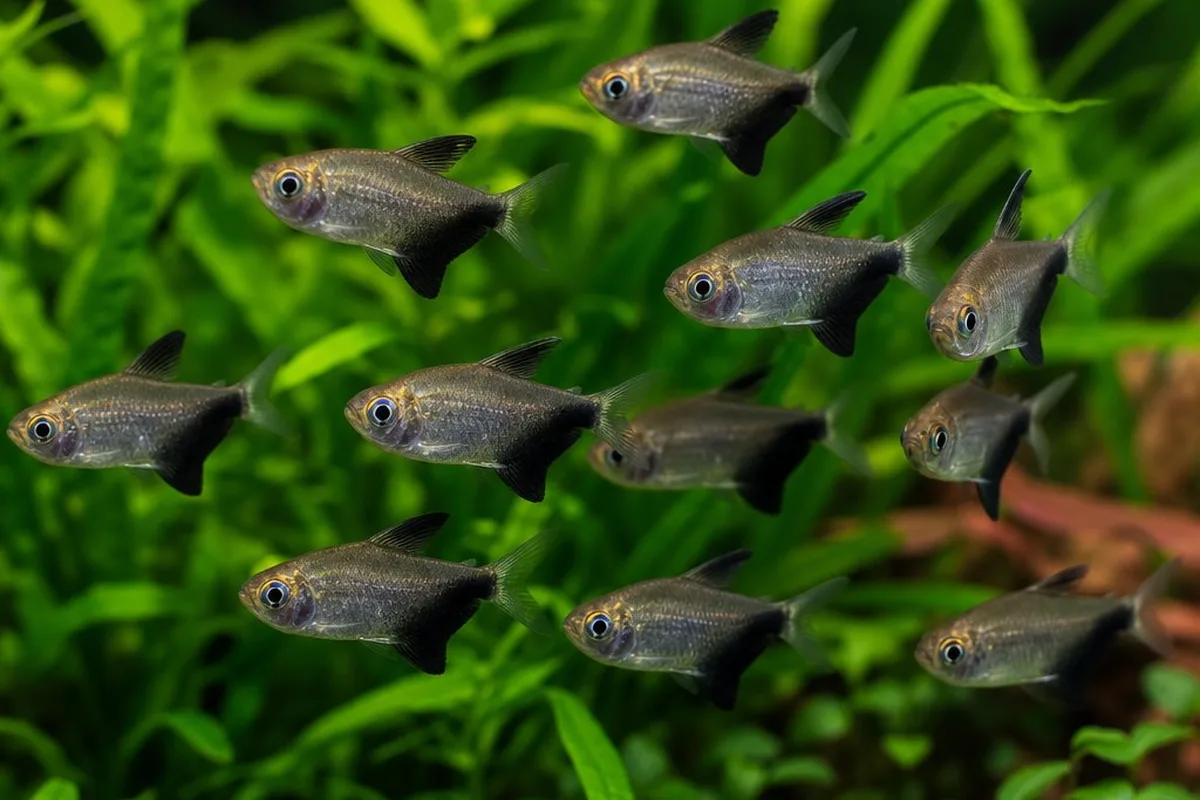
Black skirt tetras have a bit of a reputation for nipping fins and chasing tank mates — a reputation that's not entirely undeserved, but that also obscures the more useful explanation: in most cases, the fish themselves aren't the problem so much as the group size they're being kept in.
Short Answer
Black skirt tetra (Gymnocorymbus ternetzi) aggression — chasing, fin-nipping, general restlessness directed at tank mates — is most often a sign of too small a group. As a shoaling species, black skirt tetras rely on their school for a sense of security, and when that school is too small (commonly fewer than 6), social pressure that would normally be distributed across a larger group instead concentrates, often showing up as increased chasing and nipping. Increasing the group to 6 or more is the most effective single change in most cases, alongside reviewing tank size and the choice of tank mates — particularly slow-moving, long-finned fish, which are the most common targets.
Why Group Size Drives Aggression in Black Skirt Tetras
Tetras, including black skirt tetras, are shoaling fish — they're adapted to living in groups, and group size affects their behavior in ways that aren't always intuitive. In an adequately sized group, individual fish have more "targets" for the normal social interactions (chasing, brief nips, establishing position within the school) that occur in most shoaling species, and this activity tends to be spread out enough that no single fish bears the brunt of it.
In a too-small group — say, 2-4 fish instead of 6+ — that same social behavior has fewer outlets. The result is often more concentrated and more visible aggression, sometimes directed at the smallest or weakest member of the group, and sometimes redirected at other tank mates entirely, particularly if they're slow-moving and easy targets.
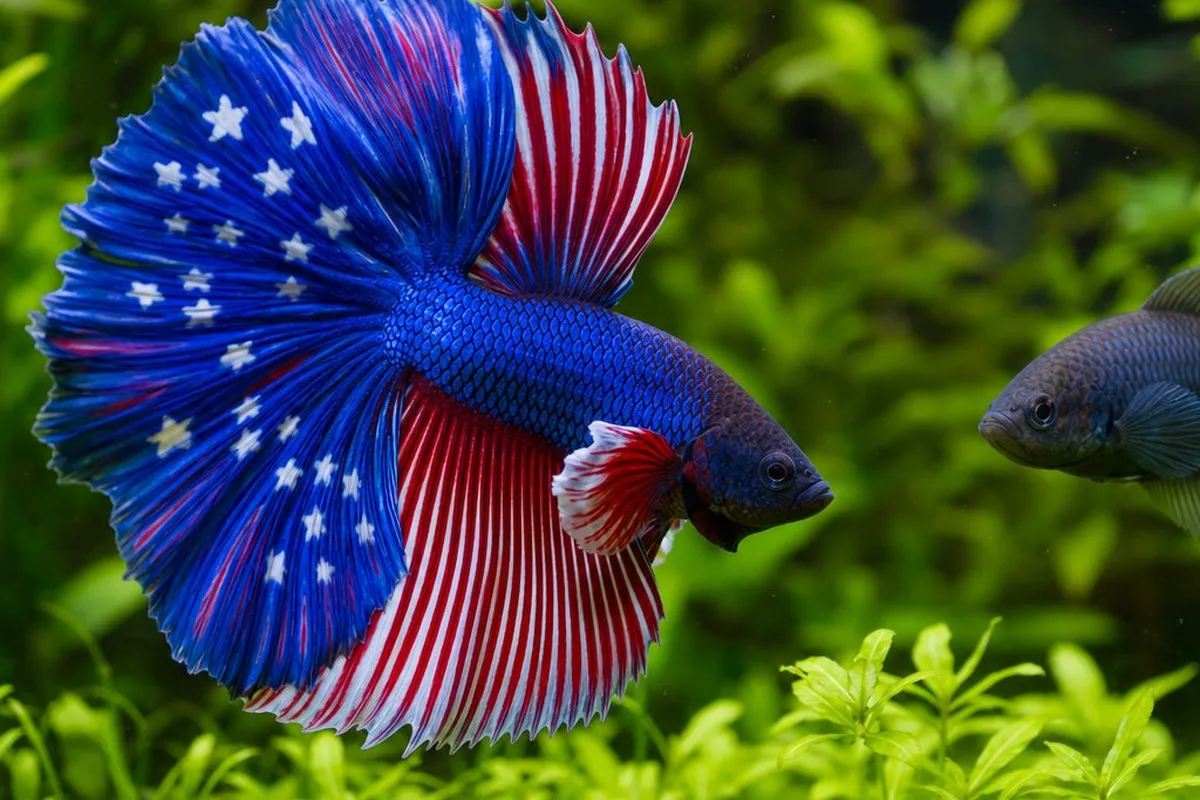
This is a different mechanism from the aggression discussed in our American flagfish guide, where the primary driver is territorial defense of space rather than redirected social pressure within a school — but both cases share a common thread: the underlying social or spatial need isn't being met, and the aggression is a symptom of that rather than a fixed trait of the individual fish.
Tank Mates at Risk From Fin-Nipping
If black skirt tetra aggression is being directed at other species rather than (or in addition to) other tetras, the fish most likely to be affected share certain traits:
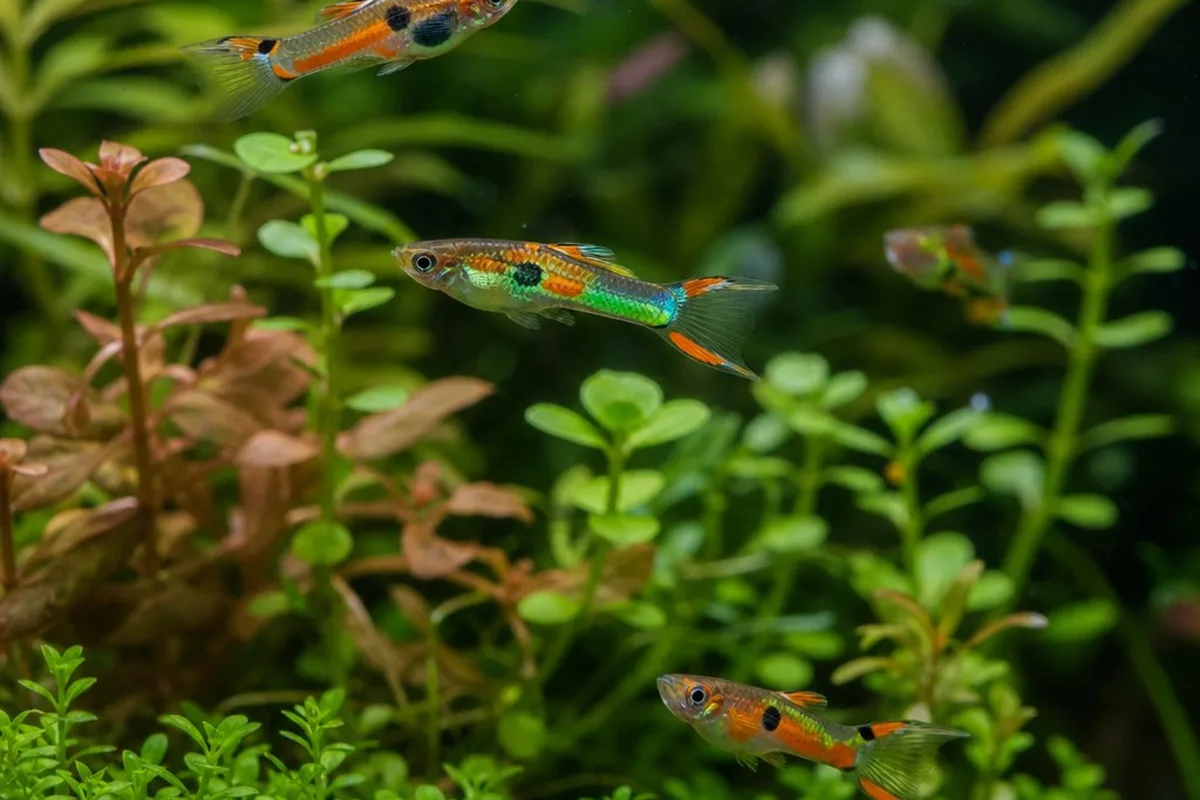
- Long fins — slower-swimming, long-finned fish present an easy, slow-moving target for nipping. This includes long-finned livebearer varieties like the split-tail guppy or ornate sailfin molly types.
- Slow, deliberate swimmers — fish that don't move quickly enough to avoid an active tetra school.
- Fish that spend time in open water near the tetra school, rather than species that are primarily bottom-dwelling or hide among decor.
This doesn't mean every black skirt tetra tank with long-finned tank mates will have problems — a well-sized group (6+) in a spacious, well-planted tank is considerably less likely to cause issues than an undersized, stressed group in a cramped tank. But it's a sensible factor to weigh when choosing tank mates, especially if you're starting with a smaller group and might add more tetras later.
Reducing Aggression: Practical Steps
- Increase the group size to 6 or more. This is the highest-impact change for most cases of black skirt tetra aggression, and often resolves issues that seemed like a "mean fish" problem on its own.
- Check tank size. A cramped tank amplifies social friction — both for the tetra school itself and for how tank mates experience any chasing that does occur.
- Add plants and visual breaks. Decor that breaks up sightlines within the tank can reduce the intensity of chasing by giving both the tetras and any targeted tank mates places to break visual contact.
- Reassess specific tank mates if one fish is being repeatedly targeted — sometimes the most practical fix is rehoming a particularly vulnerable fish (especially a long-finned one) rather than trying to change the tetra group's behavior toward it.
- Give it time after changes. Social dynamics within a newly-enlarged group can take some time to settle — a sudden increase in group size doesn't always produce instant calm, but it generally trends in the right direction over days to weeks.
Quick Reference
- Black skirt tetra aggression is usually a group-size issue, not a fixed trait
- Minimum recommended group size: 6 or more
- Some chasing/nipping in an adequately-sized group is normal shoaling behavior
- Long-finned, slow-moving fish are most at risk of fin-nipping
- Increase group size first — it's the highest-impact single change
- Add plants/decor to break sightlines and reduce chasing intensity
- Consider rehoming a repeatedly-targeted tank mate if other changes don't help