By Hektor Jorgo
Clarifying media — sold under names like "Bio-Magnet" and similar branding — gets recommended a lot for cloudy water, and it does work, for the right kind of cloudy water. The trouble is that "cloudy water" covers at least two genuinely different problems, and this media only addresses one of them.
Direct Answer: A Polishing Step, Not a Cure-All
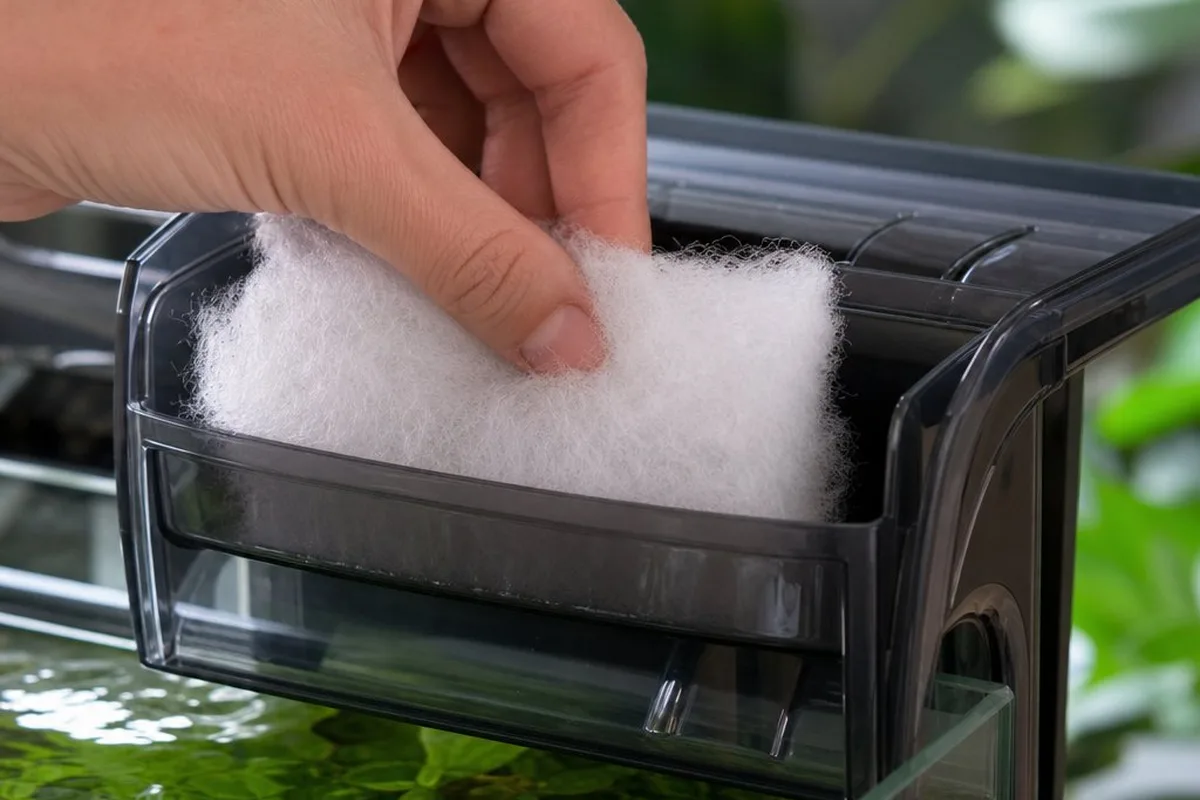
This kind of media is a fine-fiber mechanical polishing pad. Its job is to physically trap particles that are small enough to pass straight through standard floss or sponge media — the kind of fine debris that makes water look hazy or dusty without necessarily looking dirty. If your cloudiness is genuinely particulate — dust from new substrate, haze stirred up by rearranging decor or vacuuming gravel — this media can noticeably clear that up, often within a day of running.
What it can't do is address cloudiness that isn't particulate in nature. The most common example is a bacterial bloom during cycling, which produces a milky-white haze from a suspended bacterial population, not suspended debris. No amount of mechanical polishing fixes that, because there's nothing solid for the fibers to trap.
Where It Fits in a Filter
Polishing media like this belongs in the mechanical filtration stage, ideally after a coarser pre-filter (sponge or standard floss) rather than as the first thing water hits. The reasoning is straightforward: a dense fiber matrix that's efficient at catching fine particles is also efficient at clogging if it's catching everything, including the larger debris a coarser media would normally handle. Let the coarse stage do the bulk work, and let the polishing pad handle only the fine residue that gets past it — that arrangement keeps the polishing pad working longer between cleanings.
It's also worth being deliberate about what it's not replacing. Filter space is finite, and biological media — the ceramic rings, sintered glass, or similar media that host the bacteria processing ammonia and nitrite — is doing work that's essential, especially in a tank that's still cycling. A polishing pad is additive, not a substitute, and shouldn't crowd out biological capacity in a smaller filter.
The New-Tank Cloudiness Question
New tank owners reaching for a clarifier are often dealing with one of two things, and telling them apart matters:
- Dust/haze from setup — substrate that hasn't fully settled, or particulate stirred up during aquascaping. This is exactly what a polishing pad helps with, and you should see visible improvement within a day or so.
- Bacterial bloom during cycling — a milky-white cloudiness that tends to show up a few days to a week or two into cycling, as bacterial populations boom and then stabilize. This resolves on its own as the nitrogen cycle completes, and a polishing pad won't speed that up.
If you've added a polishing pad and the cloudiness hasn't budged after a day or two, it's worth considering whether you're dealing with the second kind — in which case patience (and avoiding the temptation to do a large water change that resets the cycling progress) is the more useful response than additional filtration.
It's also worth distinguishing cloudy water from a surface film — a thin, often oily-looking sheen sitting on top of otherwise clear water. That's a different phenomenon with a different fix (surface agitation rather than mechanical filtration media), covered in our guide to protein film.
Maintenance Reality
Because of its denser fiber structure, this type of media clogs faster than standard floss if it's bearing the full debris load — which shows up as reduced flow through the filter sooner than you might expect from other mechanical media. Rinsing it out under running water restores most of its capacity, but it will eventually need replacing once it stops rinsing clean. Pairing it with a coarser pre-filter, as covered above, is the simplest way to keep its maintenance interval reasonable rather than needing attention every few days.
Quick Reference
- This is a mechanical polishing media, not a chemical or biological treatment
- It works on fine particulate cloudiness (dust, haze from setup/aquascaping)
- It does NOT fix bacterial-bloom cloudiness during cycling — that resolves on its own
- Place it after a coarser pre-filter stage to avoid premature clogging
- It doesn't replace biological media needed for ammonia/nitrite processing
- Rinse when flow drops; replace once it won't rinse clean
- If cloudiness persists after a day or two, consider a bacterial bloom rather than more filtration