By Hektor Jorgo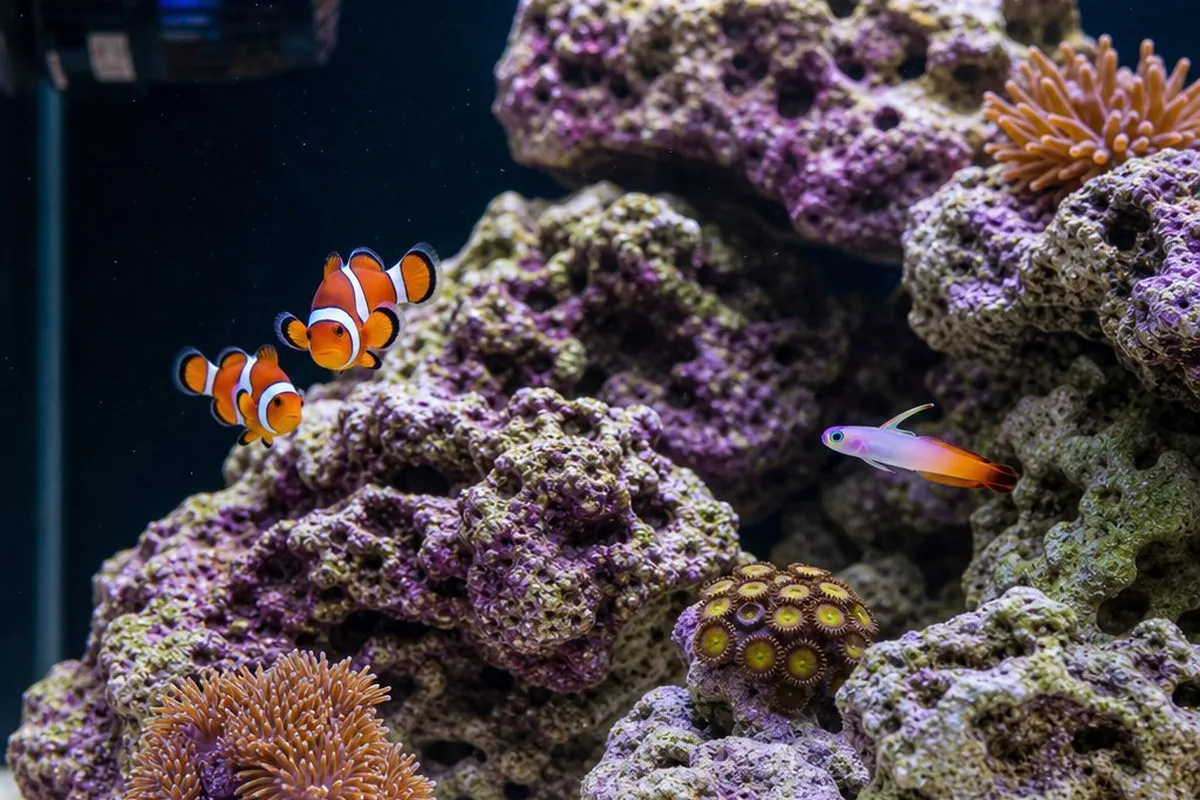
A 30-gallon tank is a genuinely different proposition from the 10-gallon tank covered in our companion guide — it's the size where most of the fish that get recommended to beginners actually become realistic choices, rather than fish that "technically fit" but are better suited to a larger setup. This guide covers what fits comfortably at 30 gallons, how to combine species into a balanced stocking plan, and where the line still sits for genuinely large fish.
Short Answer: What Fits in 30 Gallons
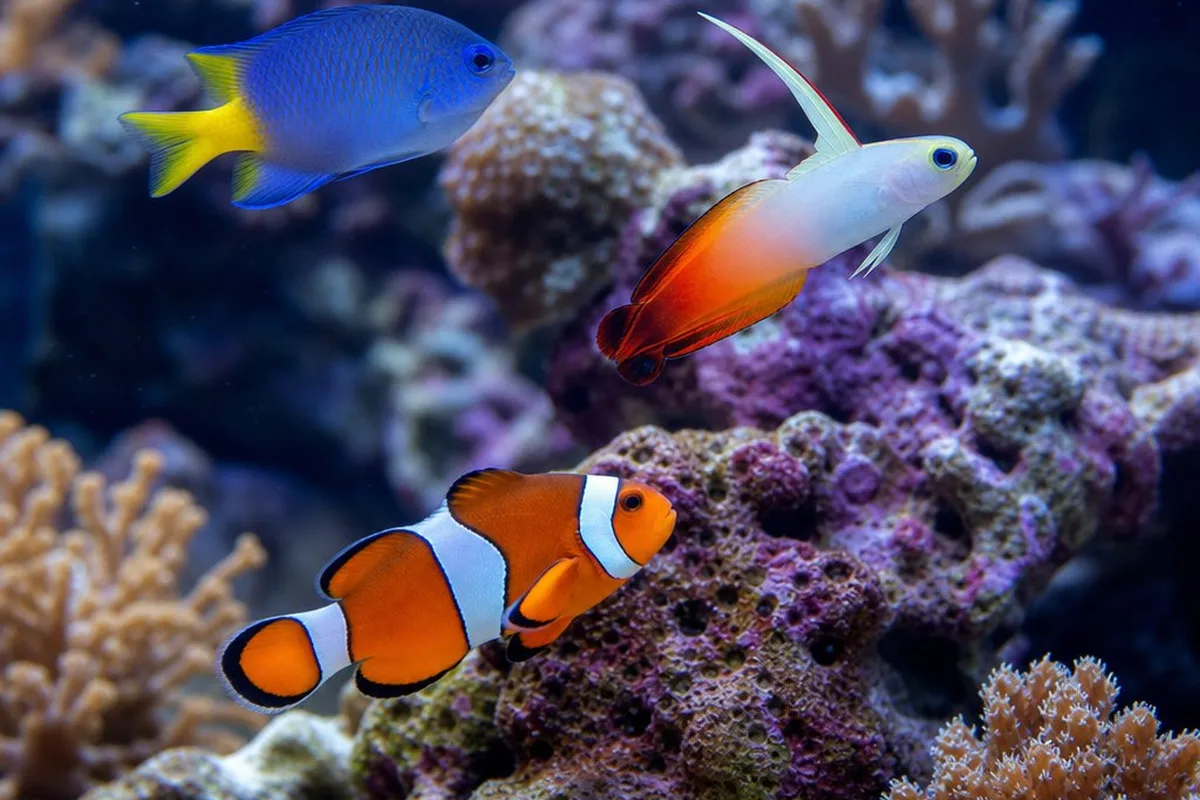
A 30-gallon tank comfortably supports most beginner-friendly saltwater fish, including the common clownfish, firefish, Banggai cardinalfish, pajama cardinalfish, yellowtail damselfish, and small wrasses or gobies. A realistic stocking plan is 3-5 small fish, combining species that occupy different niches (substrate, mid-water, rock-dwelling) to avoid excessive competition. What still doesn't fit at this size: large, active species like the blue hippo tang or big triggerfish/puffers, which need 75-125+ gallons regardless.
Why 30 Gallons Is a Meaningful Step Up From 10
Our 10-gallon stocking guide covers why that size is more limiting than it looks — faster temperature swings, bigger relative impact from evaporation, less dilution for feeding/waste, and not enough territory for active fish like clownfish or damselfish. At 30 gallons, most of these issues are substantially reduced:
- More stable temperature and salinity — three times the water volume buffers against the same evaporation rate or ambient temperature swing far more effectively
- More dilution capacity — the same feeding amount or an occasional missed water change has proportionally less impact
- Enough territory for typical beginner fish — clownfish, damselfish, and similar species have room to establish a sense of territory without constant conflict
- Room for a small community, not just one or two fish — this is the size where "stocking plan" starts to mean something beyond "which single fish should I get"
This doesn't mean 30 gallons is maintenance-free — cycling, testing, and regular water changes all still matter — but the margin for the small mistakes beginners commonly make is meaningfully larger than at 10 gallons.
Good Stocking Options for 30 Gallons
- Common clownfish — a single clownfish or bonded pair is a natural anchor for a 30-gallon stocking plan, and is one of the species this size was historically considered a comfortable minimum for.
- Firefish — occupies the water column and rock crevices without competing with bottom-oriented fish; remember a secure lid, since this species can jump.
- Banggai cardinalfish or pajama cardinalfish — both peaceful, reef safe, and occupy a different niche than clownfish or damselfish, making either a good addition to a mixed stocking plan.
- Yellowtail damselfish — hardy and a good early addition while the tank is still maturing, though as covered in our beginner guide, some damselfish species can become territorial as they mature, so one is usually plenty in 30 gallons.
- Small gobies and blennies — bottom-dwelling, peaceful, and good for rounding out a stocking plan without adding to mid-water competition.
Sample Stocking Plans
Plan A — Clownfish-focused: A bonded pair of common clownfish, plus one firefish and one goby. Three fish across three niches (rock/substrate, mid-water, bottom), all reef safe and beginner-friendly.
Plan B — Cardinalfish-focused: A small group of pajama cardinalfish (this species tolerates grouping better than many reef fish — see our note in the pajama cardinalfish guide), plus one yellowtail damselfish added early during cycling.
Plan C — Reef-focused: One common clownfish or firefish, kept deliberately minimal to prioritize coral and invertebrate stocking — a 30-gallon reef tank with one or two fish and a developed coral/cleanup-crew population is a popular and very workable combination, and aligns with the considerations in our reef-safe stocking guide.
What Still Doesn't Fit
30 gallons solves the small-tank problems covered in our 10-gallon guide, but it doesn't change the math for genuinely large fish:
- Blue hippo tang — still needs 100+ gallons; 30 gallons doesn't meaningfully change this fish's space or stress-related needs.
- Large triggerfish and puffers — species like the Niger triggerfish still need 125+ gallons as adults.
- Multiple territorial fish of the same niche — even at 30 gallons, stacking several damselfish or several similarly shaped fish together tends to produce more conflict than the tank size alone would suggest, since territorial behavior is about niche overlap as much as raw space.
If your stocking goals include any of these, 30 gallons is a good starting tank while you plan for (or build toward) something larger — not a tank these species will "grow into."
Quick Reference
- Complete a full nitrogen cycle (4-6 weeks) before stocking, same as any saltwater tank
- Good starting options: common clownfish, firefish, Banggai/pajama cardinalfish, yellowtail damselfish
- Realistic stocking: 3-5 small fish across different niches (substrate, mid-water, rock-dwelling)
- Add fish gradually — one or two at a time, weeks apart
- 30 gallons is also a popular and workable reef tank size
- Large species (blue hippo tang, big triggers/puffers) still need 75-125+ gallons — 30 gallons doesn't change this
- Compare against our 10-gallon guide if you're deciding between tank sizes