By Hektor Jorgo
If you've narrowed down a reef lighting upgrade to Kessil's A-series and are now trying to choose between two tiers within that lineup, the good news is that the decision is simpler than it might look — both share the same fundamental design, and the choice mostly comes down to how much light your tank actually needs.
Short Answer
The A350-series and A360-series are both part of Kessil's A-series point-source LED lineup, sharing the same shimmer-producing lens design — the main difference between them is intensity tier. The A360-series sits as Kessil's higher-output flagship, suited to deeper tanks or SPS-dominant stocking plans that benefit from more light penetration. The A350-series sits a tier below, a reasonable fit for shallower tanks or softie/LPS-leaning setups that don't need (and can be stressed by) the most intense option. Both use the same mounting approach and are compatible with Kessil's wireless controller accessories — the decision is less "which design is better" and more "how much light does this specific tank need."
Same Design Family, Different Output Tier
Kessil's A-series fixtures share a core design approach: a point source of LED light positioned behind a lens, which produces the rippling "shimmer" effect on the substrate that point-source fixtures are known for (and that flat LED panels generally don't replicate as strongly). Both the A350-series and A360-series are built on this same approach — the lens design and the resulting shimmer and beam characteristics are broadly consistent across the family.
What differs between the tiers is output intensity. The A360-series is positioned as the higher-output option in the lineup, while the A350-series sits a tier below. This is the same kind of tiered-lineup structure you'll find in most reef lighting brands — a higher-output flagship and a lower-output option aimed at tanks that don't need (or shouldn't have) the most intense setting available.
Matching Tier to Tank Depth and Coral Mix
The practical question this comparison usually comes down to is: how much light does this specific tank need to reach the corals being kept?
- Deeper tanks lose more light intensity by the time it reaches the substrate, so a higher-output fixture (A360-series) helps maintain adequate intensity at depth.
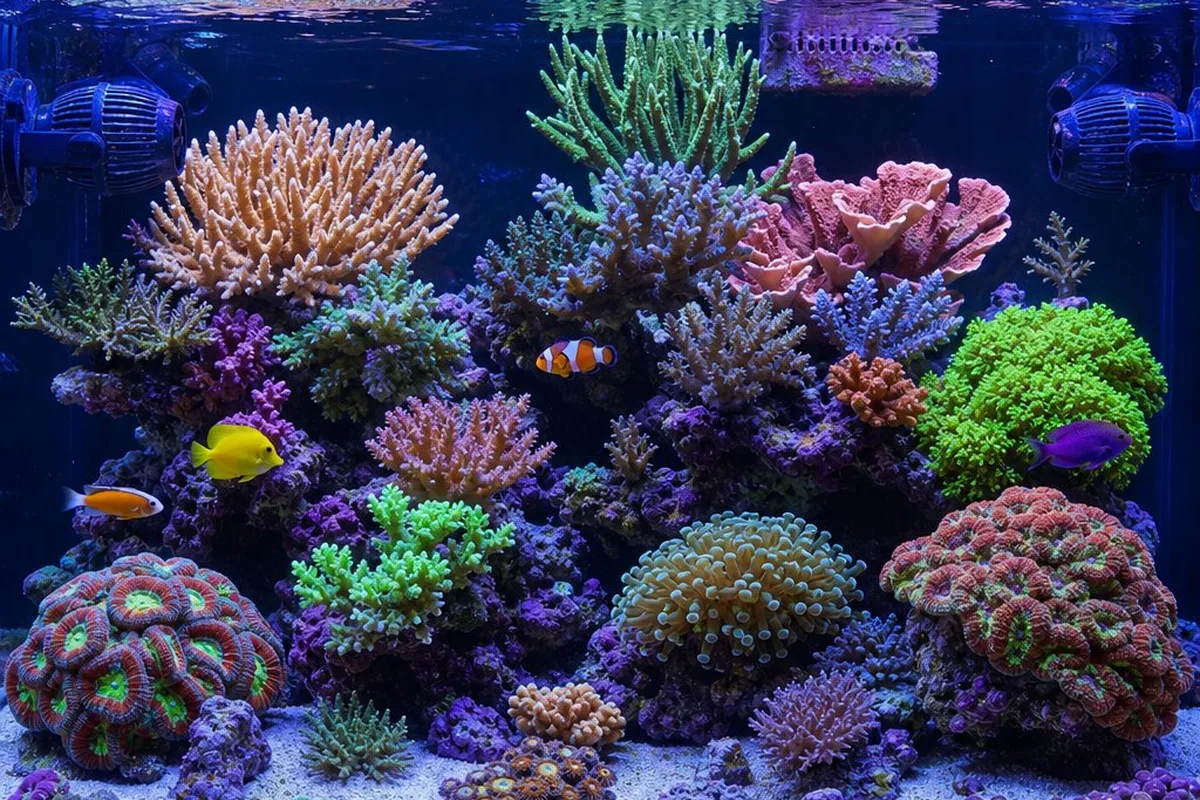
- SPS-dominant stocking plans generally benefit from more intense lighting than LPS or softie-dominant plans — many SPS corals are adapted to higher-light reef zones, while many LPS and softies tolerate (and in some cases prefer) more moderate light.
- Shallower tanks or softie/LPS-leaning stocking plans may find the A350-series tier sufficient without needing to dial down a higher-output fixture significantly from its capable range.
This isn't an absolute rule — individual coral species vary, and lighting acclimation over time matters too (our guide on how much white light corals need covers this in more general terms) — but it's a reasonable starting framework for choosing between the two tiers.
Shimmer, Coverage, and the Point-Source Trade-off
Because both tiers share the point-source-behind-a-lens design, the shimmer effect and general footprint shape are similar between them — this isn't a factor that differs much by tier. What the point-source design does trade off against is wide-angle, even-coverage designs, which is the comparison covered in our Kessil A80 vs. AI Prime 16HD guide. If shimmer and a point-source aesthetic are part of why Kessil is on the shortlist at all, that factor is consistent across the A350W/A360W decision — it only becomes relevant again if comparing against a non-point-source fixture entirely.
Controller and Mounting
Both tiers integrate with Kessil's wireless dial and Spectral Controller accessories for dimming, scheduling, and (with the Spectral Controller) more granular spectrum adjustment over time. Mounting is via gooseneck arm or rail mount, consistent with the rest of the A-series lineup — so a tank already set up for one A-series tier generally doesn't need different mounting hardware to switch tiers.
If You're Considering a DIY Build Instead
A commercial fixture — either A-series tier — is a complete, integrated package: lens, driver, and control ecosystem all designed and tested together. The alternative path is a DIY build using individual LED chips, which trades that integration for more flexibility in spectrum and cost-per-watt, at the cost of needing to handle lens, heatsink, and driver decisions yourself. Our Bridgelux vs. Cree comparison covers what that alternative actually involves, if cost or custom spectrum tuning (rather than output tier) is the main factor in the decision.
Quick Reference
- Both the A350-series and A360-series share Kessil's point-source-behind-a-lens A-series design and shimmer effect
- The A360-series is the higher-output flagship tier; the A350-series sits a tier below in intensity
- Deeper tanks and SPS-dominant stocking plans generally favor the higher-output tier
- Shallower tanks and softie/LPS-leaning stocking plans may find the lower tier sufficient
- Shimmer and footprint shape are similar across both tiers — the difference is intensity and penetration
- Both work with Kessil's wireless dial and Spectral Controller accessories
- A DIY chip-based build is the alternative path if spectrum flexibility or cost-per-watt matters more than integration