By Hektor Jorgo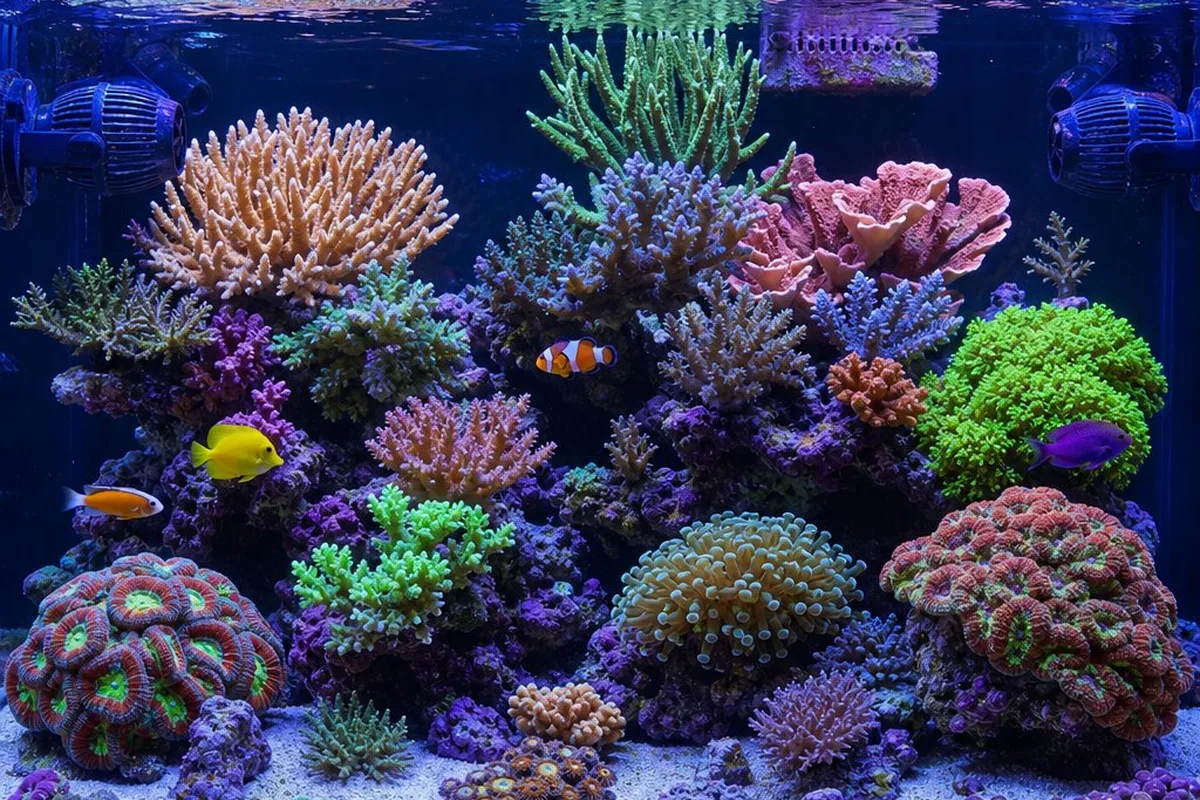
Reef lighting discussions often focus on blue/actinic channels because of how dramatically they affect a tank's appearance — but the white light component is doing a lot of the work that actually matters for coral health.
Short Answer
Corals rely on zooxanthellae — algae living in their tissue — for photosynthesis, which draws on a broad spectrum of light that blue/actinic lighting alone doesn't fully provide. White light fills in that broader spectrum. Most modern reef lighting blends white and blue channels, balancing the visual effect (blue/actinic enhances fluorescence and color) with the photosynthetic needs (white contributes more broadly). How much white light is "enough" depends heavily on coral type — SPS corals generally want more, LPS and soft corals often less — and on acclimation, since sudden increases in intensity are a common cause of bleaching even at levels a coral could eventually tolerate.
Why Zooxanthellae Care About Spectrum
The relationship between corals and zooxanthellae is symbiotic: the coral provides a home and nutrients, and the zooxanthellae photosynthesize and share the resulting energy with the coral. Photosynthesis, in turn, depends on light across a range of wavelengths — not just the blue end of the spectrum that makes reef tanks glow.
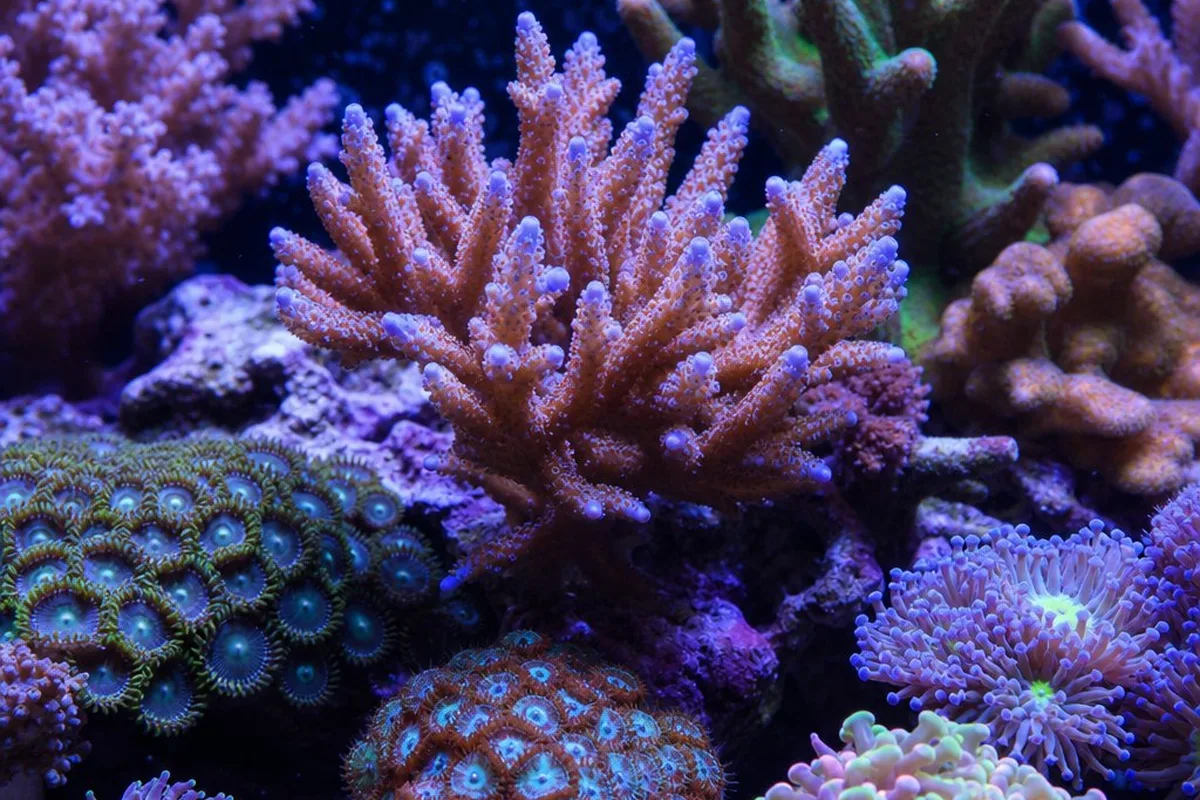
Actinic/blue lighting (roughly 400-460nm) is popular because it triggers fluorescence in many corals — the vivid colors that make reef tanks visually striking, especially during simulated dawn/dusk periods when blue-only lighting runs. But fluorescence is a visual effect, not a direct measure of how much usable light the zooxanthellae are receiving for photosynthesis.
White light — typically broader-spectrum output including red, green, and yellow wavelengths — fills in more of what photosynthesis actually uses. This is why most modern LED reef fixtures provide independently controllable white and blue channels, letting the balance be tuned for both appearance and coral health rather than treating them as the same thing. Popular nano fixtures take different approaches to delivering that balance — our Kessil A80 vs. AI Prime 16HD comparison covers how a point-source design versus a wide-angle lens affects both the visual shimmer and how evenly white light reaches corals across the tank.
PAR: A Way to Quantify "How Much Light"
PAR (Photosynthetically Active Radiation) is a measurement of light intensity specifically in the range useful for photosynthesis, often measured with a dedicated meter at different depths/positions in the tank. PAR meters are a tool serious reefers use to fine-tune placement and intensity, but they're not required for a healthy reef tank — observing coral response over time (coloration, growth, positioning) is accessible to anyone and, for most home aquariums, is the more practical day-to-day signal.
Coral Type Changes the Answer
Light requirements aren't uniform across coral types:
- SPS (small-polyp stony) corals — generally want higher light levels, including meaningful white-spectrum output, and are commonly placed higher in the tank, closer to the light source.
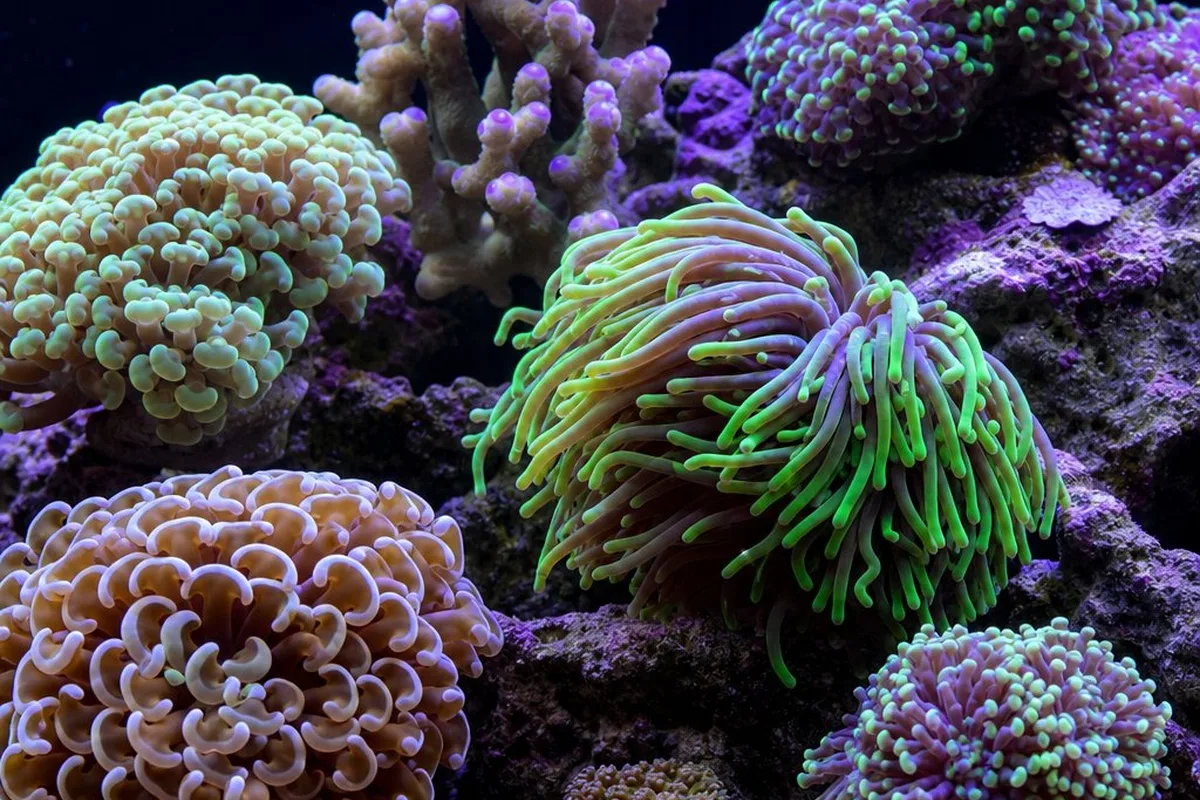
- LPS (large-polyp stony) corals and many soft corals — often tolerate, and in some cases prefer, lower light levels, and are commonly placed lower or in shaded positions. Our LPS corals for beginners guide covers placement and care specifics for this group.
This is part of why coral placement within a tank matters as much as the lighting fixture itself — the same light can be "enough" for a coral near the bottom and "not enough" for one higher up, or vice versa for excessive intensity.
Acclimation Matters as Much as the Number
A common cause of bleaching isn't that the light level is inherently too high for a given coral — it's that the increase happened too quickly. Corals (and their zooxanthellae) adjust to light levels over time; a sudden jump in white light intensity, even to a level the coral could tolerate if reached gradually, can cause stress and bleaching. This is covered in more depth in our guide on coral growth and preventing bleaching — the practical takeaway is that increasing white light intensity gradually, over days to weeks, is part of getting the "how much" answer right, not just the final number itself.
Signs You've Got the Balance Off
- Too little white light: pale or washed-out coloration, slow growth, corals stretching or reaching toward the light
- Too much white light (especially if increased suddenly): bleaching/paling, or corals retracting and staying closed more than usual — covered in our guide on identifying stressed or unhealthy corals
Quick Reference
- Zooxanthellae use a broad light spectrum for photosynthesis — white light covers more of this than blue/actinic alone
- Actinic/blue lighting enhances visual fluorescence; white light contributes more to photosynthetic needs
- PAR measures usable light intensity for photosynthesis — useful but not required for a healthy tank
- SPS corals generally want more (and higher-positioned) light; LPS and soft corals often want less
- Increase white light intensity gradually — sudden increases are a common cause of bleaching
- Pale coloration/slow growth suggests too little light; bleaching/retraction suggests too much (or too sudden an increase)
- Observing coral response over time is the most practical day-to-day gauge for a home reef tank