By Hektor Jorgo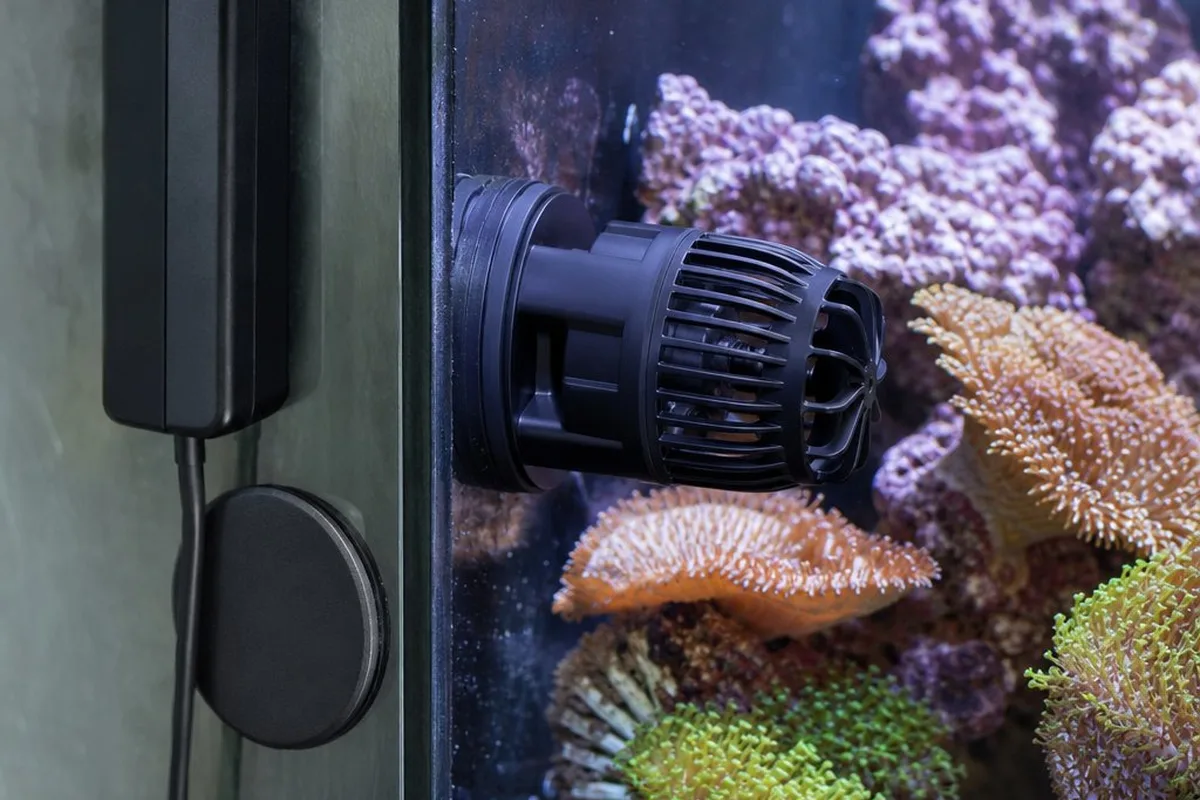
Jebao's budget controllable wave makers have been a fixture of reef tank shopping lists for years, and the lineup has evolved across a couple of generations — most notably from the original RW (Reef Wave) series to the newer WP (Wave Pump) series. If you're choosing between the two, or wondering whether an existing RW pump is worth upgrading, the comparison is more about iteration than reinvention.
Short Answer
The WP series is Jebao's newer generation of controllable wave makers, building on the same basic concept as the RW series — a magnetically-mounted pump with a wired controller offering wave, pulse, and feed-style modes — while addressing some of the most common RW complaints. The most notable changes are a generally stronger magnet mount (addressing the thick-glass magnet-slip issue some RW users encounter) and additional flow modes beyond RW's core wave/pulse/feed set. Both remain budget-tier options relative to EcoTech/Neptune equivalents. If you're shopping new, WP is the more current choice; if you already own an RW pump that's working fine, there's limited reason to upgrade unless you're specifically affected by the issues WP improves on.
Same Core Concept, Newer Generation
Both the RW and WP series solve the same problem: generating randomized, varying flow in a reef tank at a fraction of the cost of premium alternatives like EcoTech's VorTech line. Both use an external magnetic mount (pump head inside the tank, magnet drive unit outside the glass) and a proprietary wired controller rather than app/wireless integration. If you've used an RW pump before, a WP pump will feel broadly familiar — same general setup process, same basic mode-based controller approach.
The differences are in the specifics Jebao has refined between generations, which is a normal pattern for budget equipment lines — early complaints from users of one generation often inform what gets adjusted in the next.
Magnet Strength: The Most Meaningful Change
As covered in our Jebao RW-4 review, one of the most consistent RW-series complaints is that the stock magnet mount is rated for a specific glass thickness range, and on tanks with thicker glass or acrylic, the hold can be noticeably weaker — enough that the pump head can slip during cleaning or if bumped.
WP-series units commonly ship with a stronger magnet mount that extends the range of glass thicknesses the stock setup works well with. This is a genuine, practical improvement for anyone running a larger or deeper tank with correspondingly thicker glass. That said, "generally stronger" isn't the same as "works on anything" — checking the magnet's rated thickness against your specific tank remains worthwhile, especially at the upper end of glass thickness ranges.
Flow Modes: An Addition, Not a Replacement
The RW series' wave/pulse/feed mode set remains the foundation — these modes cover the core use cases (randomized surge, rhythmic pulsing, and a temporary flow reduction for feeding). WP-series controllers typically add to this set, often with more gradual, tide-style flow transitions designed to feel less repetitive over long observation periods.
Whether this matters in practice varies. For many tanks, the original three-mode set already does what's needed, and the additional WP modes are more of a refinement for hobbyists who specifically notice (or are bothered by) the repetitive feel of a fixed wave pattern over time.
Noise: A Marginal Improvement, Not a Fix
Both lines can develop an audible whine at or near maximum flow — this is a characteristic of budget powerhead motors generally, not unique to either line. Some WP users report the revised motor design is somewhat quieter at high settings compared to RW units, but this should be treated as a marginal improvement rather than a resolved issue. If a quiet room is a priority, the same advice applies to both lines: running at moderate rather than maximum flow keeps noise well within "won't notice it" territory, and is a factor worth considering for either series.
Controller Ecosystem: Unchanged
Neither the RW nor WP series offers native integration with third-party reef controllers like Neptune Apex or GHL Profilux — both rely on their own proprietary wired controllers. If integration with a broader controller ecosystem (the kind EcoTech's wireless VorTech pumps offer) is a priority, that remains a reason to look beyond either Jebao line regardless of which generation you're considering.
Should You Upgrade From RW to WP?
If your current RW pump is working well — securely mounted, acceptable noise at your normal flow setting, and the wave/pulse/feed modes meeting your tank's needs — there's limited practical benefit to swapping it for a WP unit. The improvements WP offers are real, but they're targeted at specific pain points (thick-glass magnet slip, high-flow noise, mode variety) rather than representing a fundamental upgrade in capability.
Where upgrading makes more sense:
- You're dealing with magnet slip on thick glass that a stronger mount would likely resolve
- High-flow noise is a genuine issue in your room
- You're setting up an additional tank and would rather standardize on the current generation going forward
For a tank where you're already weighing multiple equipment decisions — flow, filtration, lighting — it's often more efficient to address the specific pain point directly than to do a wholesale equipment swap for marginal gains elsewhere.
Quick Reference
- WP is Jebao's newer generation, building on the RW series' core wave/pulse/feed concept
- WP commonly ships with a stronger magnet mount, helping with the thick-glass slip issue some RW users report
- Still check the magnet's rated thickness against your tank, even on WP
- WP typically adds flow modes beyond RW's wave/pulse/feed set
- High-flow noise is improved on some WP units but not eliminated on either line
- Neither line integrates natively with third-party reef controllers
- Upgrading from a working RW pump only makes sense if you're hitting a specific issue WP addresses