By Hektor Jorgo
Decorating a turtle tank often starts the same way as decorating a fish tank — pick out rocks, plants, and ornaments that look good — and then runs into a turtle-specific reality fairly quickly: a lot of what looks good doesn't survive contact with an actual turtle.
Short Answer
Turtle tank decor needs to satisfy two things: material safety (no sharp edges, no swallowable pieces, no unrated paints or coatings) and durability against digging, bulldozing, and general turtle activity. Smooth, heavy rocks, cured driftwood, and aquarium-rated resin or ceramic ornaments are common safe choices. Live plants are workable but often get uprooted or eaten, making artificial plants a practical fallback. Substrate is a separate decision with its own tradeoffs — many keepers go bare-bottom or use large smooth rock specifically to reduce ingestion risk. The one non-negotiable "decoration" in all of this is the basking platform — everything else is flexible, that isn't.
What Makes Decor "Turtle-Safe"
Three failure modes account for most decor problems in turtle tanks:
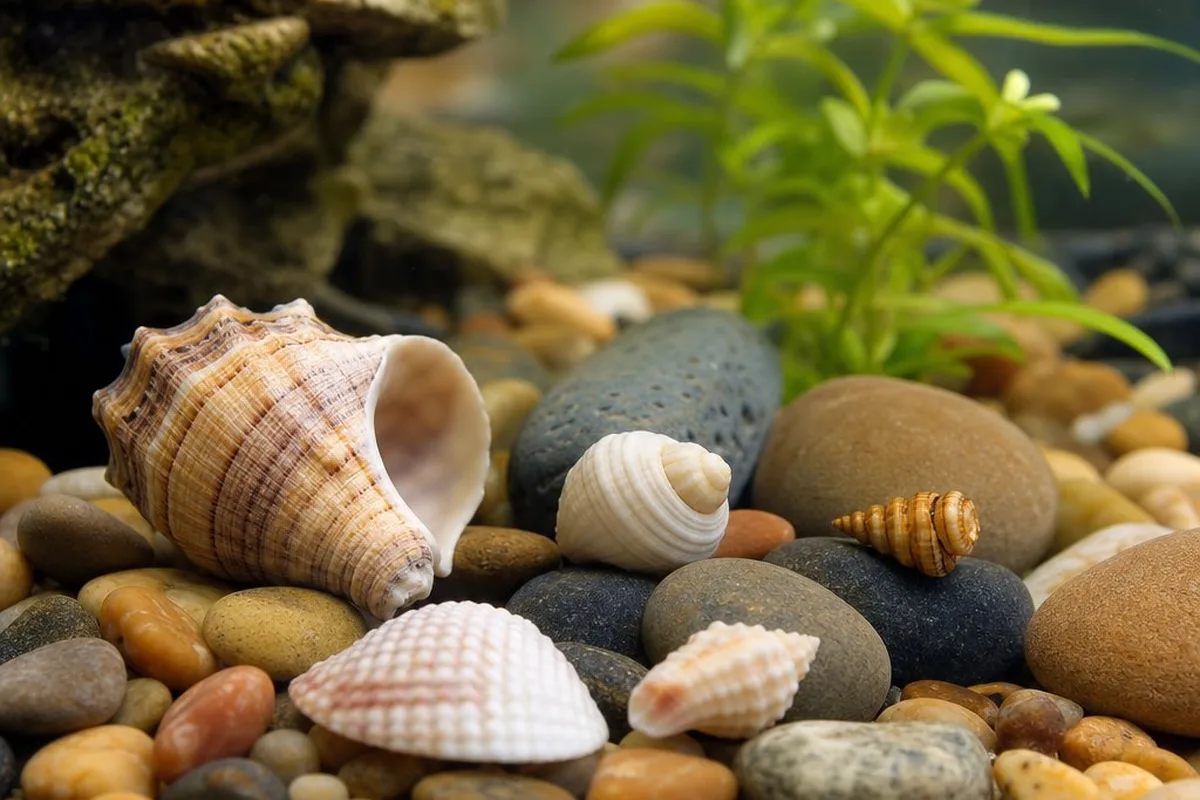
- Sharp or brittle edges — a turtle bumping into a sharp edge repeatedly (which it will, given how much time it spends moving around the tank) is a scrape risk. This is the same concern covered for shells specifically in our seashell safety guide.
- Pieces small enough to swallow — turtles will sometimes mouth or attempt to eat small decor pieces, gravel, or broken-off fragments. Anything that could plausibly fit in a turtle's mouth and isn't food is a risk worth avoiding.
- Unrated paints, dyes, or coatings — decor not specifically made for submerged aquarium use may use coatings that weren't tested for long-term water exposure, with unknown leaching potential. Items labeled for aquarium use have generally been vetted for this; random craft or outdoor decor has not.
Beyond safety, there's also durability against turtle behavior — which is less about danger and more about whether the decor stays where you put it.
Live Plants vs. Artificial Plants
Live plants add a lot to a tank's look, but turtles are hard on them. Many species will dig up, chew on, or simply bulldoze through planted areas as a matter of course — this isn't aggression toward the plant, it's just normal foraging and exploring behavior. A few approaches that hold up better:
- Hardy, attachment-based plants like java fern and anubias, tied or glued to driftwood or rock rather than planted in substrate — harder to uproot than substrate-rooted plants
- Floating plants, which avoid the substrate interaction entirely (though they may still get nibbled or pushed around)
- Artificial plants, which provide visual cover and hiding spots without any of the above concerns — a common and low-maintenance choice when live plants keep getting destroyed
Neither choice is "correct" — it's a tradeoff between the benefits of live plants (some water quality benefit, more natural look) and the lower-maintenance reliability of artificial ones.
Substrate: Bare-Bottom, Rock, or Sand?
Substrate is its own decision, separate from "decorations" in the ornament sense, but it's part of the same overall setup conversation:
- Bare-bottom tanks are easiest to clean and eliminate ingestion risk entirely, at the cost of a less natural look
- Large smooth river rock (too big to swallow) offers more visual interest while keeping ingestion risk low
- Fine gravel is a more common point of caution — small enough pieces can be accidentally ingested during feeding
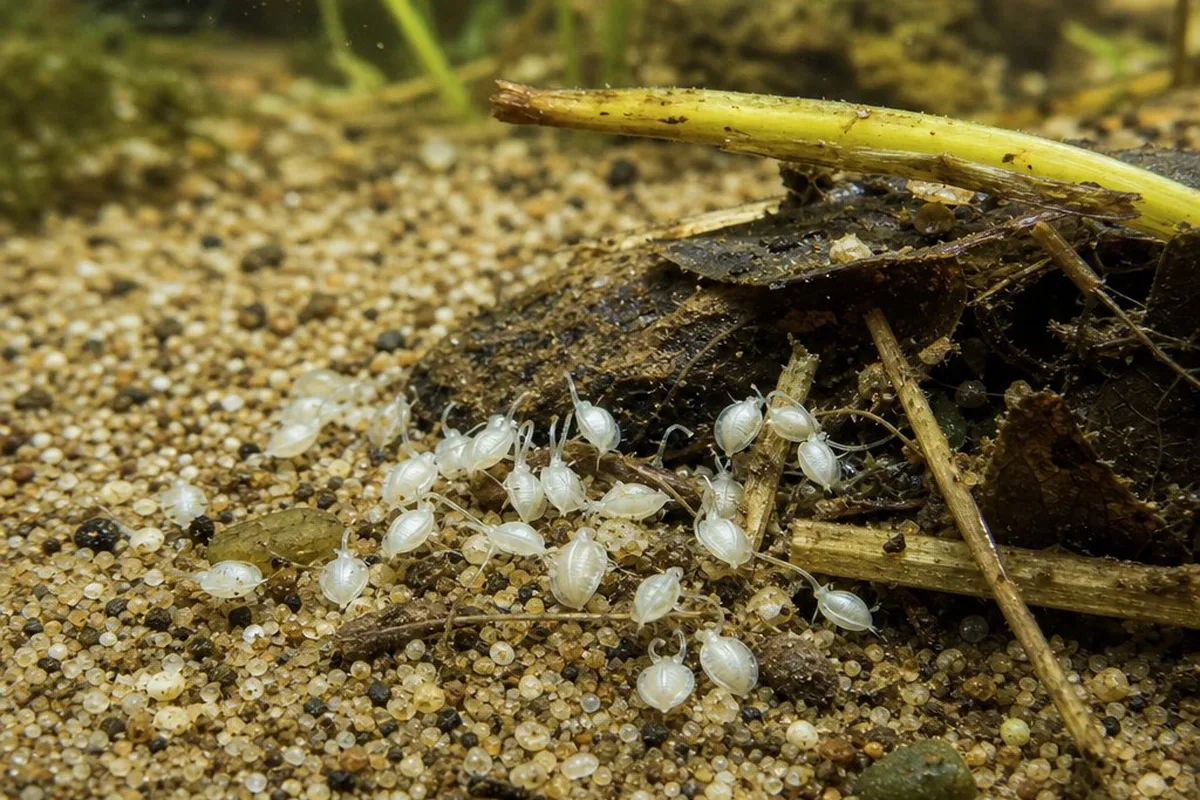
- Sand can work for species that naturally forage in soft substrate, but adds to the detritus and cleaning considerations covered in our guide on small white bugs in turtle tanks
How much this matters in practice also depends on tank size — in smaller setups like those covered in our musk turtle 20-gallon and 30-gallon turtle tank guides, substrate choice has an outsized effect on how easy the tank is to keep clean.
The One Decoration That Isn't Optional
Everything covered so far is genuinely flexible — rocks, plants, ornaments, and substrate all have multiple workable options depending on preference. The basking platform is different: it's a core husbandry requirement, not a style choice, and needs to be planned into the tank's layout from the start rather than added as an afterthought once the "decorative" decisions are made. A tank that looks great but doesn't have an accessible, appropriately lit basking area isn't fully set up yet, regardless of how the rest of the decor turned out.
Quick Reference
- Avoid sharp edges, swallowable pieces, and unrated paints/coatings on any decor item
- Live plants often get uprooted or eaten — hardy attachment-based species or artificial plants hold up better
- Substrate is a separate choice: bare-bottom and large smooth rock minimize ingestion risk and ease cleaning
- Turtles regularly dig, bulldoze, and rearrange decor — heavier or partially buried items stay put better
- The basking platform is a non-negotiable requirement, not a decorative choice
- Seashells and coral-based decor have their own water chemistry considerations, covered separately