By Hektor Jorgo
It's a question that comes up naturally once a turtle tank is established and a keeper notices the bare-looking substrate: could some shrimp live in there too, the way they might in a community fish tank? The honest answer depends a lot on what you're actually hoping will happen to the shrimp.
Short Answer
Most pet turtles will eat shrimp readily, and for many keepers, that's exactly the point — ghost shrimp and similar feeder shrimp are sometimes added to turtle tanks specifically as a live food source. If the goal is instead for shrimp to survive long-term as tank mates, the odds are generally low: many turtle species are omnivorous-to-carnivorous and view small, slow-moving invertebrates as food, and even turtles that don't immediately hunt shrimp live in tank conditions set up around the turtle's needs rather than the shrimp's. A separate tank is the more reliable option if keeping shrimp as pets, rather than turtle food, is the actual goal.
Turtles and Shrimp: A Predator-Prey Relationship in the Wild Too
It's worth starting from the basic biology here: in the wild, many freshwater turtle species are opportunistic omnivores, and small aquatic invertebrates — including shrimp, snails, insect larvae, and worms — make up a meaningful part of their natural diet, especially when they're young. A turtle encountering a shrimp in an aquarium is, in a sense, just doing what comes naturally. This isn't a case of an otherwise-peaceful animal suddenly turning aggressive; predation on small invertebrates is part of normal turtle behavior across many commonly kept species.
This is conceptually similar to whether crayfish eat snails in a freshwater tank — an opportunistic omnivore encountering a slower-moving invertebrate tank mate, where the outcome is fairly predictable even if it's not the keeper's intent.
If the Goal Is Feeding, Not Cohabitation
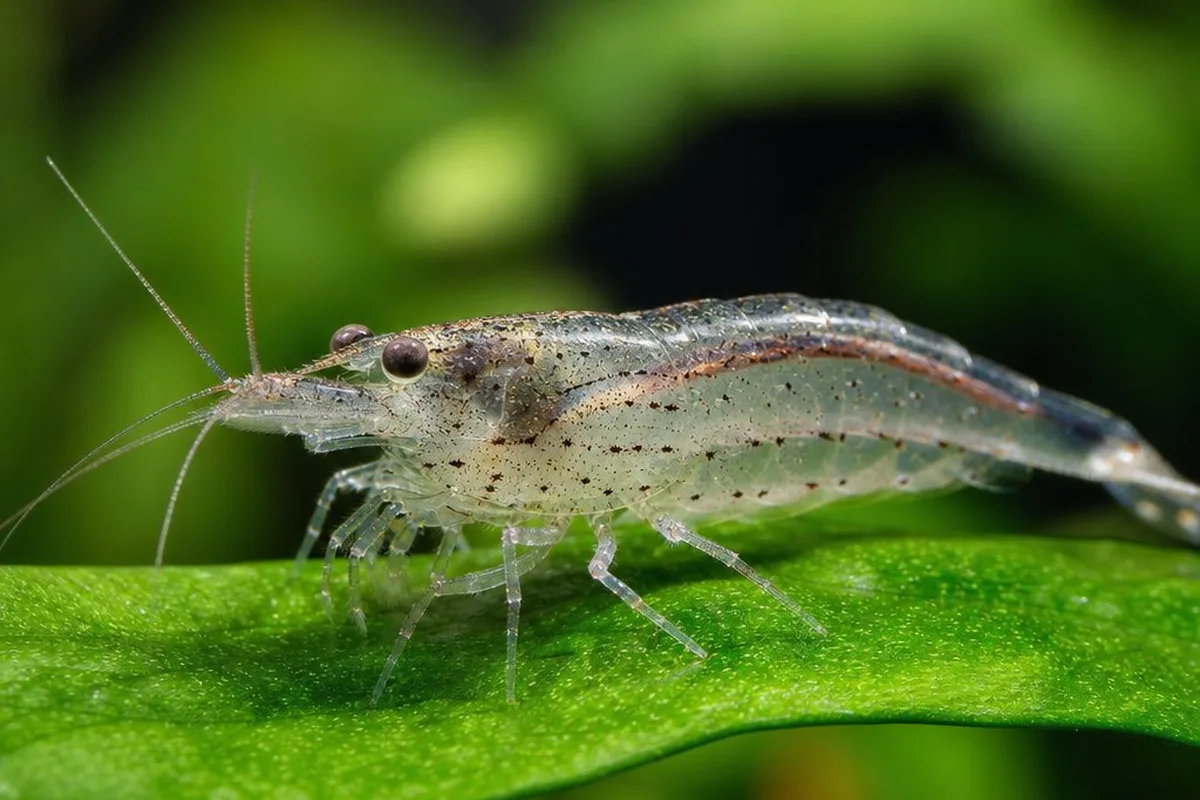
Some keepers add shrimp to a turtle tank specifically as a feeding strategy — ghost shrimp are inexpensive, widely available, and provide some natural hunting behavior and dietary variety for the turtle. In this context, the shrimp being eaten quickly isn't a failure, it's the expected and intended outcome. If this is the goal, there's not much to troubleshoot: add shrimp in the quantity you're comfortable with as an occasional food source, and expect them to be consumed within a relatively short time.
If the Goal Is Long-Term Cohabitation
This is where expectations are worth managing carefully. Even setting aside direct predation, a turtle tank presents a few challenges for shrimp as long-term residents:
- Water conditions tuned for the turtle — turtle tanks are often run warmer, and filtration is typically sized around the turtle's substantial waste output rather than the more modest needs of a shrimp population
- A turtle that isn't hunting today might hunt tomorrow — turtle feeding behavior isn't perfectly consistent, and a turtle that ignores shrimp while well-fed may behave differently at other times
- Limited hiding spots in many turtle setups — turtle tanks often have less dense planting or rockwork than a typical shrimp tank, partly because turtles can disturb or destroy live plants, leaving shrimp with fewer places to retreat
How much of a constraint any of this is also depends on the tank itself — a turtle in a tank that's already on the small side for its size, as discussed in our guides on musk turtles in 20-gallon tanks and turtles in 30-gallon tanks, has even less spare space and cover to offer a shrimp population than a more generously sized setup.
None of these factors make cohabitation strictly impossible — some keepers do report shrimp surviving for stretches in turtle tanks, particularly in larger setups with well-fed turtles and plenty of cover — but they stack up against the shrimp's odds in a way that's hard to fully mitigate.
A Practical Alternative
If the appeal of shrimp is genuinely about keeping shrimp — watching their behavior, maintaining a shrimp colony, that kind of thing — a separate, smaller tank set up around shrimp-appropriate conditions is a far more reliable path than trying to make a turtle tank work for both animals. This sidesteps the predation question entirely and lets both the turtle and the shrimp live in conditions suited to their actual needs, rather than a compromise that mostly favors the turtle by default.
Quick Reference
- Most pet turtles will eat shrimp — many turtle species are omnivorous-to-carnivorous toward small invertebrates
- Ghost shrimp are the most commonly used option, often added specifically as turtle food
- If the goal is feeding, shrimp being eaten quickly is the expected outcome, not a problem
- If the goal is long-term cohabitation, turtle tank conditions (temperature, filtration, limited cover) work against shrimp survival
- A turtle that doesn't hunt shrimp immediately may still do so later — behavior isn't fully predictable
- A separate tank is the more reliable option for keeping shrimp as pets rather than turtle food
- Shrimp are crustaceans, not fish — relevant to any medications used in a shared tank