By Hektor Jorgo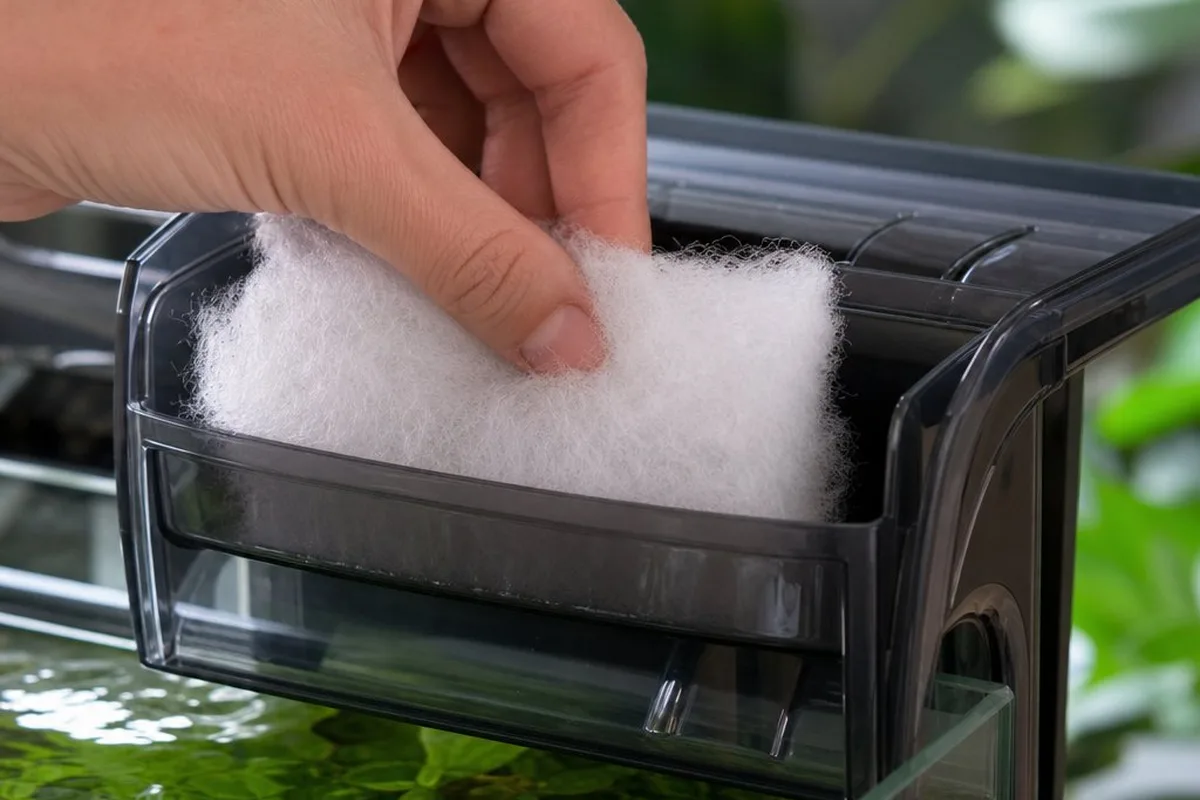
"Cotton wool" is one of those aquarium terms that's stuck around informally even though it's not quite accurate — and the gap between what people call it and what it actually is matters if you're ever tempted to substitute something from the bathroom cabinet.
Short Answer
The white fluffy material in most aquarium filters is polyester filter floss (or filter wool) — a synthetic mechanical filtration media, not actual cotton. It traps fine suspended particles as water passes through, "polishing" the water, and is designed to hold up to repeated rinsing without breaking down. Real cotton — including cosmetic cotton balls or pads — isn't a good substitute: it degrades in water over time and may contain additives (bleaches, fragrances) that aren't meant for aquarium use. Aquarium-rated filter floss is inexpensive and sold in bulk specifically for this purpose, making a substitute mostly unnecessary anyway.
Polyester Floss vs. Actual Cotton
The resemblance is understandable — both are white, soft, and fibrous at a glance. But the materials behave differently in the one environment that matters here: continuously wet, inside a filter, for weeks or months at a time.
- Polyester filter floss is a synthetic fiber engineered to retain its structure through repeated soaking, rinsing, and reuse. It traps particles effectively without breaking apart into the water itself.
- Real cotton is a natural fiber that breaks down with prolonged water exposure — over time, it can start disintegrating, potentially shedding fibers into the tank or becoming a soggy mass that's harder to rinse clean and less effective at trapping debris.
For a media that's expected to sit wet and under flow continuously, polyester's durability is the whole reason it's the standard choice — not a brand preference, but a practical one.
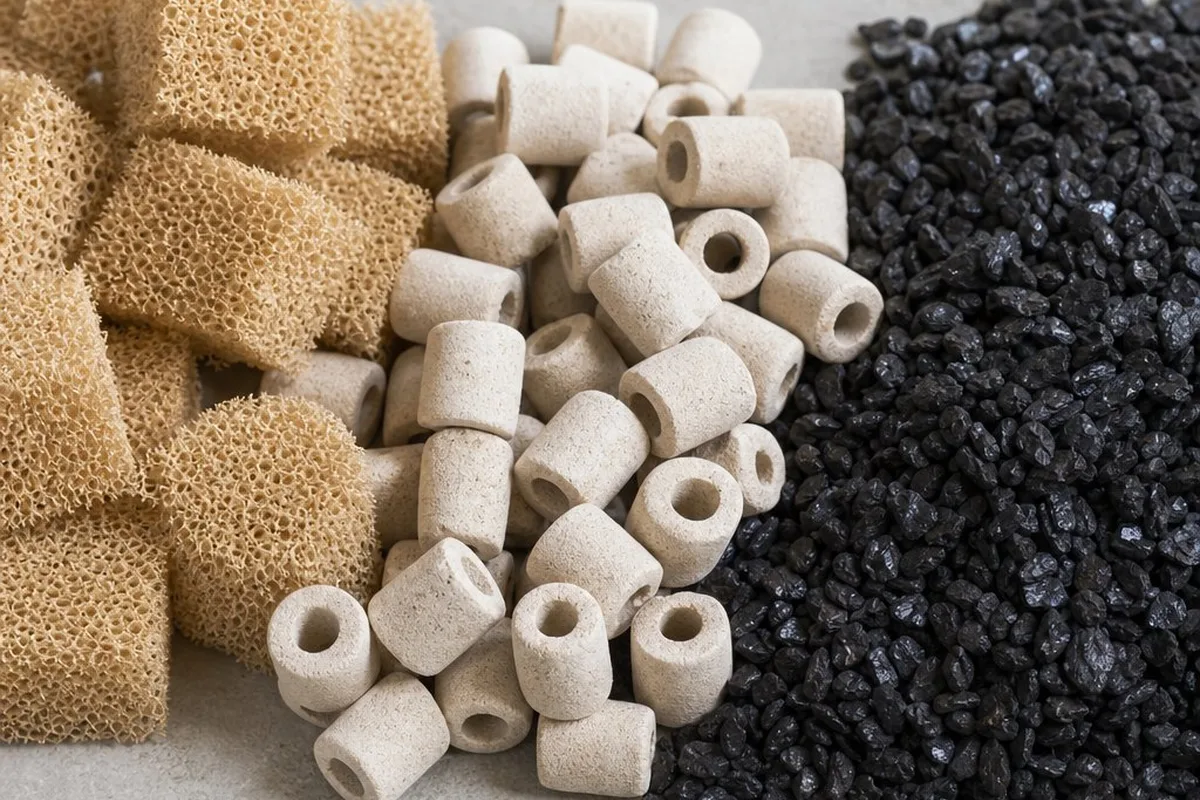
Standard floss handles general debris well, but for especially fine haze or dust that floss lets through, some keepers add a denser polishing media on top of it — covered in our review of CaribSea's Bio-Magnet clarifying media, including where it fits relative to floss and what it doesn't fix.
Why Cosmetic Cotton Products Are a Bad Substitute
Beyond the durability issue, cotton balls and cotton pads sold for cosmetic or medical use often go through manufacturing processes that involve bleaching agents, fragrances, or other additives — none of which are intended to end up dissolved or dispersed into aquarium water, and none of which have been formulated with aquarium safety in mind. Even if a particular product seems "plain," there's no way to verify from the packaging that it's free of anything that could affect water chemistry or fish health over time.
If you're genuinely out of filter floss and need something immediately, a clean synthetic sponge (unused, no soap residue) or a piece of clean nylon mesh/pantyhose stretched over the intake — common short-term fixes discussed in fishkeeping communities — are safer stopgaps than reaching for cosmetic cotton products, while you wait to get proper aquarium-rated floss.
Maintenance: Rinse Often, Replace When Degraded
Filter floss follows the same general mechanical-media pattern covered in our guide on how often to change filter media:
- Rinse regularly in old tank water (not tap water, to avoid harming any bacteria that have colonized it) — commonly every one to two weeks, more often in heavily stocked tanks.
- Replace when it's physically degraded — compacted to the point it restricts flow, falling apart, or no longer rinsing back to a usable state.
- Discoloration alone isn't a reason to replace it. Floss turning brown or gray reflects the particles it's successfully trapping — that's the media doing exactly what it's for, not a sign it's failing.
Quick Reference
- The "cotton wool" in most filters is polyester filter floss, not actual cotton
- Polyester floss holds its structure through repeated rinsing; real cotton degrades in water
- Cosmetic cotton balls/pads may contain bleaches or additives not meant for aquarium water
- In a pinch, a clean synthetic sponge or mesh is a safer temporary substitute than cosmetic cotton
- Rinse floss regularly; replace only when compacted, degraded, or falling apart
- Discoloration (brown/gray) is normal and means the media is working, not failing
- Aquarium-rated floss is sold cheaply in bulk — a substitute is rarely necessary