By Hektor Jorgo
"Crushed coral" is one of those aquarium products that sounds like it should be a single, simple thing — but depending on where you encounter it (a bag of freshwater cichlid substrate, a filter media additive, a marine sump), it's doing slightly different jobs while relying on the same underlying chemistry.
Short Answer
Crushed coral is a calcium carbonate (usually aragonite) material, sold as coarse aquarium substrate or filter media, that slowly dissolves and raises pH and hardness (GH/KH) in the water around it. That single property is the reason it shows up in very different contexts: as a substrate for African cichlid tanks that benefit from hard, alkaline water, as a filter media additive in canister filters or sumps for ongoing buffering, and occasionally as marine aquarium media, though reef sand and live sand are more common choices for marine display substrates today. Whether crushed coral belongs in your tank depends entirely on what your animals need — it's a tool, not a default.
What Crushed Coral Is Made Of
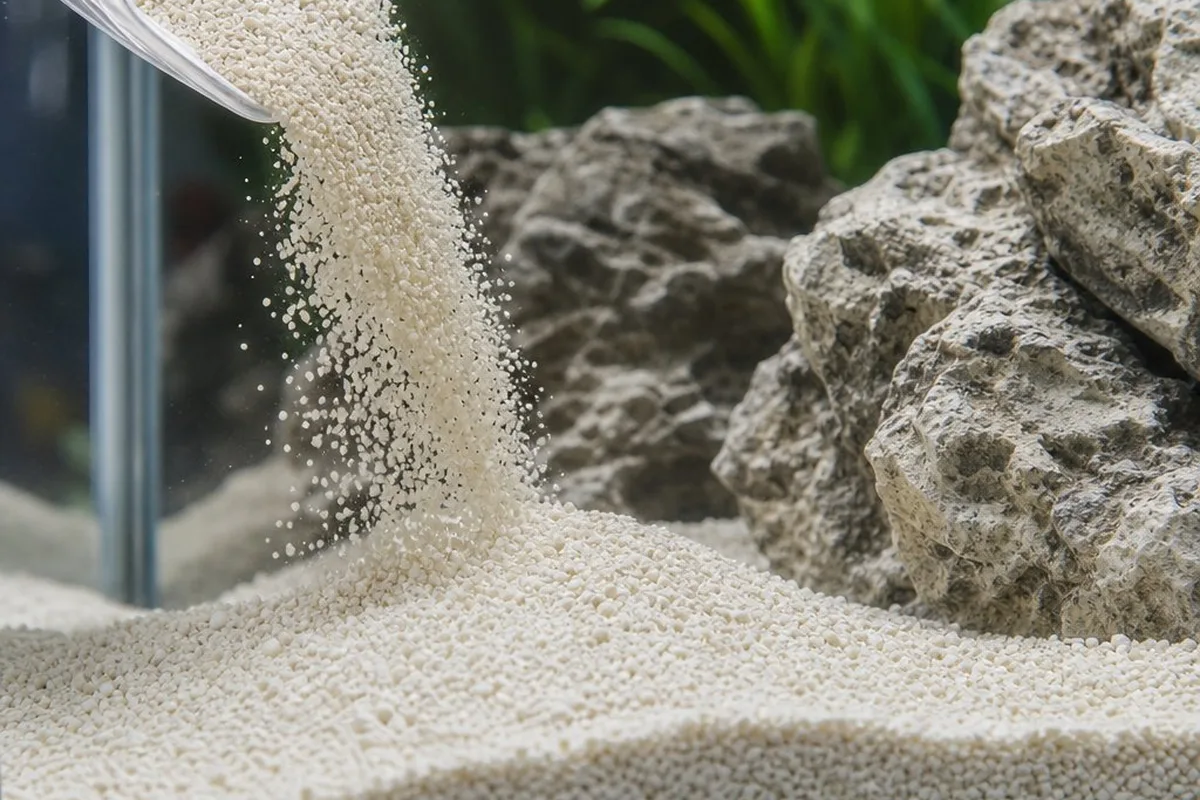
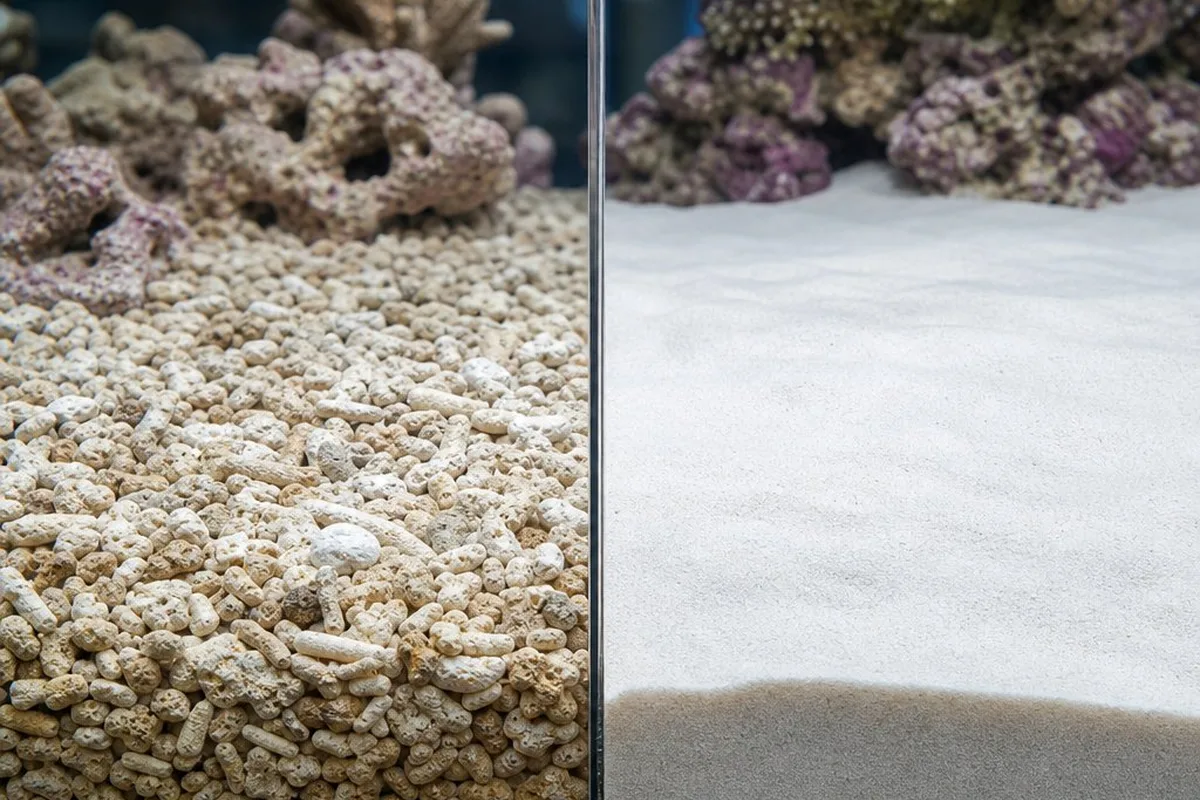
Crushed coral is composed of calcium carbonate, typically in its aragonite crystal form — the same basic mineral that makes up the skeletons of stony corals, many marine shells, and the structures discussed in our brain coral skeleton guide. Aquarium-grade crushed coral is processed into coarse, angular fragments, generally larger and chunkier than the fine grains sold as "reef sand" or "aragonite sand."
It's worth being clear about sourcing here too: the name "crushed coral" describes what the material is, not necessarily where it came from. Most commercial crushed coral is produced from quarried or processed aragonite deposits rather than coral skeletons harvested directly from living reefs — a distinction that matters if you're also thinking about the legality and ethics of collecting coral material from beaches, which is a largely separate question from buying a bag of substrate at a pet store.
What Crushed Coral Actually Does in Water
The defining property of crushed coral — and the reason it's used at all — is that calcium carbonate slowly dissolves in water, releasing calcium and carbonate ions. This has two related effects:
- Raises general hardness (GH) by adding dissolved calcium (and often magnesium, depending on the exact product) to the water
- Raises and buffers carbonate hardness (KH) and pH, resisting downward pH drift and tending to stabilize pH on the alkaline side
This is the same mechanism covered in detail in our reef sand in freshwater tanks guide — crushed coral and reef sand are close relatives, differing mainly in particle size and how they're typically packaged and sold. An inert substrate like plain gravel or silica sand, by contrast, doesn't meaningfully react with the water at all.
Where Crushed Coral Gets Used
Freshwater African cichlid tanks are the most common deliberate use case. Cichlids from Lake Malawi, Tanganyika, and Victoria come from naturally hard, alkaline water, and crushed coral — whether as a substrate or as media in a filter — provides ongoing buffering toward that chemistry without constant manual dosing. This is often paired with other hardness-focused approaches, like Epsom salt for African cichlids, in setups such as a 75-gallon peacock cichlid tank.
Filter and sump media is another common placement. Rather than using crushed coral as the main display substrate, some keepers place it in a media bag inside a canister filter, or in a sump tray, where water flows through it continuously. This concentrates the buffering effect into a controlled area and makes it easier to add, remove, or replace without disturbing the display substrate — relevant when thinking through how much crushed coral to use to raise pH, since media-bag dosing and full-substrate dosing behave differently.
Marine aquariums historically used crushed coral as a display substrate, but live sand (fine aragonite sand seeded with bacteria and microfauna) has largely become the standard for reef tank substrates, since it supports the tank's biological filtration in ways plain crushed coral doesn't. Crushed coral can still appear in marine setups as sump or refugium media, though for most home reef tanks it's a secondary rather than primary substrate choice. Our crushed coral vs. live sand comparison covers this substitution in more depth, including why particle size — not just the underlying chemistry — drives most of the practical differences between the two.
Crushed Coral Isn't a One-Size-Fits-All Additive
It's worth repeating: crushed coral's core property — raising pH and hardness — is exactly what some tanks need and exactly what other tanks should avoid. Before adding it to any tank, the practical questions are the same ones covered in our reef sand in freshwater tanks guide:
- What does your fish actually need? Hard-water species (many African cichlids) benefit; soft-water and blackwater species (altum angelfish, many South American tetras) don't.
- What's your starting water chemistry? If your tap water is already hard and alkaline, you may not need additional buffering at all.
- Where will you place it? Full substrate, partial substrate, or filter/sump media all have different effects and are easier or harder to remove later.
If you're starting from "I want to raise my tank's pH and I've heard crushed coral can do that," the next practical step is figuring out roughly how much to use and how to test whether it's working — covered in our crushed coral pH guide.
Quick Reference
- Crushed coral is a coarse calcium carbonate (aragonite) substrate/filter media that slowly raises pH and hardness
- Good fit: hard-water freshwater tanks, especially African cichlids; poor fit: soft-water/blackwater species
- Differs from "reef sand" mainly in particle size — both rely on the same dissolving calcium carbonate chemistry
- Not the same as live sand — no bacterial/microfauna seeding, just the mineral substrate
- Commonly placed as display substrate, or as filter/sump media for more controlled buffering
- Most commercial crushed coral is processed aragonite, not wild-harvested reef material
- Buffering effect diminishes as the material gets coated with detritus and biofilm over time