Can Fish Get Drunk? What Happens When Substances Enter Their Water

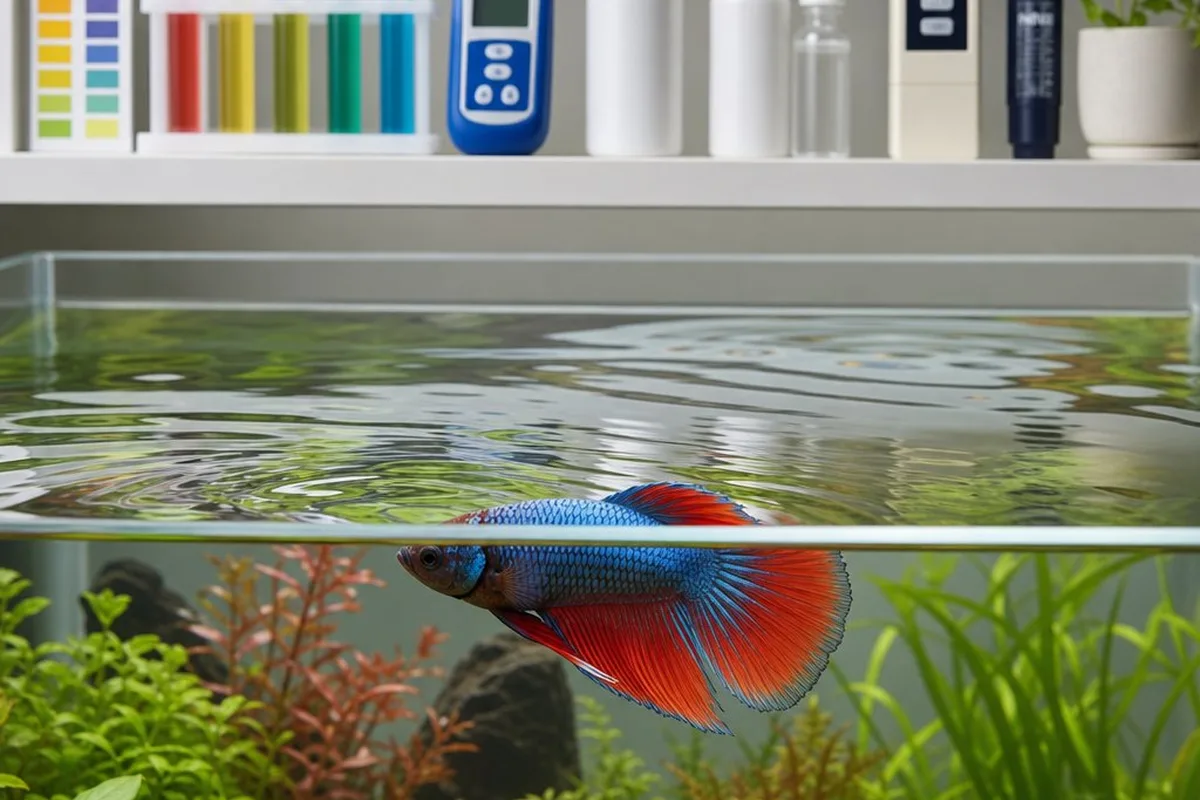
A fish swimming near the surface of an aquarium, with a bottle of cleaning spray sitting nearby on a shelf

Quick Facts

Can Fish Get 'Drunk'?
In a real physiological sense, yes — fish exposed to dissolved alcohol can show measurable behavioral effects
Why Gills Make This Different
Substances dissolved in water pass directly into the bloodstream via gills — a much more direct route than ingestion
Research Use
Fish (notably zebrafish) are used in some studies of alcohol's effects on behavior, precisely because of this direct exposure route
Real-World Risk
Household chemicals, hand sanitizer residue, and cleaning product fumes near tank water are a genuine hazard for the same reason
Small Amounts Matter More
Because of direct gill absorption, concentrations trivial if ingested can have outsized effects when dissolved in water
Medications Use This Same Route
Many fish medications work via gill absorption — the difference is intentional, measured dosing vs. accidental contamination
Not the Same as 'Drinking'
Fish exposure is via gills and skin, not oral intake the way the word 'drunk' implies for land animals
Bottom Line
'Drunk' isn't quite the right word, but dissolved substances do affect fish fast and directly — a genuine safety consideration

It sounds like a joke question, but it points at something genuinely important about how fish interact with their environment — and why aquarists are often more careful than seems necessary about what goes near a tank.

Direct Answer: Not "Drunk" Exactly, But the Underlying Mechanism Is Real

Fish exposed to alcohol dissolved in water can show measurable behavioral changes — research on zebrafish has used exactly this approach to study intoxication-like effects. The reason this works (and the reason it matters far beyond a hypothetical about alcohol) is that fish absorb dissolved substances directly through their gills into the bloodstream — a much more direct route than the digestive process land animals rely on for ingested substances. This is the same basic mechanism behind both a real safety concern (accidental contamination from household chemicals) and a real tool (medications dosed into tank water).

Why Gills Change Everything

A gill's job is to let dissolved gases — oxygen in, carbon dioxide out — move efficiently between water and blood, covered in more depth in our guide to why fish can't breathe air. That same thin, highly permeable tissue doesn't selectively let through only oxygen and carbon dioxide — other dissolved substances can cross the same barrier, often efficiently, simply because the tissue is built for efficient exchange in general. The result is that fish are, in a real sense, continuously exposed to whatever's dissolved in their water in a way that land animals generally aren't to whatever's in their immediate environment.

The Practical Safety Angle

This is why aquarists tend to be careful about:

  • Hands before reaching into a tank — lotion, sanitizer, and other residues
  • Sprays and aerosols used near an open tank — cleaning products, air fresheners, and similar
  • Anything dissolved or settled onto the water's surface that wasn't put there deliberately

None of this is about fish being unusually "fragile" — it's a direct consequence of how efficient gill absorption is, the same property that makes respiration possible in the first place. The same concern applies outside the aquarium hobby too — anglers handling a fish during catch-and-release can transfer sunscreen, repellent, or other substances from their hands through this same pathway, one of several handling factors covered in our guide to whether fishing hurts fish.

The Flip Side: This Is How Medications Work

The same gill-absorption pathway is what makes dosing medications into tank water an effective treatment approach at all — a conditioner like Prime, or an antiparasitic/antibacterial medication, reaches the fish through this same route. The difference between a medication and an accidental contaminant isn't the mechanism — it's whether what's dissolved, and at what concentration, is known and intentional. A measured dose of a formulated product is a controlled use of gill absorption; an unknown substance at an unknown concentration is the same pathway working against you.

Quick Reference

  • Fish exposed to dissolved alcohol show measurable behavioral effects — used in some research contexts
  • Gills allow dissolved substances to pass directly into the bloodstream, not just oxygen/CO2
  • This makes fish more sensitive to dissolved substances than the amounts might suggest
  • Household chemicals, sanitizer residue, and aerosols near open tanks are a real (if often overlooked) risk
  • The same gill-absorption pathway is what makes water-dosed medications effective
  • The difference between "medication" and "contamination" is whether the substance and dose are known

Frequently Asked Questions

Can fish actually get 'drunk' from alcohol in the water?

In a real, measurable sense, yes — though 'drunk' is a loose way of describing it. Research on fish (notably zebrafish, a common model organism) has used ethanol dissolved in water to study behavioral effects, because fish exposed this way show changes in activity, social behavior, and movement patterns that researchers can measure and compare — the kind of effects that, in everyday language, would be described as intoxication. This works because of how fish absorb substances, covered in the next answer — it's not that fish are drinking alcohol the way a person would, but the physiological exposure route still produces real behavioral effects. None of this means alcohol belongs anywhere near aquarium water in a home setting — it's a research tool used in controlled, measured contexts, not a reason to think a small amount in a home tank would be harmless.

Why are fish so sensitive to substances dissolved in their water?

Because gills provide an extremely direct path from the surrounding water into the bloodstream. Land animals that ingest a substance have it pass through a digestive system first — absorption happens gradually, and a lot gets processed (or not absorbed at all) along the way. Fish, by contrast, have gills constantly exposed to the surrounding water, with thin, blood-rich tissue specifically built to let dissolved gases (oxygen, carbon dioxide) move directly into and out of the blood. That same structure that makes respiration possible also means other dissolved substances — not just oxygen — can cross that same barrier, often quite efficiently. The practical result: a concentration of something dissolved in the water that would be negligible if a person, say, touched it or even ingested a similar amount, can represent a much more direct and significant dose for a fish whose gills are continuously exposed to it.

What household products or substances are a real risk near aquarium water?

Quite a few common items, mostly because of how easily they can transfer into water without anyone intending it to happen. A few examples worth being aware of: hand sanitizer or lotion residue on hands before reaching into a tank; cleaning product fumes or residue from sprays used near an open tank, which can settle onto the water's surface or be absorbed into it; aerosols of any kind used in the same room as an open-top tank; and medications or supplements (human ones) that end up near tank water by accident. None of these are designed to go into aquarium water, and because of the direct gill-absorption pathway, even small amounts can matter more than intuition suggests. The general practical takeaway is to be mindful of what's near an open tank and what's on your hands before they go in the water — not out of excessive caution, but because the exposure route for fish is genuinely more direct than it would be for a person in the same situation.

Is this the same mechanism that fish medications use?

Yes, in terms of the basic mechanism — medications dosed into aquarium water rely on the same gill (and skin) absorption pathway to reach a fish's system. This is actually why medicating fish by adding something to the water works at all — it's a deliberate use of the same direct-absorption route that makes accidental contamination a concern. The difference is intention and measurement: medications are formulated and dosed based on known concentrations for a known therapeutic effect, the way Prime and similar conditioners are dosed based on tank volume for a specific detoxifying effect. Accidental contamination, by contrast, involves unknown substances at unknown concentrations — which is exactly the combination that makes it risky. The underlying biology (gills as a direct absorption route) is the same in both cases; what differs is whether what's being absorbed, and how much of it, is actually known and controlled.

Sources & Further Reading

  1. Zebrafish as a Model for Behavioral Research — National Institutes of Health
  2. Aquarium Water Safety Discussion — Practical Fishkeeping
Hektor Jorgo

About the Author: Hektor Jorgo

Co-Founder & Marine Biologist

Hektor is a co-founder of Sea Life Planet and has kept reef and freshwater aquariums for over 15 years. He holds a background in marine biology and focuses on species care accuracy, water chemistry, and tank husbandry.