By Hektor Jorgo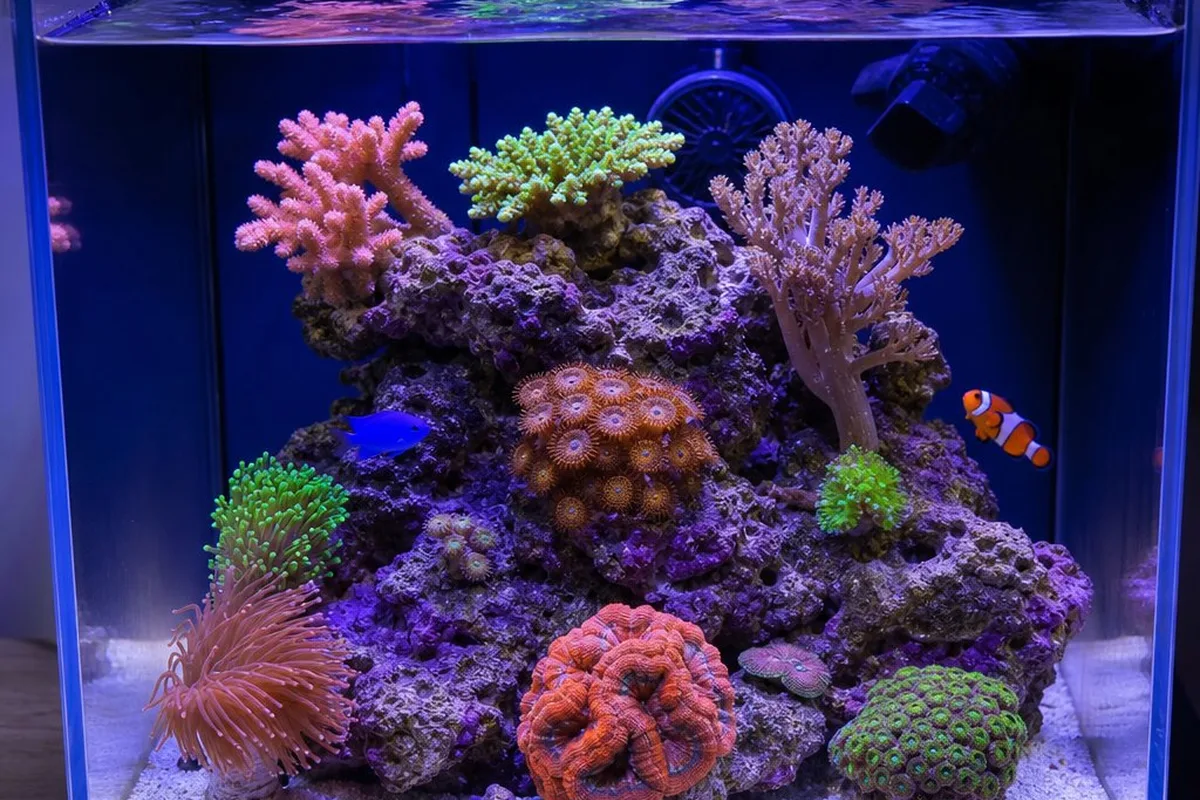
"How many corals can I fit?" is a natural first question for a 10-gallon tank — but it's also the wrong question, because corals don't come in fixed sizes. The frag you place today and the colony it becomes in a year are very different things, space-wise.
Short Answer
There's no fixed number of corals for a 10-gallon tank — unlike fish stocking, which often references rough ratios (covered in our saltwater fish for a 10-gallon tank guide), coral stocking depends on eventual size and growth form, not headcount. The useful planning question is: how much space will each coral eventually need, and does the total — with spacing for growth — fit the tank? Starting with fewer colonies and more spacing, and adding over time as growth becomes clear, is generally lower-risk than stocking densely from the start.
Plan for Eventual Size, Not Current Size
A small frag's size at purchase tells you almost nothing about how much space it'll need in a year. Our branching coral overview covers how different growth forms occupy space differently as they grow:
- Branching corals can eventually fill significant vertical and horizontal space
- Encrusting/plating corals spread mainly across a surface
- Massive/mounding corals expand outward and upward as a single mass
In a 10-gallon tank, this means being conservative about how many "eventually large" corals to include, and leaving physical space between frags for future growth — the same spacing principle covered in our chalice coral guide and zoanthid tree guide, just with less total room to work with.
What Happens With Insufficient Spacing
The main risk is corals growing into contact and competing — the "zoa wars"-type interaction covered in our Utter Chaos zoa guide and the broader allelopathy discussion in our chalice coral guide. In a 10-gallon tank, contact can happen faster simply because there's less distance between colonies to begin with. Beyond direct contact, overcrowding can affect lighting and flow to individual colonies — a coral shaded or flow-blocked by a growing neighbor can show the kind of reduced extension covered in our coral stress guide, even without physical contact.
Start Smaller Than Feels Necessary
Starting conservatively and adding over time tends to work out better than stocking densely upfront — the same sequencing approach covered in our guide on when to add corals to a new tank. Fewer colonies with more spacing gives you room to observe actual growth before deciding whether there's space for more, rather than committing to a dense layout and dealing with overcrowding once growth catches up.
It's also worth deciding upfront whether a 10-gallon tank will be coral-focused or also house fish — our coral-only tank guide and coral-compatible tank mates guide cover the relevant planning considerations either way.
Quick Reference
- There's no fixed "number of corals" for a 10-gallon tank — plan by eventual footprint, not headcount
- A coral's size at purchase doesn't predict how much space it'll need once grown
- Growth form (branching, encrusting, massive) determines how a colony occupies space over time
- Leave spacing between colonies to reduce the chance of contact and allelopathy
- Overcrowding can block light/flow to some colonies even without direct contact
- Start with fewer colonies and more spacing, adding over time as growth becomes clear
- Decide early whether the tank will be coral-focused or also house fish