By Hektor Jorgo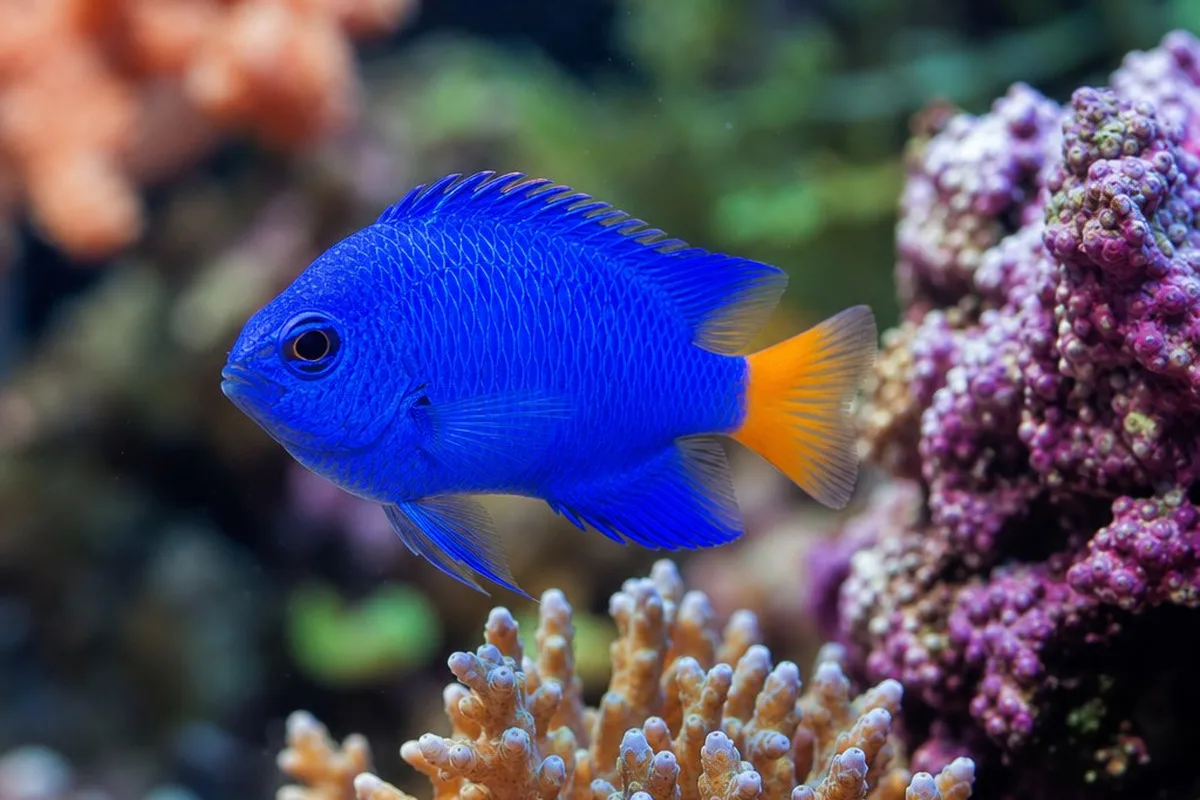
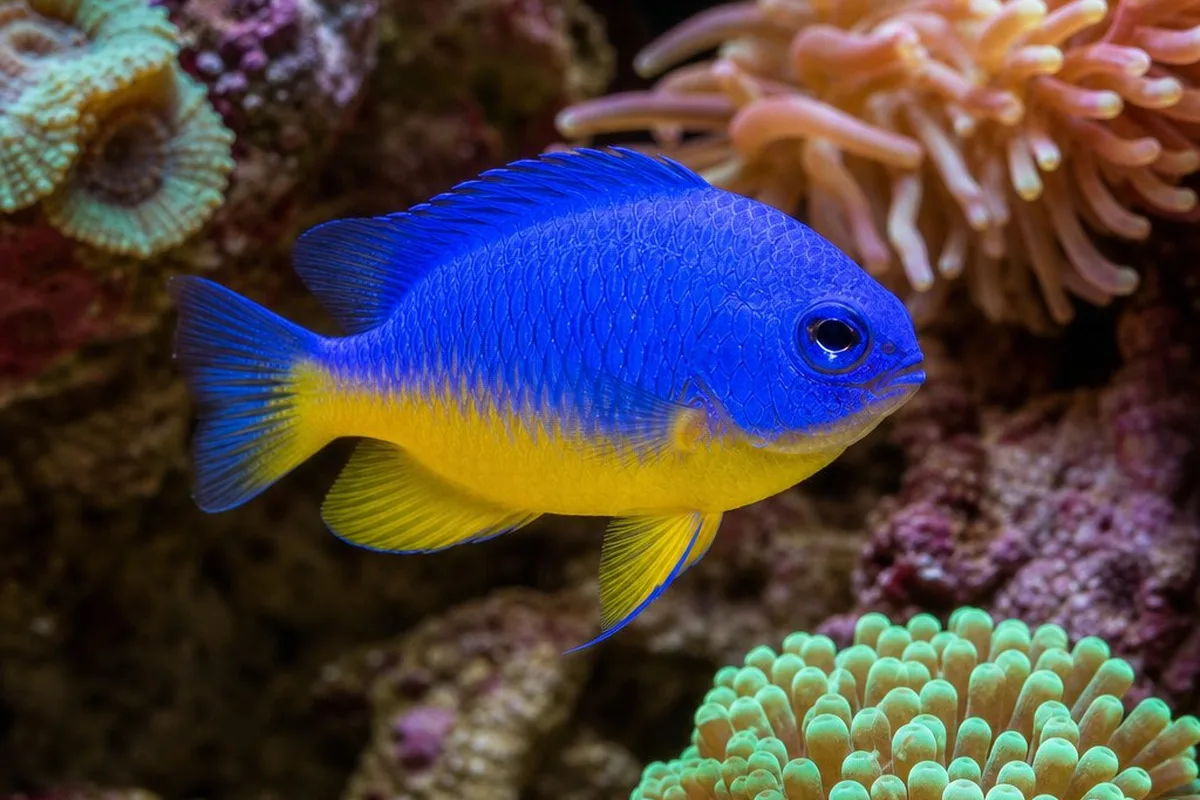
The blue devil damselfish (Chrysiptera cyanea) is, in a lot of ways, the fish people picture when they hear "blue damsel" — a small, electric-blue fish that practically glows under reef lighting. It's also, true to its common name, one of the scrappier small fish you can put in a tank, with a temperament that punches well above its 3-inch weight class. It's frequently confused with the yellowtail damselfish (Chrysiptera parasema), a different species entirely with a very different look and a noticeably calmer disposition. This guide covers what the blue devil damselfish actually needs, and how to manage the aggression that comes with it.
Appearance and Natural Range
Blue devil damselfish are small, oval-bodied fish reaching about 3 inches (7.5 cm). The body is a deep, saturated blue from head to tail — there's no yellow tail or fin coloration, which is the key visual difference from the yellowtail damselfish. Sexual dimorphism is fairly visible in adults: mature males typically develop a yellow-to-orange tinge on the tail and sometimes the dorsal fin edge, while females and juveniles tend to be solid blue with only a thin dark margin on the tail.
In the wild, C. cyanea ranges across the Indo-Pacific, commonly found in shallow lagoons, reef flats, and surge channels at depths of 1-12 meters, often in small groups dominated by a single male over several females. This harem-style social structure in the wild is part of why blue devil damselfish behave the way they do in captivity — males in particular are hardwired to defend territory and control access to females, and a home aquarium doesn't switch that instinct off.
Tank Requirements
Tank Size
A single blue devil damselfish does well in a tank as small as 20 gallons (75 liters). If you want to attempt a male-female pair, 40+ gallons gives the female more room to retreat from an overly persistent male, and reduces the odds of the pairing turning into one-sided harassment. Avoid keeping two males together in anything smaller than a very large, heavily structured saltwater aquarium — and honestly, even then it's a gamble.
Aquascaping
Provide dense live rock with multiple caves and overhangs — a blue devil damselfish will pick one as a home base and defend the surrounding area fiercely. More rockwork generally means more "edges" for territories to form around, which can reduce (though not eliminate) aggression by giving subordinate fish places to retreat that are out of the dominant fish's sightline.
Water Parameters
| Parameter | Target Range |
|---|---|
| Temperature | 72-78°F (22-26°C) |
| Salinity | 1.020-1.025 SG |
| pH | 8.1-8.4 |
| Ammonia / Nitrite | 0 ppm |
| Nitrate | <20 ppm (lower for reef tanks with sensitive corals) |
| Alkalinity | 8-12 dKH |
Blue devil damselfish are extremely hardy and, like most damsels, are often used to "season" a tank during the early cycling period because they shrug off the ammonia and nitrite spikes that would stress more delicate fish. Don't let that hardiness become an excuse for sloppy maintenance — chronic poor water quality will still dull this fish's signature blue and make it more prone to disease over time, even if it's the last fish in the tank to show it.
Diet and Feeding
Blue devil damselfish are unfussy omnivores that will eat just about anything offered:
- High-quality marine flake food
- Marine pellets (1-2mm)
- Frozen mysis shrimp or brine shrimp, enriched if possible
- Nori/dried seaweed for grazing
Feed 1-2 times daily, offering only what's consumed in 2-3 minutes. This species has a robust appetite and will often be first to the food in a community tank — keep an eye on whether more timid tank mates are getting their share, especially during the first few weeks after introduction.
Tank Mates and Compatibility
Blue devil damselfish are on the more aggressive end of the damselfish spectrum, particularly males, and this is the single biggest factor in whether this fish works out in your tank.
Key points:
- Add the blue devil damselfish last, or as one of the first fish in a brand-new tank with no other small fish yet present — either approach reduces the odds of it establishing dominance over fish that arrive afterward, or of it being bullied by fish that were already established.
- Good tank mates include the common clownfish, firefish, gobies, blennies, and other fish that either hold their own or occupy different areas of the tank (firefish, for instance, tend to stay in the water column or near a burrow rather than competing for the same rockwork).
- Avoid combining with other small blue damsels in anything but a large tank. A blue devil damselfish housed with an azure damselfish or yellowtail damselfish can result in persistent low-grade conflict, since similarly colored, similarly sized fish read as direct competitors. If you want to keep several Chrysiptera species together, a 50+ gallon tank with rockwork broken into distinct zones gives each fish room to claim its own patch.
- A domino damselfish will generally outcompete and dominate a blue devil damselfish once it reaches adult size — not a good long-term pairing in a tank under about 75 gallons.
Breeding in the Home Aquarium
Blue devil damselfish are egg-layers, and Chrysiptera cyanea is one of the Chrysiptera species that can form a stable male-female pair and spawn in a home reef tank under the right conditions — though it's less commonly reported than the closely related yellowtail damselfish, partly because successfully housing a pair without one fish harassing the other to death is the harder part of the equation.
What to expect if a pair forms:
- The male cleans a flat patch of rock — often tucked into a cave or under a ledge — over several days, becoming increasingly possessive of that spot.
- The female deposits a layer of small eggs on the cleaned surface, which the male fertilizes and then guards and fans almost continuously, chasing off anything (including much larger fish, and your hand) that approaches.
- Eggs typically hatch within about a week, usually after lights-out. The resulting larvae are pelagic and, in a typical reef tank with a sump, will mostly be drawn into the filtration system and lost unless you take active steps to capture them.
- Raising fry to adulthood requires a separate larval-rearing setup with green water and rotifers — a serious undertaking most aquarists don't pursue, even when a pair does spawn.
Even without intentions to breed, a guarding male blue devil damselfish becomes noticeably more aggressive than its already-assertive baseline — worth knowing before you reach into the tank near "his" rock during maintenance.
Common Health Issues
Blue devil damselfish are hardy and rarely the first fish to show problems, but watch for:
- Marine ich (Cryptocaryon irritans) — white spots on body and fins; damsels can carry this with minimal symptoms while passing it to more sensitive tank mates.
- Fin damage — often from aggressive encounters (either given or received), rather than disease. Check stocking and territory dynamics if you see ragged fins.
- Color fading — usually tied to stress, poor water quality, or insufficient hiding spots rather than illness.
A 2-4 week quarantine period for new fish remains the best general defense, even for a species this tough. It also serves a second purpose with this particular fish: a quarantine stay lets you observe whether you've ended up with a male or female before it goes into your display, since males develop the characteristic orange-tinged tail and tend to show more overt territorial behavior even in a bare quarantine tank. That information is genuinely useful for planning tank mates and stocking order ahead of time, rather than discovering it the hard way once the fish is established in your main system.
Quick Setup Checklist
- Tank: 20+ gallons (40+ if attempting a pair), fully cycled before adding fish
- Dense live rock with multiple caves and overhangs
- Salinity 1.020-1.025, temperature 72-78°F
- Marine flake/pellet diet plus occasional frozen mysis
- Stocking order: add blue devil damselfish last, or early into a fishless tank
- Avoid housing two males together; avoid pairing with other similarly colored small damsels in tanks under 50 gallons