By Hektor Jorgo
"What fish should I get for a saltwater tank?" is a question that's almost impossible to answer with a single list — saltwater fish span an enormous range of sizes, temperaments, and requirements, and the more useful starting question is usually what kind of tank are you building, not which fish are "best."
Direct Answer: Tank Style First, Then Species
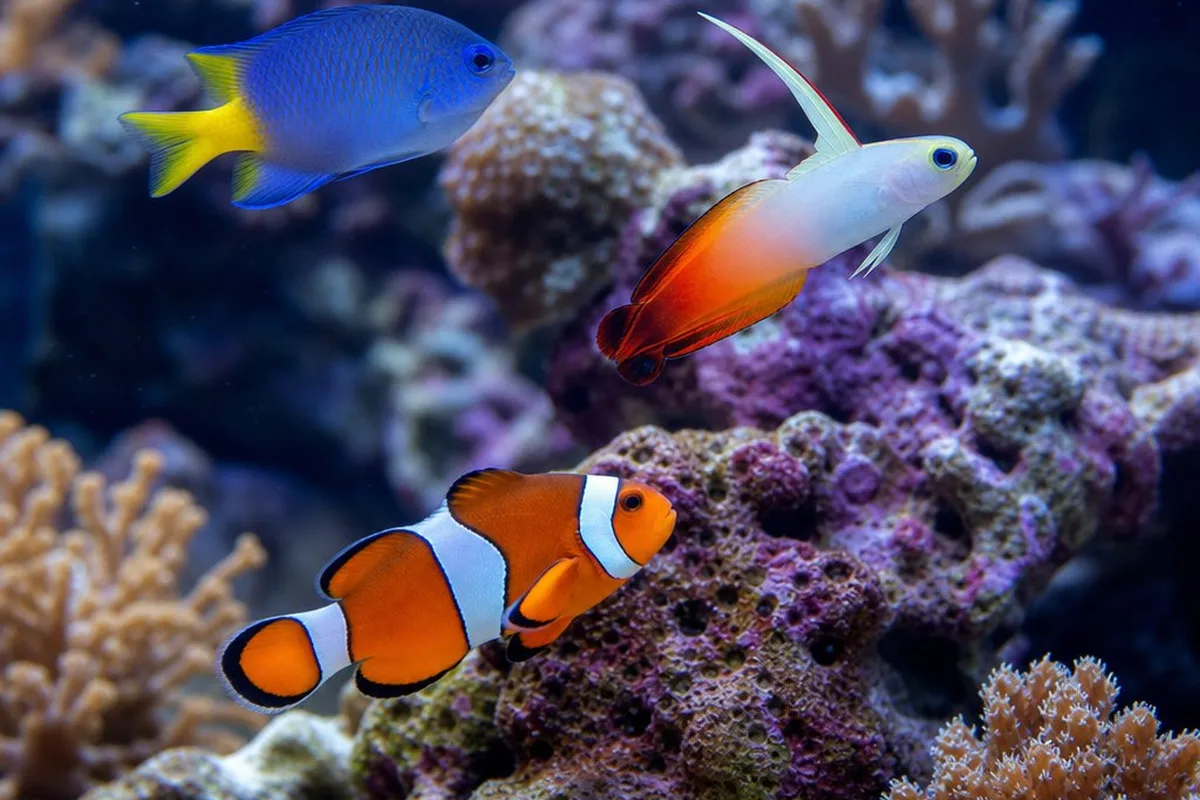
The single biggest factor narrowing down realistic saltwater fish choices is tank style — fish-only, FOWLR (Fish Only With Live Rock), or reef — not any individual species' general difficulty rating. A reef tank rules out fish known to disturb corals, while a fish-only tank opens up species that would otherwise be incompatible with invertebrates. Within whatever tank style you're working with, the major groups of saltwater fish (damselfish, clownfish/anemonefish, tangs, angelfish, wrasses, gobies, and the larger "personality" fish like puffers and triggerfish) each bring different size, temperament, and care considerations — and our beginner stocking guide covers specific picks for a new tank in more depth than this overview does.
Fish-Only, FOWLR, or Reef: Why This Comes First
These three tank styles aren't just aesthetic choices — they functionally determine your stocking list:
- Fish-only tanks (decorations, artificial rock, or bare-bottom setups) offer the most flexibility, including species that would eat or disturb live corals or invertebrates.
- FOWLR tanks add live rock for natural biological filtration and aesthetics without live corals — most fish-only-compatible species also work here, with the added benefit of a more natural-looking habitat and surfaces for beneficial organisms to establish.
- Reef tanks include live corals (and often other invertebrates like clams or shrimp), which narrows the list to species that won't pick at or disturb them — see our guide on fish for a reef tank for species that fit this category.
Deciding this before researching individual species avoids the common frustration of falling in love with a fish online only to find out it's a poor fit for the tank style you've already built.
Major Groups of Saltwater Fish
Damselfish and Clownfish (Anemonefish)
The most commonly recommended starting groups for new saltwater tanks. Damselfish are hardy, often brightly colored, and tolerate the water-quality swings of a tank still maturing biologically — though some species can become territorial as they mature. Clownfish are similarly hardy and widely available as captive-bred stock, with the added appeal of anemone-hosting behavior (though an anemone isn't required for a clownfish to thrive).
Tangs and Surgeonfish
Active, often brightly colored swimmers like the blue hippo tang that need substantial open swimming space as adults — tangs are a frequent example of a fish that looks appropriately sized as a juvenile but needs considerably more room within a year or two. Planning for adult size before purchase matters more for this group than almost any other.
Angelfish and Butterflyfish
A mixed group where reef compatibility varies significantly by species — some angelfish and butterflyfish are considered reef-safe with caution (may pick at certain corals or invertebrates), while others are more reliably reef-safe or more reliably not, depending on the specific species. This is a group where checking the individual species (not just "angelfish" as a category) before adding to a reef tank really matters.
Wrasses and Gobies
Generally smaller and often peaceful, with some species providing useful functions — certain wrasses are popular for pest control (flatworms, pyramidellid snails), and many gobies are substrate-sifters that help keep sand beds aerated. Some wrasses are also known jumpers, which affects whether an open-top tank is suitable.
Puffers, Triggerfish, and Eels
The "big personality" group — often hardy and engaging, but frequently not reef-safe, sometimes capable of eating smaller tank mates, and in several cases growing considerably larger than their appearance at purchase suggests. These can be excellent centerpiece fish in a tank planned around them, but are usually a poor fit for a community reef tank planned around smaller, more peaceful species.
Stocking Pace Matters as Much as Species Choice
Beyond which fish you choose, how quickly you add them affects how well a saltwater tank handles new arrivals. Adding fish one or two at a time, with enough time between additions for the biological filter to adjust and for new arrivals to settle in without competition from other recent additions, reduces stress on both the new fish and the existing tank inhabitants — this matters more in saltwater than freshwater because of marine fish's generally lower tolerance for ammonia and nitrite spikes.
Quick Reference
- Decide on tank style (fish-only, FOWLR, or reef) before researching individual species — it narrows the list more than difficulty ratings do
- Damselfish and clownfish are the most commonly recommended hardy starting groups for a newly matured tank
- Tangs and other large swimmers need adult-size planning, not just current-size tank fit
- Check reef-safe status at the species level, not just the family/group level
- Add new fish slowly — one or two at a time, with time between additions
- FishBase is a useful reference for a specific species' adult size, diet, and natural range before buying