By Hektor Jorgo
The AquaClear 110 and Emperor 400 both turn up regularly in recommendations for larger tanks — both are hang-on-back (HOB) filters from well-established brands, both handle substantial flow, and both have loyal followings. But they're built around different ideas of how biological filtration should work, and that difference is worth understanding before picking between them.
Short Answer
The AquaClear 110 is a hang-on-back filter rated up to around 110 gallons, built around a large open media basket that's flexible for custom media stacking — its biological filtration relies primarily on the surface area of its sponge media. The Emperor 400 is rated up to around 80 gallons (400 GPH), and adds dual rotating bio-wheels to its media cartridges — bio-wheels stay moist and retain their bacterial colony even during a brief power outage, which is the Emperor's signature feature. Beyond that core difference, the AquaClear has a more compact footprint and more open-ended media customization, while the Emperor's wider housing provides effective surface skimming alongside its bio-wheel filtration. Both are solid choices; the better fit depends on whether media flexibility or outage-resilient biological filtration matters more for a given tank.
Two Different Approaches to Biological Filtration
This is the core distinction between these two filters, and it's worth understanding rather than just comparing flow ratings.
The AquaClear 110 uses an open media basket containing (typically) a large foam sponge insert, with room to add additional media. AquaClear's foam media is well-regarded in the hobby specifically for its surface area — a large sponge provides a lot of real estate for nitrifying bacteria to colonize, and the open basket design means you can supplement it with ceramic rings, carbon, or other media as needed.
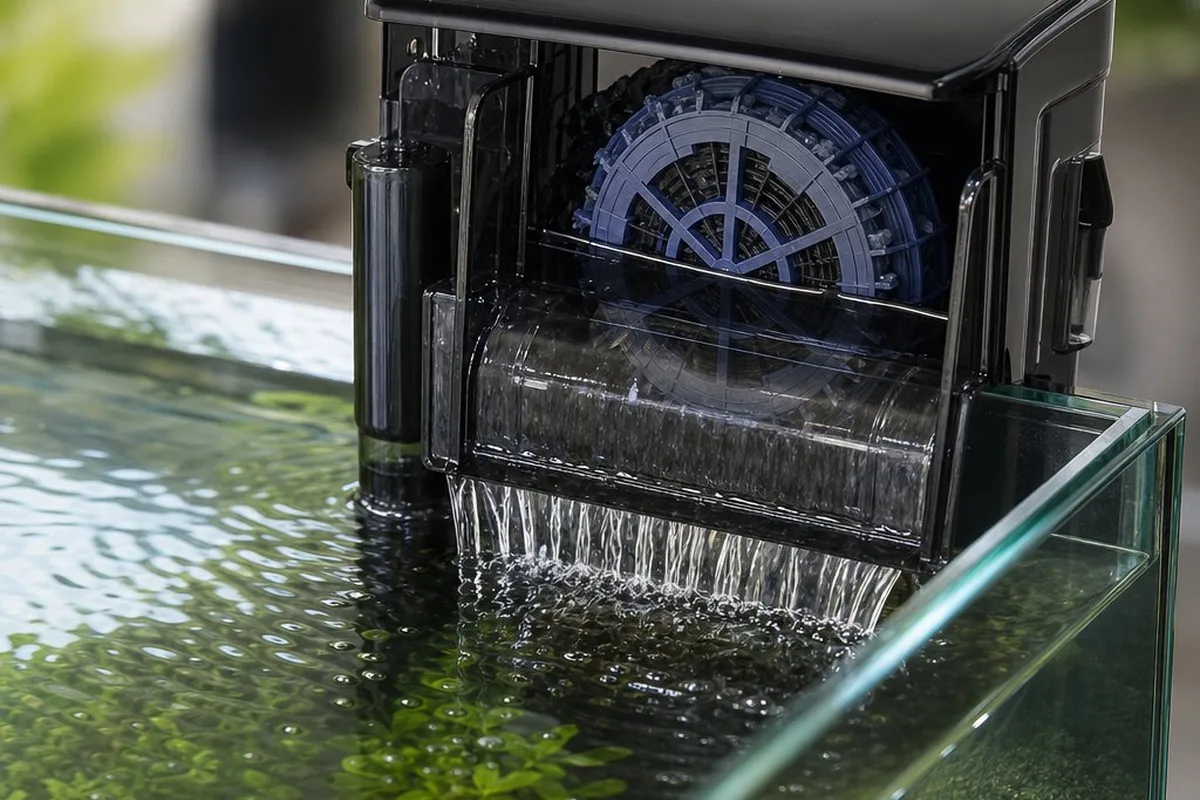
The Emperor 400 combines media cartridges with dual rotating bio-wheels — wheels with a mesh or sponge-like surface that rotate continuously through the water flow and the air above it. The key characteristic of a bio-wheel is that it retains moisture and continues rotating briefly even if the pump stops (from residual water retention and momentum), which means the bacterial colony living on it doesn't dry out during a short power outage the way media sitting in a now-still water column might be more exposed to.
Neither approach is "incomplete" — both provide substantial biological filtration capacity during normal operation. The practical difference shows up specifically in how each handles a power interruption, and in how much each design can be customized with additional media.
Media Customization
The AquaClear's basket is the more open-ended of the two — it's essentially a compartment sized around the included foam insert, but with enough room to add or substitute additional media types. This makes it a popular choice for hobbyists who like to build a custom media stack (foam + ceramic media + carbon, for example, in whatever proportions suit their tank).
The Emperor's cartridge-and-bio-wheel design is more structured. Some customization is possible within the cartridge compartments, but the bio-wheels themselves are a fixed structural element — they're the point of the design, not a slot to repurpose. If outage-resilient biological filtration is the priority, that's specific to the bio-wheel design and isn't something an AquaClear setup can replicate by adding media.
Footprint and Surface Skimming
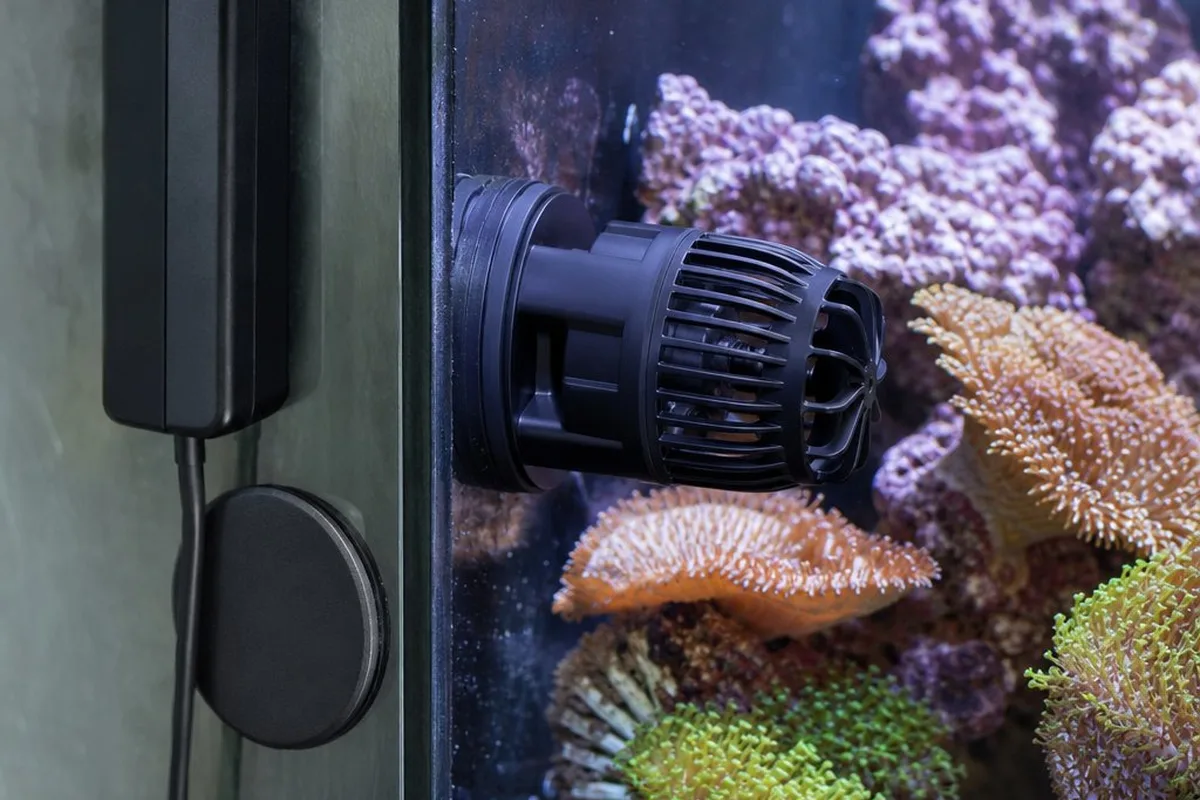
The Emperor 400's dual bio-wheel housing is noticeably wider on the tank rim than the AquaClear 110's more compact body — worth factoring in if rim space is tight, especially on tanks already running other hang-on equipment like a wave maker or heater.
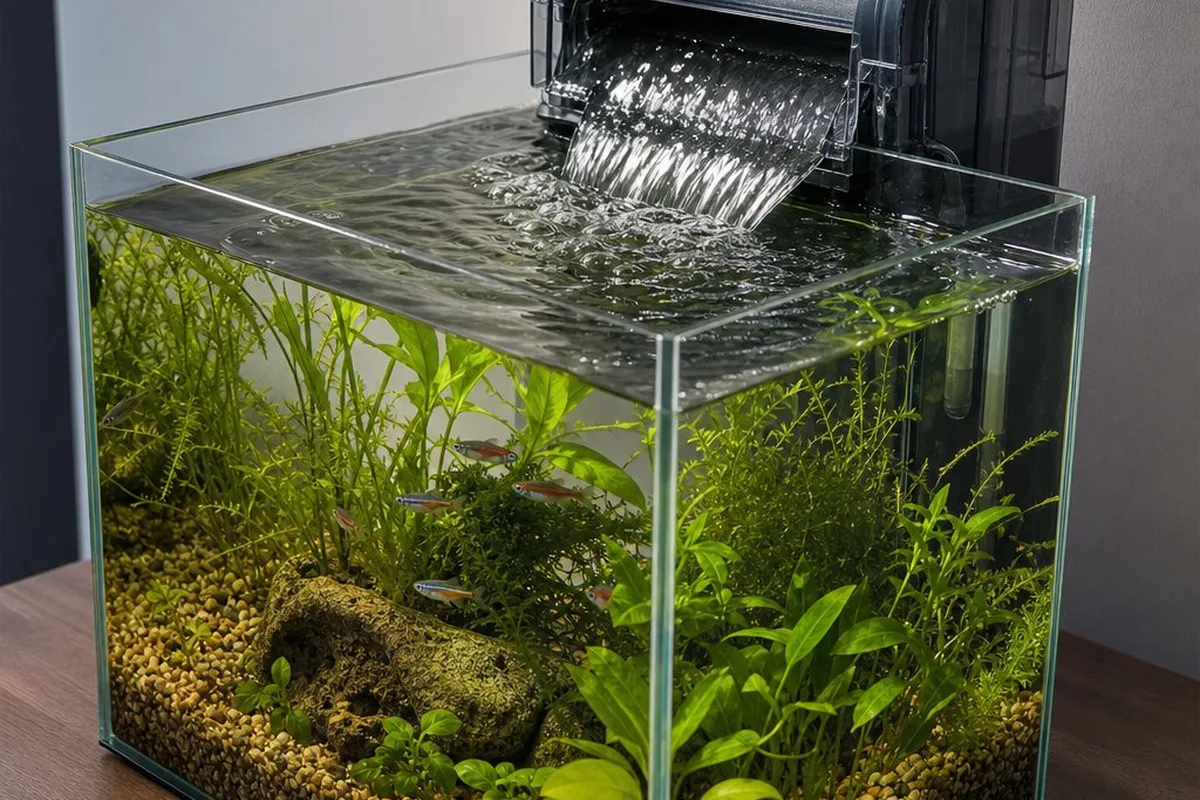
On the other hand, the Emperor's wide intake is often specifically noted for effective surface skimming — pulling in surface water (and the film/debris that accumulates there) effectively across its intake width. The AquaClear also provides surface agitation, but the Emperor's wider intake gives it something of an edge specifically for surface skimming on tanks prone to a persistent surface film.
That Clicking Sound
If you go with the Emperor 400 (or already have one), a rhythmic clicking or ticking as the bio-wheels rotate is normal — it's most often caused by mineral deposits on the wheel's axle, and it's covered in detail (including how to distinguish it from impeller-related noise, and how to quiet it down) in our Penguin BioWheel impeller noise guide, which addresses the same bio-wheel technology used across Marineland's BioWheel filter lines.
Brand Context
AquaClear is part of Hagen/Fluval, and the Emperor is a Marineland product — both are established specialist filtration brands, distinct from the house-brand and major-retailer-brand equipment (like Top Fin or Aqueon) that often ships bundled with all-in-one kits. If a tank's current filtration came as part of a kit and is being upgraded, either of these represents a step up in the "specialist filtration brand" direction regardless of which design philosophy (open media basket vs. bio-wheel) ends up being the better fit.
Quick Reference
- AquaClear 110: open media basket, sponge-based biological filtration, more customizable, rated up to ~110 gallons
- Emperor 400: dual bio-wheels + cartridges, outage-resilient biological filtration, rated up to ~80 gal / 400 GPH
- Bio-wheels retain moisture and keep their bacterial colony through brief power outages
- AquaClear's basket allows more open-ended media customization
- Emperor's wider intake is often noted for effective surface skimming
- A clicking/ticking sound from the Emperor's bio-wheels is normal, not a defect
- Check actual flow rate against tank size and stocking, not just the headline gallon rating