By Hektor Jorgo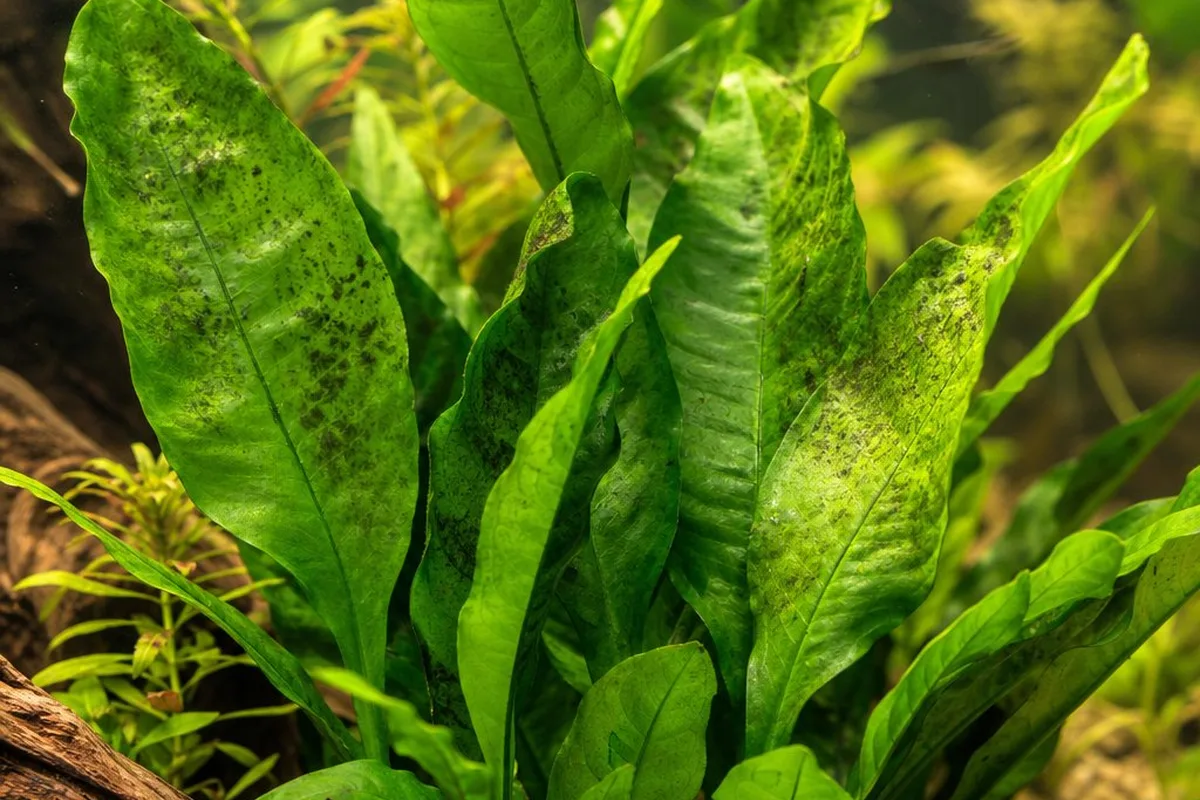
Java fern is one of the most recommended "beginner-proof" aquarium plants, which makes it a little disorienting when it's also one of the first plants to show visible algae. The good news: this almost never means you've done something wrong with the java fern specifically. It mostly comes down to one trait — java fern is slow, and slow-growing surfaces are exactly where algae tends to show up first.
Direct Answer: It's About Growth Rate, Not the Plant Being Unhealthy
Java fern leaves can persist on the plant for many months, growing very little in that time. Faster-growing plants are constantly producing fresh leaf surface area and actively pulling nutrients out of the water that algae would otherwise use (the same competition dynamic covered in our general algae guide). Java fern doesn't do either of those things much — its older leaves sit in the same light and water conditions for a long time, giving algae spores a stable, long-term surface to colonize. The presence of algae on java fern is best read as a reflection of your tank's overall light/nutrient balance, with java fern simply being an early or visible indicator of it — not a sign the plant itself is struggling.
The Algae Types You'll Most Often See
- Green spot algae (GSA) — small, hard, circular green dots, often the most common thing found on java fern leaves. Difficult to rub off with a finger, frequently linked to light duration/intensity relative to phosphate availability, and largely cosmetic rather than harmful to the leaf.
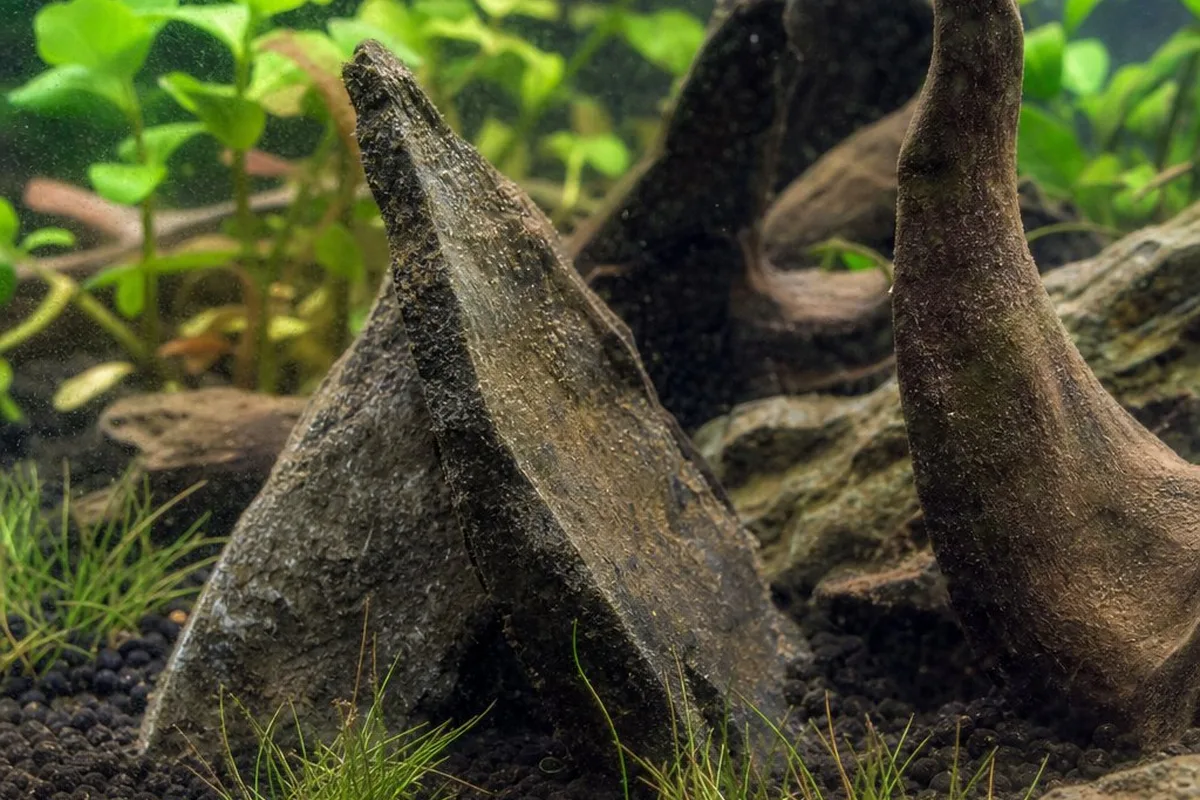
- Brown algae (diatoms) — a dusty brown film, especially common on java fern in newer tanks still going through their first weeks of maturing. Our algae growth timeline guide covers how long this typically takes to appear and fade.
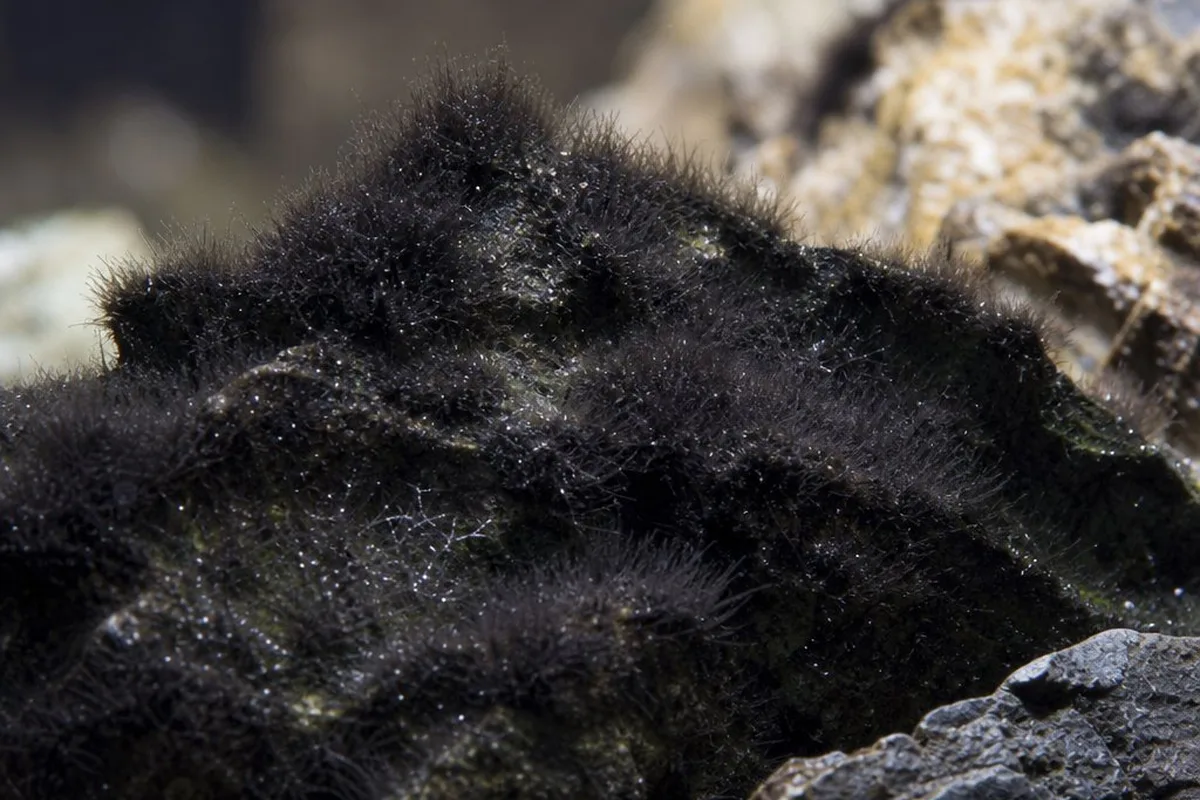
- Black beard algae (BBA) — dark, tufted growth, often along leaf edges, that's notably more resistant to grazing and manual removal than GSA or film algae. If BBA is establishing specifically on java fern, it's worth checking flow around that area, similar to the flow-related causes discussed in our Calothrix algae guide.
- Grey or olive-green films — less commonly discussed but covered separately in our grey algae guide, which addresses a film type that's sometimes confused with diatoms or early GSA.
Java Fern's Epiphyte Habit Matters Here Too
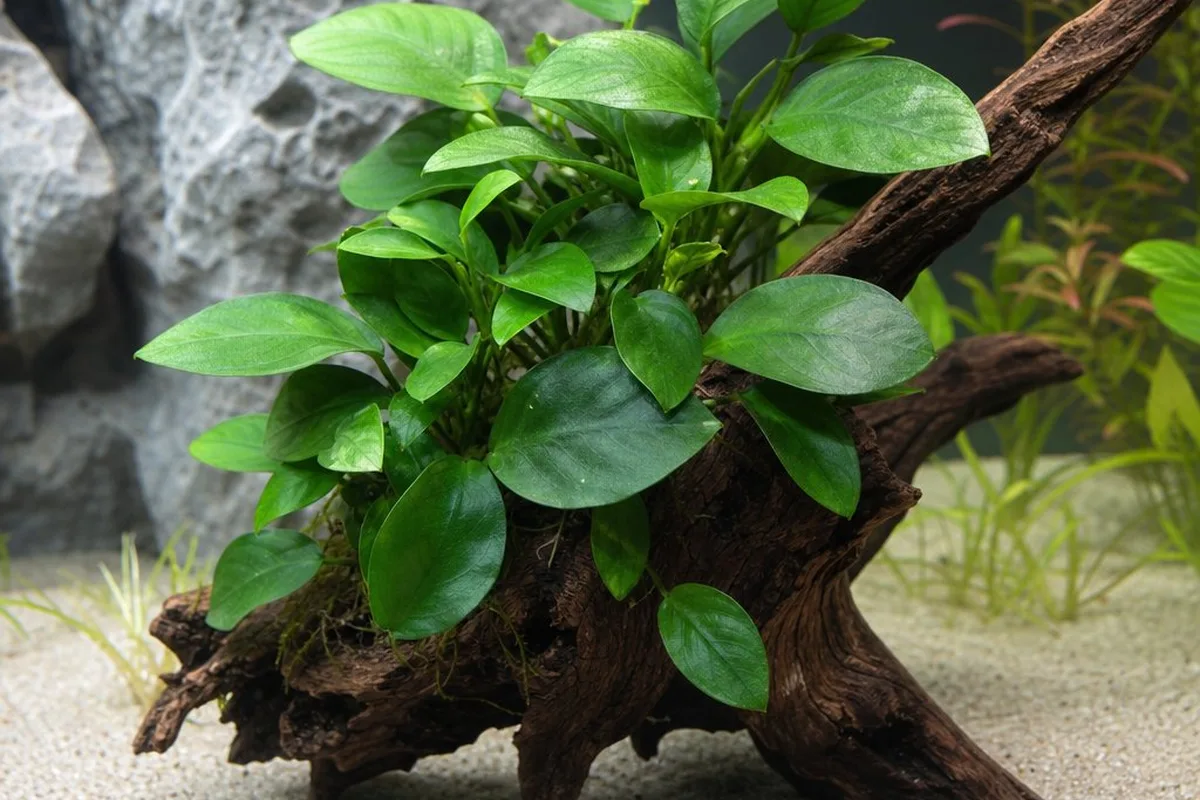
Java fern, like anubias, is an epiphyte — its rhizome attaches to hardscape (driftwood or rock) rather than growing buried in substrate. This matters for algae in a couple of ways: a java fern mounted in good flow near the top or middle of the tank, where light is strongest but flow keeps debris from settling on leaves, tends to accumulate less film algae than one tucked into a low-flow corner. It also means the rhizome-burial issue covered in our anubias rot guide — a much more serious problem than surface algae — applies to java fern too, and is worth ruling out separately if a java fern looks unhealthy beyond just having some algae on its leaves. If you're also dealing with java fern that seems to be struggling rather than just collecting algae, and you keep anubias as well, it's worth checking whether anubias can grow out of water for a sense of how these epiphytes' care needs compare.
What Actually Helps
- Gentle manual cleaning — rubbing leaves between your fingers or using a soft toothbrush removes most film and spot algae without harming the leaf. This is maintenance, not a fix, but it keeps older leaves looking better while the underlying balance is addressed.
- Check light duration and intensity — GSA in particular is frequently linked to lighting that's on longer or brighter than the plant mass in the tank can use, or to an aging bulb whose output has drifted.
- Don't over-fertilize relative to plant mass — if java fern is one of relatively few plants in the tank, nutrient dosing aimed at a heavily-planted tank can leave a surplus for algae.
- Leave heavily-colonized old leaves alone unless they're also dying — a leaf with some GSA that's otherwise healthy is still contributing to the plant; removing every leaf with any algae on it can do more harm (less leaf mass, more stress) than the algae itself.
- Remember some tankmates rely on this algae — grazing fish like otocinclus depend on the biofilm and algae that build up on slow-turnover leaves like java fern, so a java fern that's "too clean" isn't necessarily a win if it's removing a food source those fish depend on.
Quick Reference
- Algae on java fern is mostly about its slow growth rate, not the plant being unhealthy
- Green spot algae (GSA) is the most common type seen on java fern leaves
- Brown diatom film is common on java fern in newer, still-maturing tanks
- Black beard algae is tougher and often linked to flow issues in that area
- Java fern is an epiphyte — rhizome should stay exposed on hardscape, not buried
- Gentle manual cleaning manages algae without harming healthy leaves
- The real fix is the same light/nutrient balance covered for algae generally