By Hektor Jorgo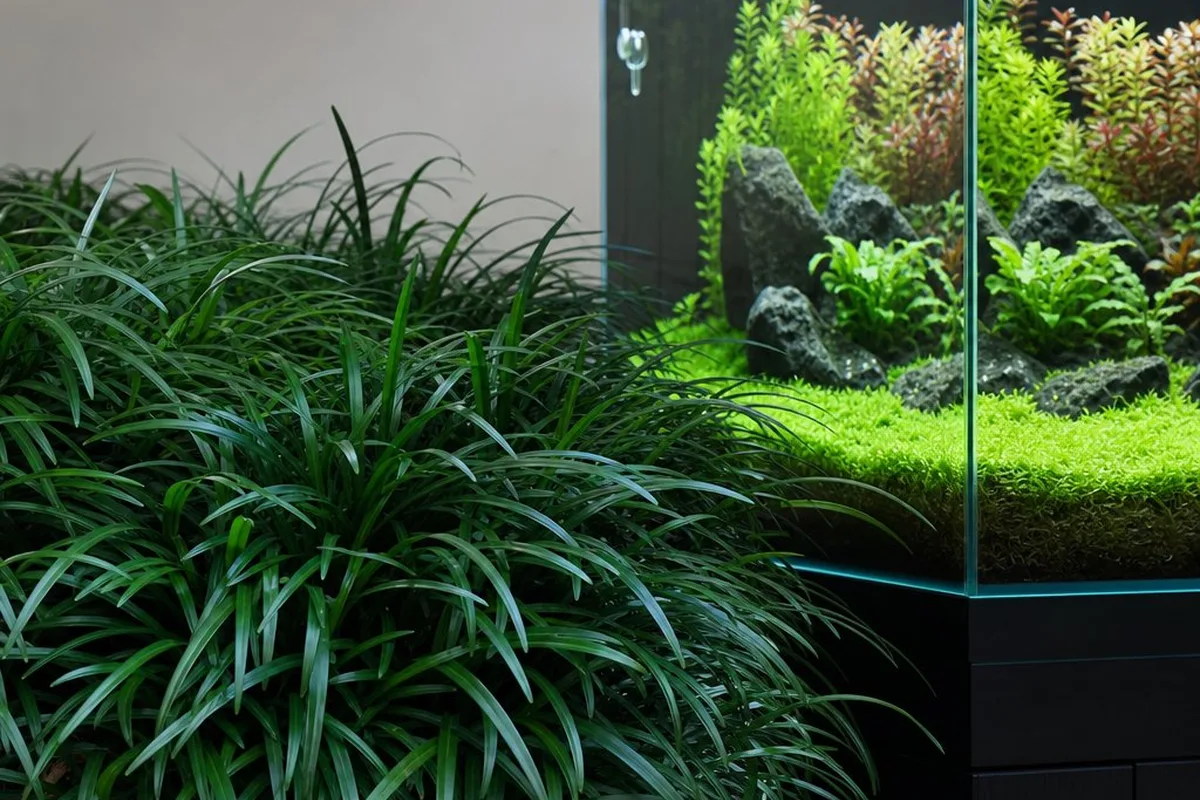
Walk past the right display tank and mondo grass looks completely at home — dense, dark green, grass-like, exactly the kind of carpet effect a lot of planted tanks aim for. The resemblance is real. The problem is that resemblance is mostly skin-deep.
Direct Answer: A Land Plant That Tolerates Water Temporarily, Not Permanently
Mondo grass (Ophiopogon japonicus) is a terrestrial/marginal groundcover plant, not a true aquatic species — and while it can often survive weeks to a few months fully submerged, it typically declines and rots over that timeframe rather than thriving. Early signs of trouble include yellowing or browning blades and a rotten smell from the base. It's sometimes sold or displayed in ways that suggest aquarium suitability because of its grass-like look and low cost, but a genuinely similar look from a true aquatic plant — like dwarf hairgrass (Eleocharis species) — is available and adapted for permanent submersion. Mondo grass itself is much better suited to a paludarium or riparium, where it can grow at or above the waterline as it would on land.
Why the Resemblance Is Misleading
Mondo grass has narrow, dark green, grass-like blades that grow in dense clumps — visually, it's not far off from what a thick carpet of true aquatic grass looks like. But visual similarity and underwater physiology are different things. True aquatic plants have adaptations for gas exchange and nutrient uptake that work efficiently underwater on an ongoing basis. Mondo grass, like a number of other plants occasionally found in the "aquarium plant" section of pet stores, is a terrestrial or marginal species that can tolerate temporary submersion (it's often grown in consistently moist soil near water features on land) but isn't built for permanent full submersion.
What Actually Happens If You Submerge It
In the short term — days to weeks — fully submerged mondo grass can look fine, which is part of why the mismatch isn't always obvious right away. Over weeks to a few months, though, the typical pattern is:
- Blades yellowing or browning, often starting at the tips or older growth
- A rotten smell developing from the base or root area as tissue breaks down
- Gradual overall decline rather than a sudden die-off
This is consistent with a plant whose tissues aren't adapted for sustained underwater conditions — not a disease or water-quality problem with the rest of the tank.
A True Aquatic Alternative: Dwarf Hairgrass
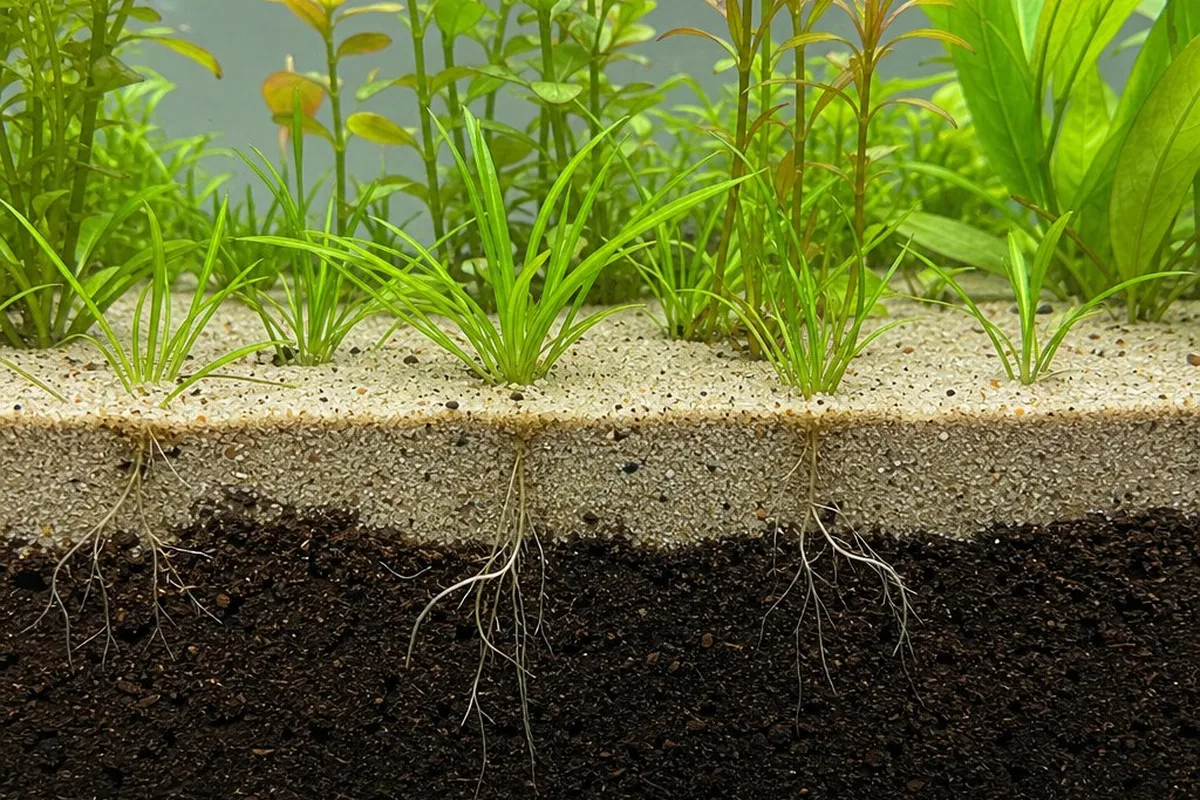
If the goal is a grass-carpet look that's actually sustainable underwater, dwarf hairgrass (Eleocharis species) is a commonly recommended true aquatic plant that produces a genuinely similar visual effect — fine, grass-like blades forming a dense carpet — while being adapted for permanent submersion. Like other carpeting/root-feeding plants, it benefits from substrate considerations covered in our guide to plant substrate and, for an extra nutrient boost, laterite as a substrate additive.
Where Mondo Grass Actually Fits: Paludariums and Ripariums
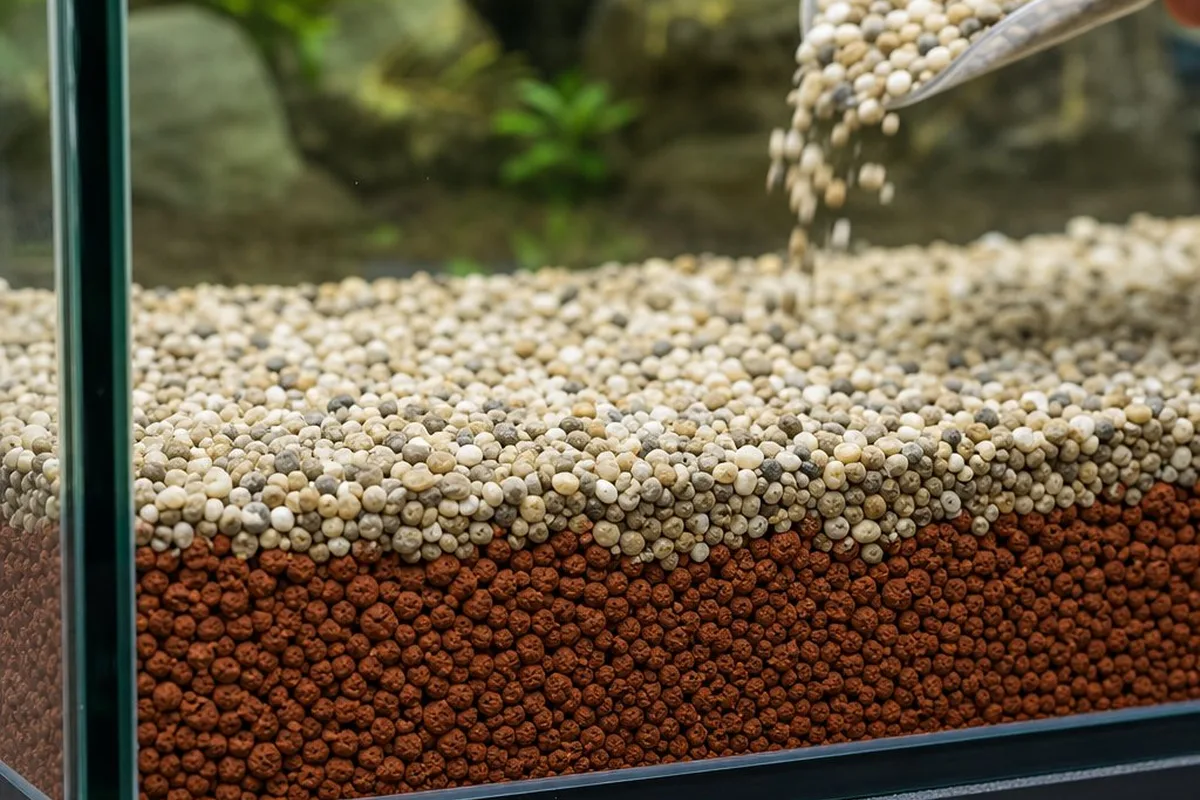
Mondo grass's real growing requirements — marginal/terrestrial, tolerant of consistently moist soil — line up well with paludarium and riparium setups, where plants are specifically chosen to grow at or above the waterline rather than fully submerged. In that context, mondo grass can be a genuinely good choice. Paludarium substrate planning often involves a mix of considerations not relevant to a fully aquatic tank — soil-based substrates for the land sections, substrate depth calculations for the aquatic portion, and an awareness that the combined weight of soil, hardscape, and water in these builds can add up, as covered in our guide to tank weight.
Quick Reference
- Mondo grass is a terrestrial/marginal groundcover plant, not a true aquatic species
- It can survive weeks to a few months fully submerged before declining and rotting
- Yellowing/browning blades and a rotten smell from the base signal submersion stress
- Dwarf hairgrass (Eleocharis) offers a similar look as a genuinely aquatic alternative
- Mondo grass is well-suited to paludariums/ripariums, where it grows at or above the waterline
- Visual similarity to aquatic carpet plants doesn't mean similar underwater physiology