By Hektor Jorgo
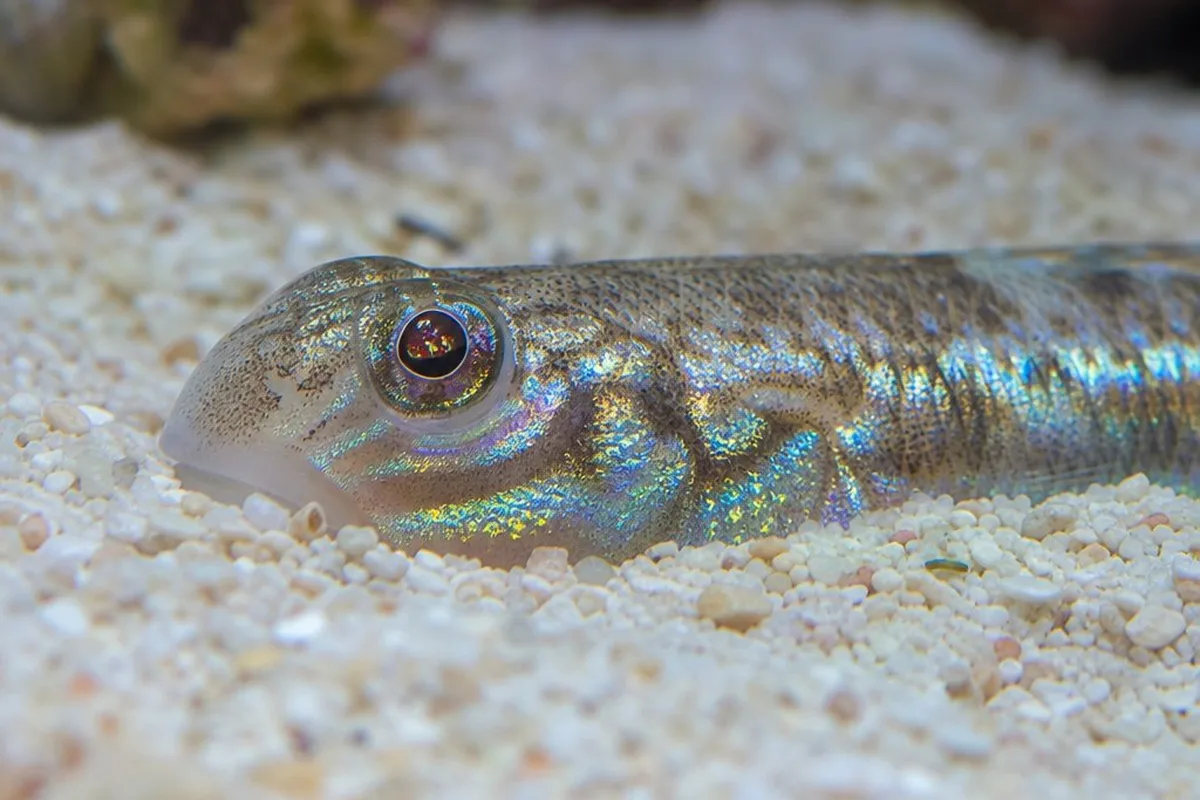
A dragon goby's natural diet — sifting through sediment for microorganisms, algae, and organic matter — doesn't translate directly into "drop food in the tank and watch it get eaten" the way it does for many community fish. Understanding why can help avoid the common (and often premature) conclusion that a dragon goby simply "won't eat."
Short Answer
Dragon gobies are detritivores and omnivores that feed primarily at the substrate level, sifting sand for microorganisms and organic matter in the wild. In aquariums, the best approach is sinking pellets or wafers plus occasional live or frozen foods (bloodworms, blackworms), offered once or twice daily in small amounts and positioned so they actually reach the substrate where the fish spends most of its time. A dragon goby that doesn't appear to eat is often either not encountering food that's only offered at the surface, or is a newly acquired fish still acclimating — both far more common explanations than a fish that's simply refusing all food.
Why Dragon Gobies Have a "Picky Eater" Reputation
Several factors combine to make this species seem more difficult to feed than it usually actually is:
- Bottom-feeding behavior — a dragon goby spends most of its time at or below the substrate surface (see our burrowing behavior guide), so food that doesn't reach that zone may simply go unnoticed
- Reclusive habits — because the fish is often partially buried, it can be hard for keepers to directly observe feeding, leading to an impression that the fish "isn't eating" when it may be eating food that's reached the substrate without being seen
- Acclimation period — newly acquired dragon gobies commonly don't visibly eat for the first several days to weeks in a new tank, a pattern seen across many species but particularly easy to misread in one that's hard to observe closely to begin with
Best Foods for Dragon Gobies
- Sinking pellets and wafers — including those marketed for catfish or other bottom feeders, formulated to reach and stay at the substrate
- Frozen bloodworms and blackworms — widely available, easy to store, and generally well accepted once a dragon goby is settled
- Live blackworms — particularly useful for encouraging feeding in reluctant or newly acquired fish, since movement can trigger a feeding response
- Spirulina-based foods — for some dietary variety, reflecting the partly algae/detritus-based component of this species' natural diet
As feeding challenges go, a dragon goby that's slow to find sinking food is a relatively mild case. For comparison, the Amazon leaffish is a species where the feeding requirement isn't about food placement at all — it's a near-obligate live-food predator that often won't recognize a motionless pellet as food regardless of where it lands.
Feeding Technique: Getting Food to a Buried Fish
Because a dragon goby may be buried at feeding time, a few practical approaches help:
- Drop sinking foods near where the goby was last seen surfacing, rather than scattering food broadly across the tank
- Use a feeding tube or similar tool to deliver food close to the substrate in a specific spot, reducing the chance it's swept away by filter flow before settling
- Be patient — a dragon goby may not emerge immediately when food is added, especially if it's resting; food that settles into the sand can still be found later
New Fish and Feeding During Acclimation
If you've recently acquired a dragon goby and it hasn't visibly eaten yet, this is common and not necessarily a cause for immediate concern — provided water parameters are good and the fish otherwise seems to be settling in (even if mostly buried). Give a newly acquired dragon goby at least a week or two before becoming concerned about feeding specifically, while continuing to offer appropriate foods daily. If a fish that was previously feeding normally suddenly stops, that's a different situation — worth checking water parameters first, as reduced appetite is a general symptom across many freshwater health issues.
Quick Reference
- Offer sinking pellets/wafers and occasional frozen bloodworms/blackworms
- Food needs to reach the substrate — surface or mid-water food is often missed entirely
- Live foods can help encourage feeding in reluctant or newly acquired fish
- Feed once or twice daily in small amounts
- A mature sand bed supplements but doesn't replace prepared feeding
- Newly acquired dragon gobies may not visibly eat for days to weeks — this is common
- A previously-feeding fish that stops eating warrants a water quality check