By Hektor Jorgo
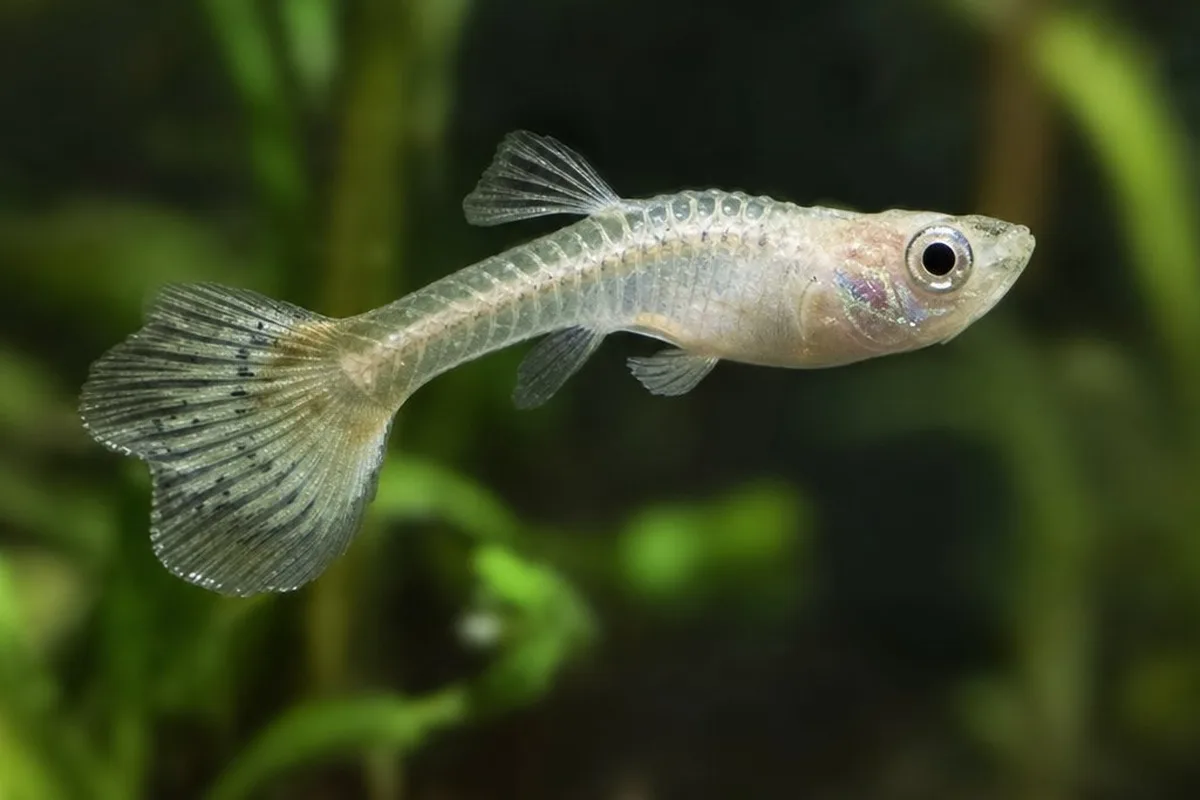
A guppy with a visibly divided tail fin raises an immediate question for a lot of keepers: is this normal, an injury, or something to worry about? The short version is that a true double tail (split tail) is a recognized genetic trait, not a deformity in the everyday sense — but the genetics behind it do come with a breeding caveat worth understanding before pairing two of these fish together.
Short Answer
A split-tail (double-tail) guppy has a genetically divided caudal fin — two distinct lobes instead of one continuous fan. It's a deliberately bred trait in the fancy guppy hobby and isn't inherently a health problem for the individual fish; day-to-day care is identical to any other guppy, as covered in our guppy care guide. The caveat is genetic: breeding two double-tail guppies together increases the risk of spinal deformities in the resulting fry, so most breeders pair double-tail guppies with single-tail guppies rather than with each other.
What Causes the Split-Tail Trait
The double-tail trait is controlled by a gene affecting how the caudal fin develops — rather than forming as a single continuous fin, it splits into two lobes, sometimes described as giving the fish two separate "tails" or a "double sword" appearance depending on how pronounced the split is and how it interacts with other fin-shape genes (like the various delta, fan, and veil tail types).
Unlike some simple dominant/recessive traits, the inheritance pattern here is more variable — not every fry from a double-tail parent will show the trait, and the degree of expression (how pronounced the split is) can vary between individuals even within the same brood.
Is It a Deformity or a Breeding Trait?
This is the core distinction, and it's worth separating into two questions:
For the individual fish: a guppy that's genetically double-tailed from birth, with a consistent, symmetrical-looking split visible as the fin develops, is generally healthy and normal — it eats, swims, and behaves like any other guppy, with at most a minor difference in swimming agility depending on how large and elaborate the fins are.
For breeding decisions: this is where the trait becomes more nuanced. The genes involved in the double-tail trait appear to be linked, in some cases, to genes affecting spinal and skeletal development. Breeding two double-tail guppies together increases the chance of fry with spinal deformities — a curved spine, shortened body, or other skeletal issues that are a genuine welfare concern, unlike the tail trait itself. This is why experienced breeders typically pair a double-tail guppy with a single-tail guppy, which can still produce double-tail offspring (depending on genetics) without concentrating the spinal-development risk the way a double-tail × double-tail pairing can.
Telling a True Double Tail From an Injured Fin
A torn or damaged single tail can sometimes look superficially similar to a double tail, especially if the tear runs down the middle of the fin. Key differences:
- A true double tail is usually visible from a young age and has a relatively symmetrical, consistent division between the two lobes, often with each lobe having its own clean edge.
- An injured/torn fin typically has a ragged, uneven edge, may appear suddenly in a fish that previously had a normal single tail, and is often accompanied by other signs of fin damage (fraying, discoloration) — issues more related to water quality or fin-nipping tank mates than genetics, both covered in our guppy care guide.
Care Considerations for Split-Tail Guppies
In practice, there's very little to do differently:
- Tank size, water parameters, and diet are identical to standard guppy care — see our guppy care guide for the full breakdown.
- Tank mates — a guppy with larger or more elaborate finnage (whether double-tail or another fancy variety) may be very slightly less agile, which is a minor point in favor of avoiding fast, boisterous, or fin-nipping tank mates, but this is good general advice for fancy guppies regardless of tail type.
- Health monitoring — a double-tail guppy is just as susceptible to standard guppy health issues (fin rot, tuberculosis, ich) as any other guppy, with no special considerations specific to the tail trait itself.
Should You Breed Split-Tail Guppies?
If you have a double-tail guppy and are considering breeding:
- Pair with a single-tail guppy, not another double-tail, to reduce the risk of spinal deformities in fry — this is the single most important practical takeaway.
- Monitor fry development for any signs of spinal curvature or skeletal abnormality, which can sometimes become more apparent as fry grow rather than being obvious at birth.
- Don't assume "double tail x double tail = more double tails, no downside" — the appeal of concentrating a desirable trait has to be weighed against the documented increase in skeletal issues from that specific pairing.
- If breeding isn't a goal, a double-tail guppy is simply a guppy with an interesting fin shape — no different in day-to-day care from any other guppy in your guppy care guide-following setup.
Quick Reference
- Split/double tail = genetic fin trait, not an injury (if present from a young age with a symmetrical split)
- Day-to-day care is identical to standard guppy care
- Not inherently a health problem for the individual fish
- Breeding double-tail × double-tail increases risk of spinal deformities in fry
- Prefer double-tail × single-tail pairings if breeding for the trait
- A ragged, uneven "split" appearing suddenly is more likely an injury than genetics
- No special tank size, water parameter, or diet requirements