By Hektor Jorgo
A 10-gallon saltwater tank is a real, viable project — but it's not a smaller version of the 20-40 gallon beginner tanks most care guides are written around, and the stocking list that fits is much shorter than most new owners expect. This guide is an honest look at what actually works at this size, and where the genuinely popular beginner fish don't fit no matter how small they start out.
Short Answer: What Fits in 10 Gallons
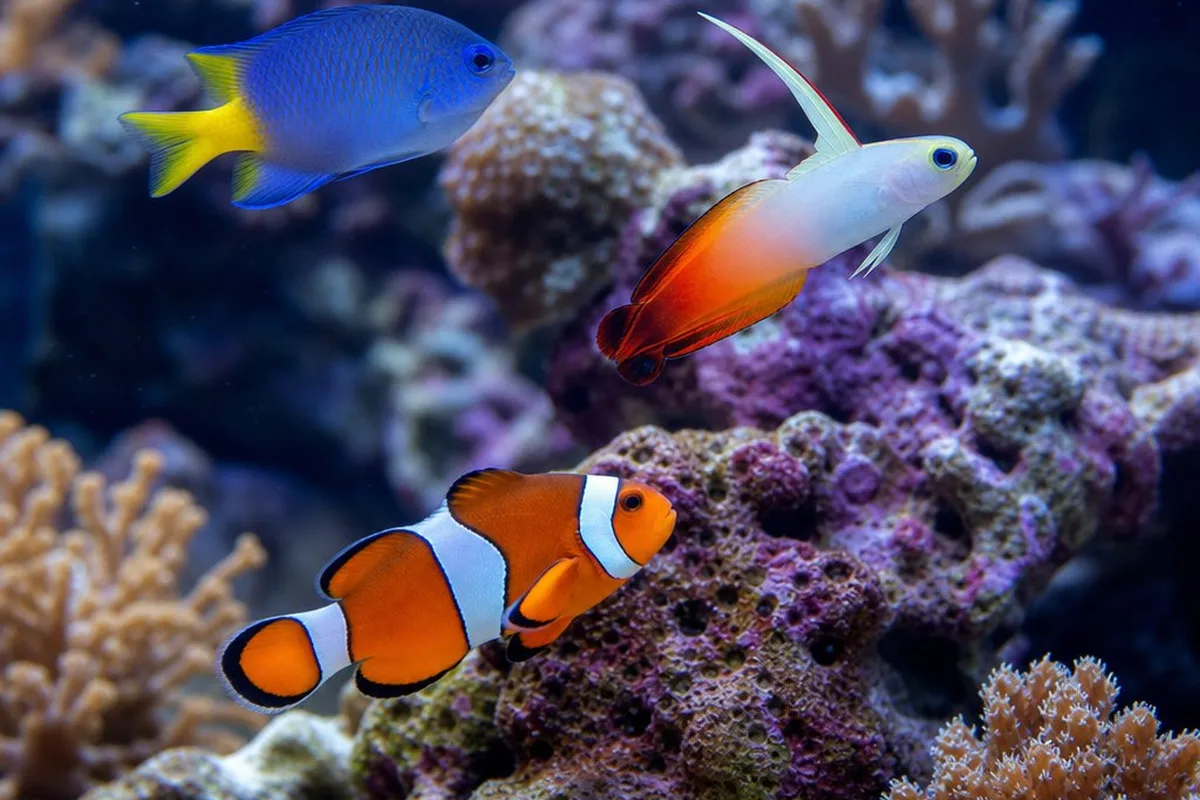
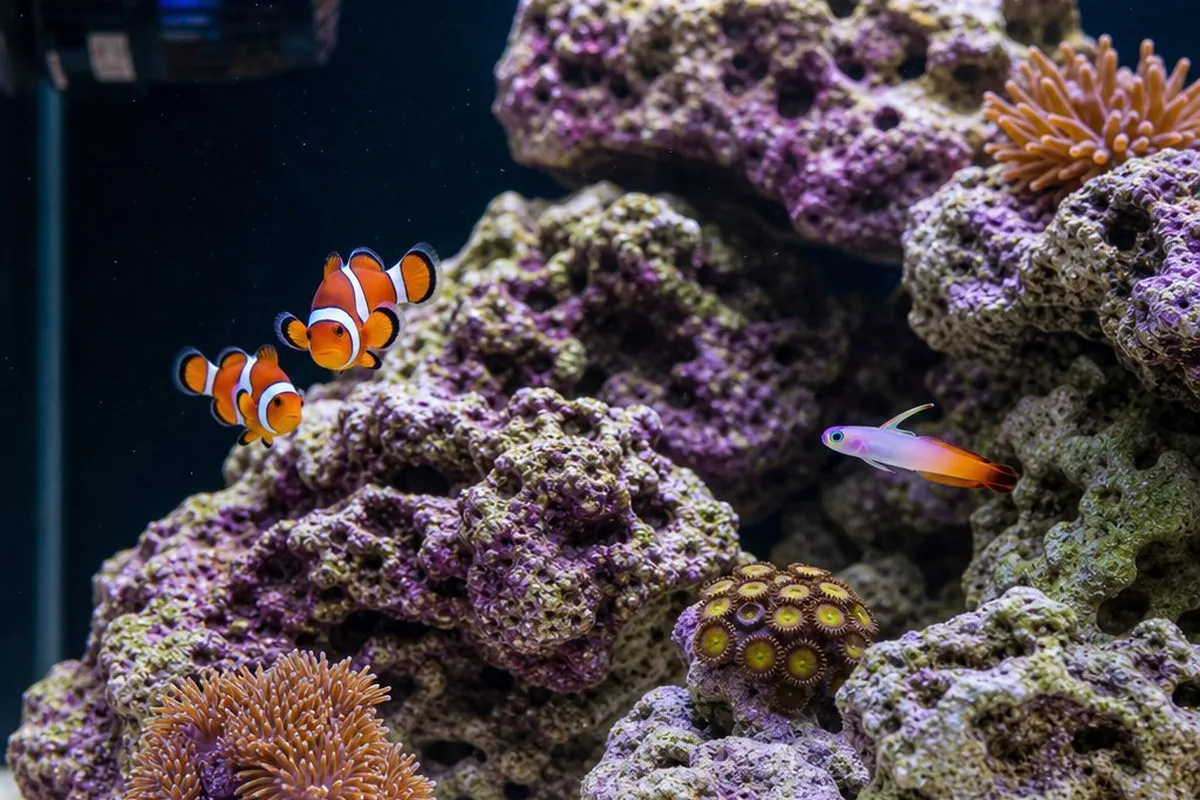
Realistically, a 10-gallon saltwater tank can support one, occasionally two, small fish under about 2 inches — primarily clown gobies, neon gobies, or a pistol shrimp/watchman goby pair. Popular beginner fish like the common clownfish are usually recommended for 20+ gallons minimum, even though a small juvenile clownfish would physically fit in 10 gallons for a while. If your goal is specifically a clownfish, firefish, or damselfish tank, 10 gallons isn't the right starting size — those fish need the extra volume for both space and stability.
Why 10 Gallons Is More Limiting Than It Looks
The core issue with a 10-gallon saltwater tank isn't that fish are too big to physically fit — small juveniles of almost any species would fit in 10 gallons for a while. The issue is stability, and it compounds in a few specific ways:
- Temperature swings faster. A small volume of water responds to room temperature changes (a sunny window, an AC cycle, a heater that's slightly oversized) much faster than a larger volume, making stable temperature harder to maintain with the same equipment that works fine in a 20+ gallon tank.
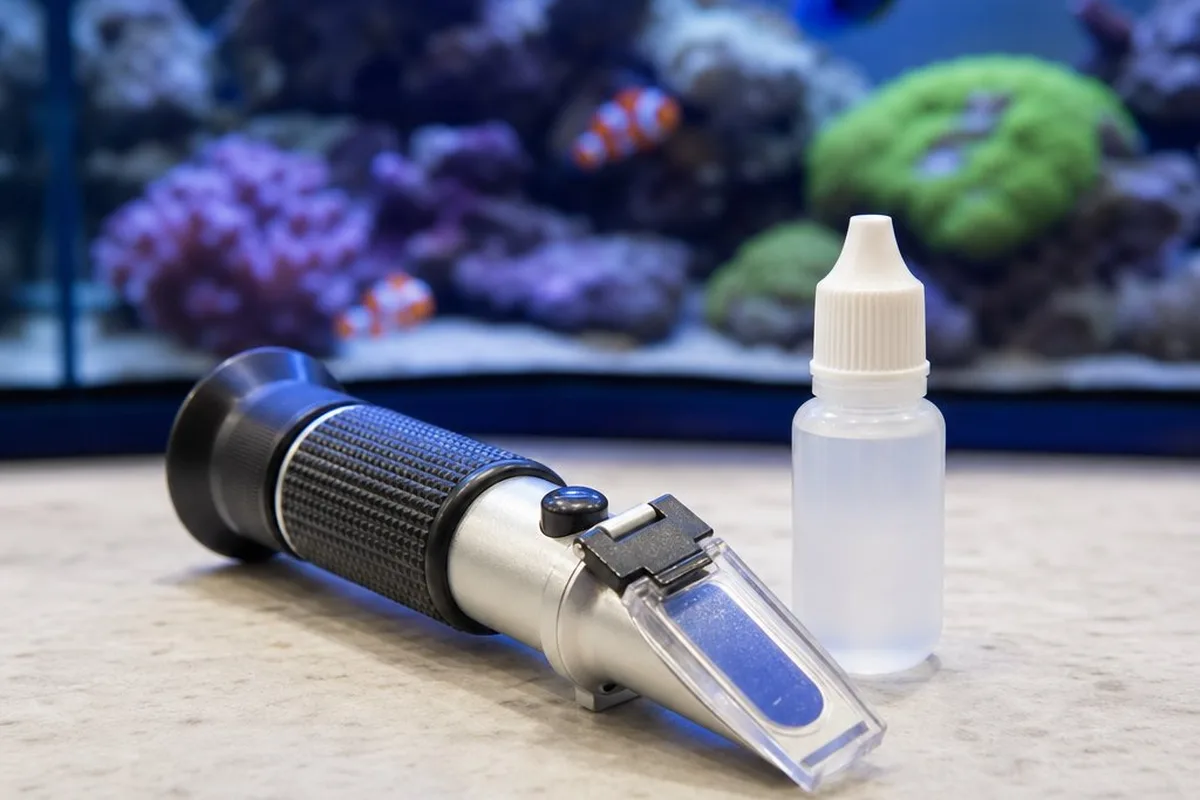
- Evaporation has a bigger relative effect. The same half-inch of evaporation represents a much larger percentage change in a 10-gallon tank than a 40-gallon one, meaning specific gravity can drift further between top-offs if you're not consistent.
- Feeding and waste have less dilution. An overfeeding mistake, or a missed water change, has a smaller volume of water to "absorb" the resulting nutrient load — ammonia spikes and nitrate creep both happen faster in small tanks.
- Less territory for active fish. Fish like clownfish and damselfish — hardy in terms of water quality tolerance — still want enough space to establish a sense of territory. In 10 gallons, that space is extremely limited even for a single small fish.
None of this means 10 gallons can't be done — nano and pico reef tanks are a whole sub-hobby with passionate, successful keepers. It means the margin for the kind of small mistakes beginners commonly make is much smaller, which is the main reason most "best fish for beginners" guides — including our own saltwater fish for beginners guide — point toward 20-40 gallons as a starting point instead.
Fish That Can Actually Work in 10 Gallons
Clown gobies (Gobiodon species) — Small (under 2 inches), territorial in a good way (they tend to perch on a single coral or rock and not roam much), and don't require the swimming space larger fish need. A single clown goby is one of the most commonly recommended fish for tanks this size.
Neon gobies — Similarly small and well-suited to limited space, with the bonus of being known for picking parasites off other fish in larger community tanks (less relevant in a single-fish nano tank, but a notable natural behavior).
Pistol shrimp and watchman/shrimp goby pairs — This symbiotic pairing (the shrimp digs and maintains a burrow, the goby acts as a lookout for both) is a popular nano tank centerpiece. The goby itself is usually small enough for a 10-gallon footprint, and the behavioral interaction between the two animals is often more engaging to watch than a single larger fish would be.
What doesn't make this list, and why: clownfish, damselfish, firefish, and basically every other "beginner fish" covered in our beginner stocking guide — not because they're delicate, but because their recommended minimum tank sizes (20+ gallons) reflect both space and stability needs that 10 gallons doesn't provide, regardless of how small the individual fish currently is.
What to Consider Instead
If you're set on 10 gallons specifically, two paths tend to work better than "shrink down a beginner fish-only tank":
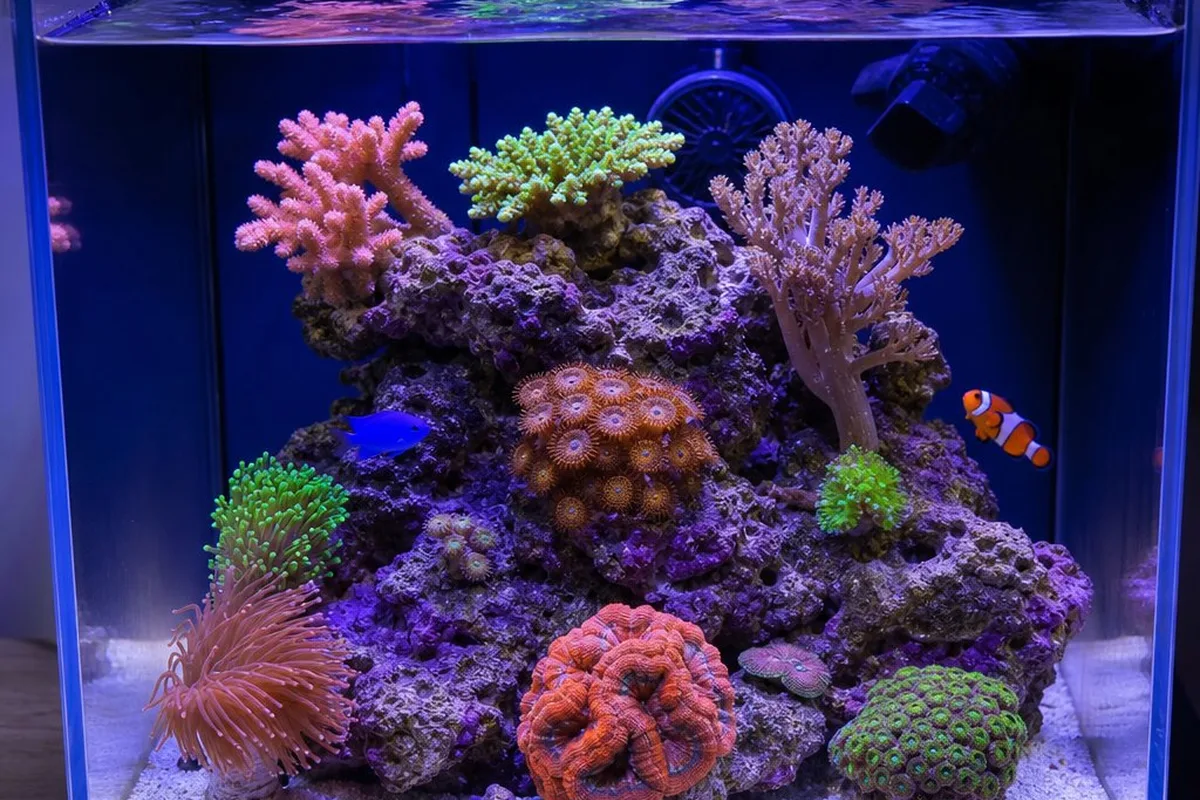
- A nano/pico reef — focus the tank on corals, invertebrates, and a cleanup crew, with at most one small fish (or none at all). This plays to a small tank's strengths: corals don't need swimming space, and a invertebrate-and-coral-focused tank sidesteps most of the stocking limitations above. Our guide to how many corals fit in a 10-gallon tank covers the planning side of this approach — spacing and growth form matter more than headcount.
- Upsize to 20 gallons, or further to 30. If the goal is specifically to keep a clownfish, firefish, or similar beginner fish, a 20-gallon tank is a relatively modest upgrade in footprint and cost compared to 10 gallons, and it unlocks the entire beginner stocking list covered in our main beginner guide — including options that would be genuinely stressed in 10 gallons. At 30 gallons, covered in our 30-gallon stocking guide, a small community of 3-5 fish becomes realistic rather than just a single fish.
If You Proceed: Setup Tips for Stability
- Use an auto top-off (ATO) system. Given how quickly evaporation affects specific gravity in a small volume, an ATO is more valuable here, proportionally, than in a larger tank.
- Test parameters more frequently. Because small tanks can drift faster, weekly testing (rather than the bi-weekly or monthly schedule that might suffice in a larger system) catches problems while they're still small.
- Do smaller, more frequent water changes. Rather than a large monthly water change, smaller weekly changes keep nutrient swings gentler in a tank with less total volume to begin with.
- Don't rush stocking. The "add one fish, wait weeks, evaluate" approach from our beginner guide matters even more here — there's less room for a stocking mistake to dilute itself away.
Quick Reference
- 10 gallons realistically supports one, occasionally two, small (under 2-inch) fish
- Clown gobies, neon gobies, and pistol shrimp/goby pairs are the best-suited options
- Common beginner fish (clownfish, damselfish, firefish) need 20+ gallons — not just for space, but for stability
- Small tanks swing faster in temperature, salinity, and nutrients — plan for more frequent monitoring
- Consider a nano/pico reef (corals + inverts, minimal fish) as an alternative approach
- If a clownfish or similar fish is the goal, 20 gallons is a more realistic starting size than 10
- Use an auto top-off system and test parameters weekly in a tank this size