By Hektor Jorgo
Driftwood is one of the most common hardscape elements in a freshwater aquascape, and Malaysian driftwood and Mopani wood are two of the names that come up most often when shopping for it. Both are dense, attractive, and widely used — but they behave differently enough in the first few weeks after going into a tank that it's worth knowing what to expect from each.
Short Answer
Malaysian driftwood and Mopani wood are both dense hardwoods that leach tannins and need pre-soaking before going into a tank, but they differ in a few practical ways. Malaysian driftwood tends to be denser and sinks faster, often arriving in larger, more dramatically twisted or branching pieces. Mopani wood is known for its distinctive two-tone tan-and-dark-brown grain, tends to float longer before it's fully saturated, and is especially prone to a harmless white fungal bloom in its first few weeks underwater. Both soften and slightly acidify water via tannins, which makes either one a poor match for hard-alkaline setups like African cichlid tanks — but both are excellent anchor points for moss, anubias, and other epiphyte plants in a softer-water planted aquascape.
Origins and Appearance
Malaysian driftwood is typically sourced as dense root or branch wood from Southeast Asia, and it's prized in the hobby for its often dramatic, twisted, or branching shapes — pieces that can serve as a tank's central focal point on their own. Mopani wood comes from southern Africa and is immediately recognizable by its two-tone grain — bands of lighter tan wood alongside darker reddish-brown streaks, giving each piece a distinctive striped appearance that's quite different from the more uniformly dark look of most Malaysian driftwood.
Neither type is "better looking" in any objective sense — it's largely a matter of which aesthetic fits the aquascape being built. Malaysian driftwood's branching shapes lend themselves to larger centerpiece arrangements, while Mopani's smaller, two-toned pieces are often used to build up more compact structures or as accent pieces alongside rockwork.
Sinking and Prep: Where the Real Difference Shows Up
This is where the two types diverge most in practice. Malaysian driftwood is often dense enough that it sinks — or comes close to sinking — after a relatively modest soak, sometimes just a few days. Mopani wood, by contrast, has a reputation for floating stubbornly, sometimes for a week or more, until enough water has been absorbed into the wood to overcome its buoyancy.
For smaller pieces of either type, boiling speeds this process up considerably — submerging the wood fully in a large pot of water and boiling for an hour or more both helps the wood absorb water faster (so it sinks sooner) and leaches out some of the tannins that would otherwise color the tank water. For pieces too large to boil, a longer soak in a separate container (changing the water periodically as it darkens) accomplishes something similar, just more slowly.
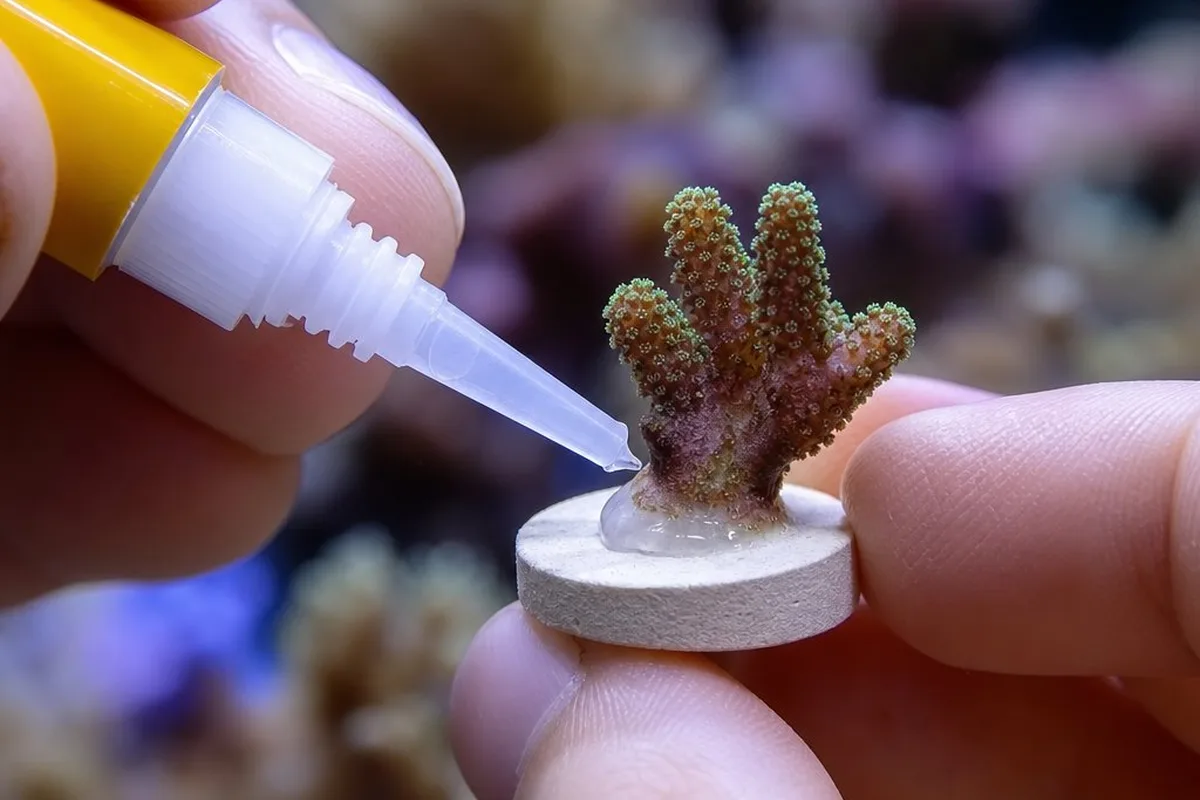
In the meantime, a piece that won't stay down can be temporarily held in place with a clean rock, a suction-cup anchor, or wedged against other hardscape — and once it's positioned where you want it permanently, aquarium-safe cyanoacrylate gel is a reliable way to anchor it to a base rock or to another piece of wood, the same general approach used to attach coral frags to rock in a reef tank.
Tannins: Expected for Both, More Pronounced With Mopani
Both types of wood will tint tank water an amber or tea-colored hue as tannins leach out — this is completely normal and is, in fact, a desirable effect for keepers building soft-water or "blackwater" biotope-style tanks. The tinting is usually most noticeable in the first several weeks and gradually decreases over time, though it can return somewhat after major rearranging or adding new pieces.
Mopani wood tends to release tannins more noticeably in its first few weeks compared to a similarly-sized piece of Malaysian driftwood, though both will eventually settle down to a much lower baseline. Keepers who want clearer water from the start typically combine pre-soaking/boiling with activated carbon or other tannin-absorbing filter media for the first few weeks after adding new wood of either type.
The White Fuzz: A Mopani Specialty (But Not Exclusive)
One of the most commonly asked questions about new driftwood — and Mopani wood in particular — is about a white, fuzzy or cottony growth that can appear across some or all of the wood's submerged surface within the first one to three weeks. This is a harmless fungal/biofilm bloom, feeding on organic compounds in the wood's outer layers, and it's an extremely common part of new wood "breaking in" underwater. It typically fades on its own as the surface stabilizes, though it can be gently brushed or siphoned away if it bothers you.
While this bloom can happen with any new driftwood, Mopani wood is particularly known for it — enough that it's worth mentioning proactively to anyone trying Mopani for the first time, so a tank doesn't get torn apart in a panic over what is, in nearly all cases, a completely normal and temporary phase.
Water Chemistry: Neither Fits a Hard-Alkaline Tank
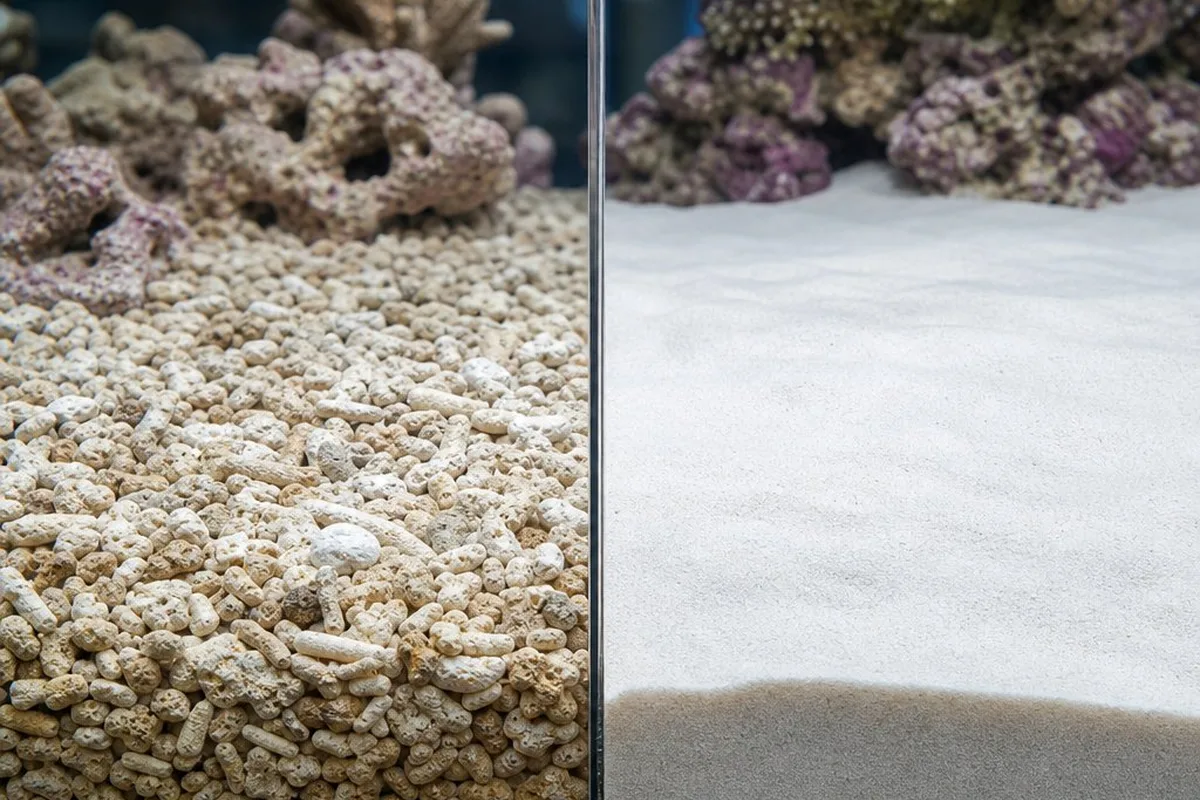
Because both types leach tannins that soften and slightly acidify water, neither is a good match for setups that need hard, alkaline water — most notably African cichlid tanks. Our guide to driftwood in cichlid tanks covers this in more detail, including why rock-based aquascaping is the better fit for that water chemistry. The same consideration extends to substrate choice: if a tank is using crushed coral for its water-hardening properties, adding either Malaysian driftwood or Mopani wood works against that effect, regardless of which wood type is chosen.
For softer-water setups — South American biotopes, many planted tanks, and similar — this same tannin release is often a feature rather than a drawback, contributing to both the look and the water chemistry the tank is aiming for.
A Good Base for Plants Either Way
Both Malaysian driftwood and Mopani wood are widely used as anchor points for epiphyte plants — mosses, anubias, java fern, and similar species that attach to hardscape rather than rooting in substrate. Tying these plants on with thread or fine fishing line (until their roots or rhizoids grip the wood on their own) works equally well on either wood type, as does using cyanoacrylate gel for mosses. If the aquascape calls for fast-growing stem plants to fill in around the hardscape, species like those covered in our cabomba vs. hornwort comparison are common companions for either type of driftwood centerpiece.
Quick Reference
- Malaysian driftwood is denser and typically sinks faster with less prep than Mopani
- Mopani wood is known for its two-tone tan-and-brown grain and often floats longer before sinking
- Both leach tannins (tea-colored water) — more pronounced early on, especially with Mopani
- A white fuzzy bloom in the first weeks (especially common on Mopani) is harmless and temporary
- Neither suits hard-alkaline tanks like African cichlid setups
- Both work well as anchor points for moss, anubias, and java fern via thread or aquarium-safe glue
- Boiling smaller pieces speeds up sinking and reduces initial tannin release for either type