By Hektor Jorgo
Most aquarium advice splits neatly into "freshwater" and "saltwater" — but a meaningful number of popular fish actually come from brackish water, the zone where rivers meet the sea, and treating them as purely one or the other is one of the most common setup mistakes in the hobby.
Short Answer
Brackish water is water with salinity between freshwater and full seawater, typically targeted in aquariums at a specific gravity of roughly 1.005-1.015, depending on the species. It's the natural habitat of estuaries, mangrove forests, and tidal river mouths — environments where salinity isn't constant, but fluctuates with tides and seasonal river flow. A number of fish sold in freshwater sections of pet stores — mollies, dragon gobies, green spotted puffers, and others — are actually brackish-water species that merely tolerate freshwater, and tend to do better long-term with some salt added.
What "Brackish" Means in Practice
Salinity is usually measured as specific gravity (SG), a ratio comparing the density of tank water to pure water. Freshwater is 1.000. Full-strength seawater is roughly 1.020-1.026. Brackish water covers the range in between, and within that range, "low brackish" (around 1.005) and "mid brackish" (around 1.010-1.015) call for somewhat different equipment and species considerations.
Importantly, brackish isn't a single fixed recipe — it's a spectrum, and different species are adapted to different points on it. A tank built around mollies might sit at the low end, while one built around species that spend more time in estuarine or coastal habitats might run higher.
Setting Up a Brackish Tank
Salinity and Equipment
The core piece of equipment that distinguishes a brackish setup from a standard freshwater tank is something to measure specific gravity — a hydrometer or refractometer, the same tools used in marine aquariums. Salt is added using a marine aquarium salt mix, dissolved in dechlorinated water before adding to the tank (never added directly as dry salt to an established tank, which can cause localized salinity spikes).
Substrate
Aragonite-based sand or crushed coral is a common substrate choice in brackish tanks, for the same reason it's used in some freshwater hard-water setups: it slowly dissolves and buffers pH and hardness upward, which suits the alkaline-leaning water chemistry many brackish species come from. This is the same underlying chemistry covered in our crushed coral guide, just applied in a brackish rather than purely freshwater or marine context.
Plants and Hardscape
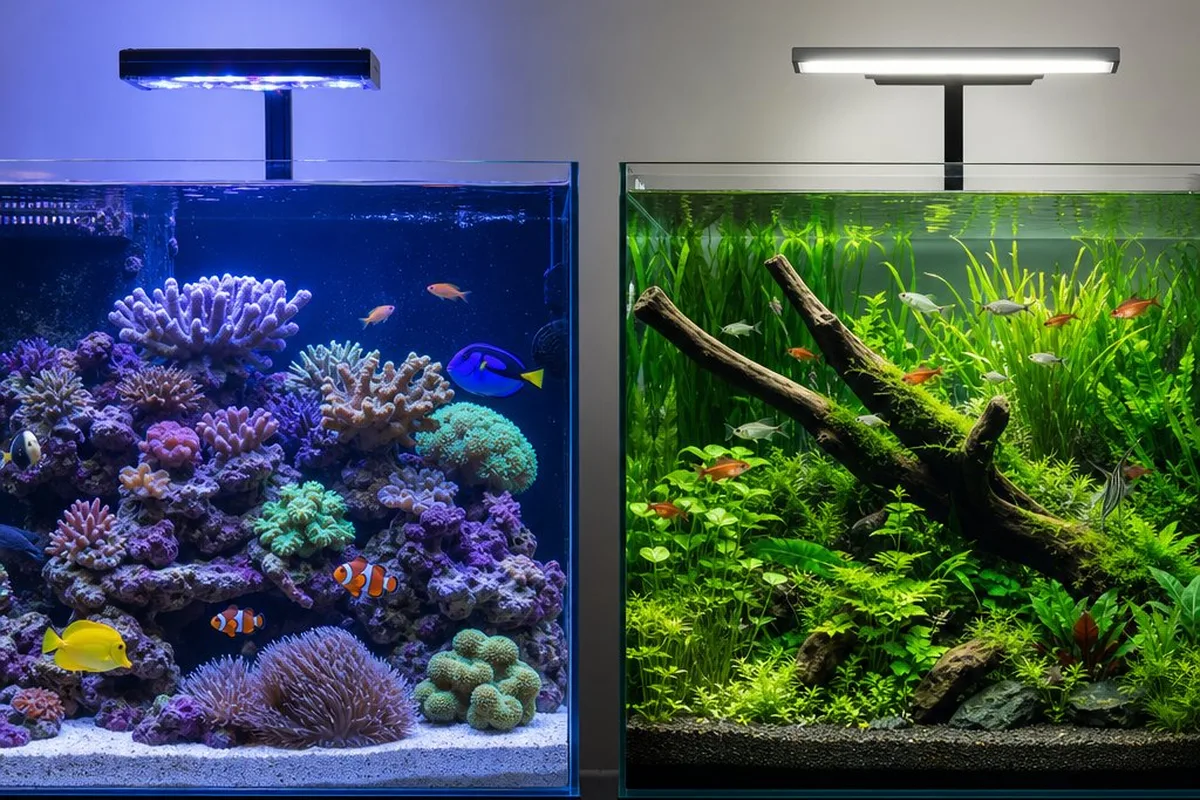
This is the area where brackish tanks diverge most from typical planted freshwater setups. Most aquatic plants don't tolerate added salinity well, and the higher the target specific gravity, the fewer options remain. Many brackish tanks lean on driftwood, rockwork, and mangrove-style root structures for visual interest instead of a fully planted aesthetic — an approach that's taken even further in dedicated brackish paludarium builds, where land-based and emergent planting takes over from submerged plants entirely.
Popular Brackish Water Fish
A few species illustrate the range of what "brackish" covers in the aquarium trade:
- Mollies — among the most commonly available livebearers, often sold as freshwater fish but generally healthier with some salt added, particularly for long-term coloration and disease resistance
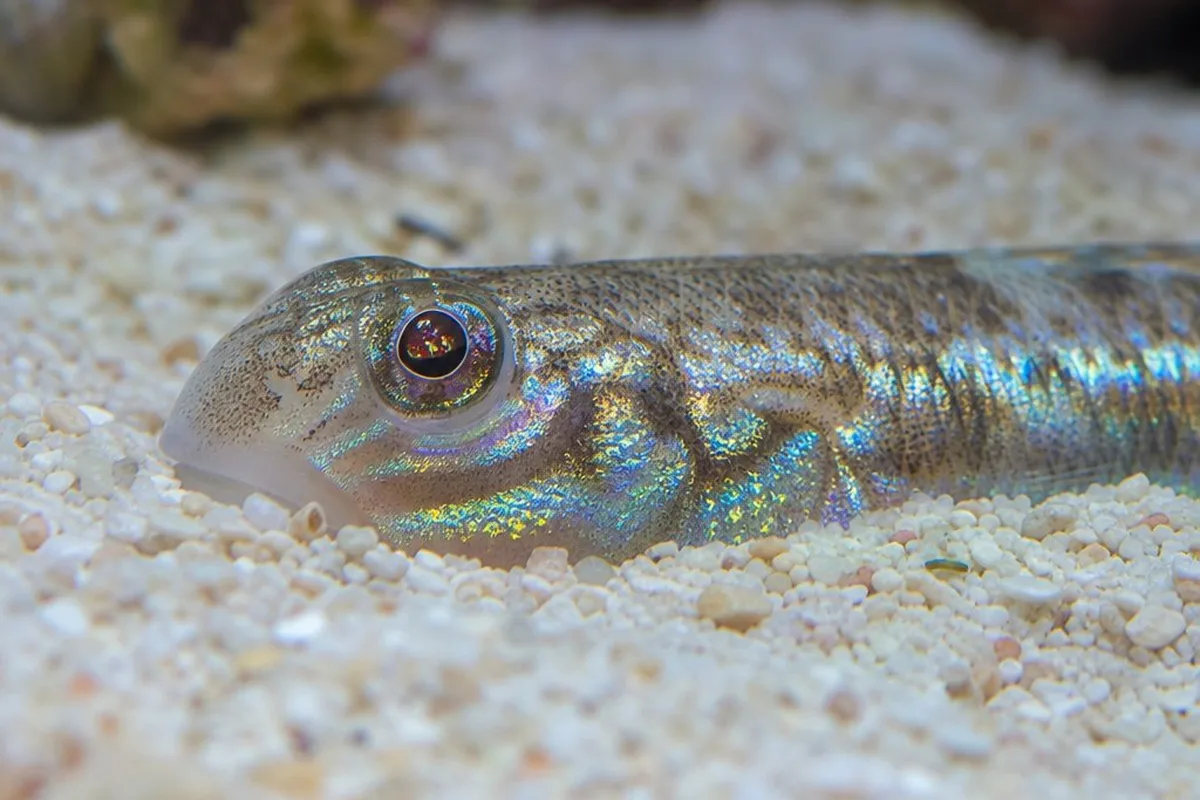
- Dragon gobies (violet gobies) — a substrate-burrowing species frequently mislabeled as purely freshwater; see our dragon goby care guide for the full picture
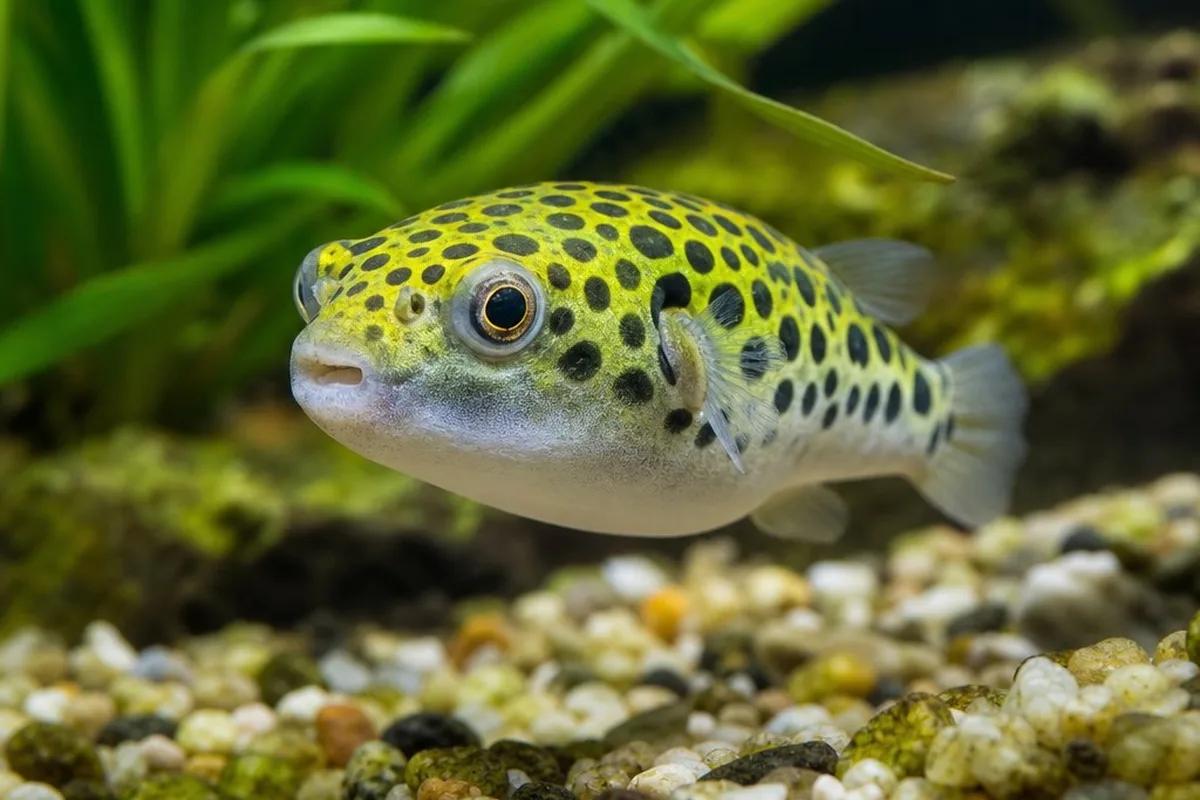
- Green spotted pufferfish — a species that often requires a transition toward higher salinity as it matures, regardless of how it was sold
- Four-eyed fish, archerfish, scats, and monos — species more closely tied to estuarine and mangrove habitats, generally requiring brackish-to-marine conditions throughout their lives rather than tolerating freshwater as juveniles
- Fiddler crabs — not fish, but a frequent brackish-tank companion species, covered in our fiddler crabs and mudskippers guide
Common Mistakes
The single most common mistake is buying a fish labeled "freshwater" that's actually brackish, and never adding salt at all. Because many of these species are euryhaline and can survive — sometimes for years — in freshwater, the consequences aren't always immediate, which is part of why the mislabeling persists. Reduced lifespan, dull coloration, and increased disease susceptibility are the more common long-term costs, rather than acute symptoms.
A second common mistake is changing salinity too quickly. Even euryhaline species that can handle a range of salinities generally need gradual adjustment — over days to weeks, not hours — when moving from one salinity level to another, the same caution that applies to acclimating any fish to new water parameters.
Quick Reference
- Brackish = specific gravity roughly 1.005-1.015, between freshwater (1.000) and seawater (1.020+)
- Use a hydrometer or refractometer to measure salinity, not guesswork
- Use marine aquarium salt mix, never plain table salt
- Top off evaporation with freshwater, not salt water, to avoid salinity creep
- Many "freshwater" store fish (mollies, dragon gobies, puffers) are actually brackish species
- Plant options are limited — most brackish tanks rely more on hardscape than live plants
- Adjust salinity gradually over days/weeks when transitioning an established fish