By Hektor Jorgo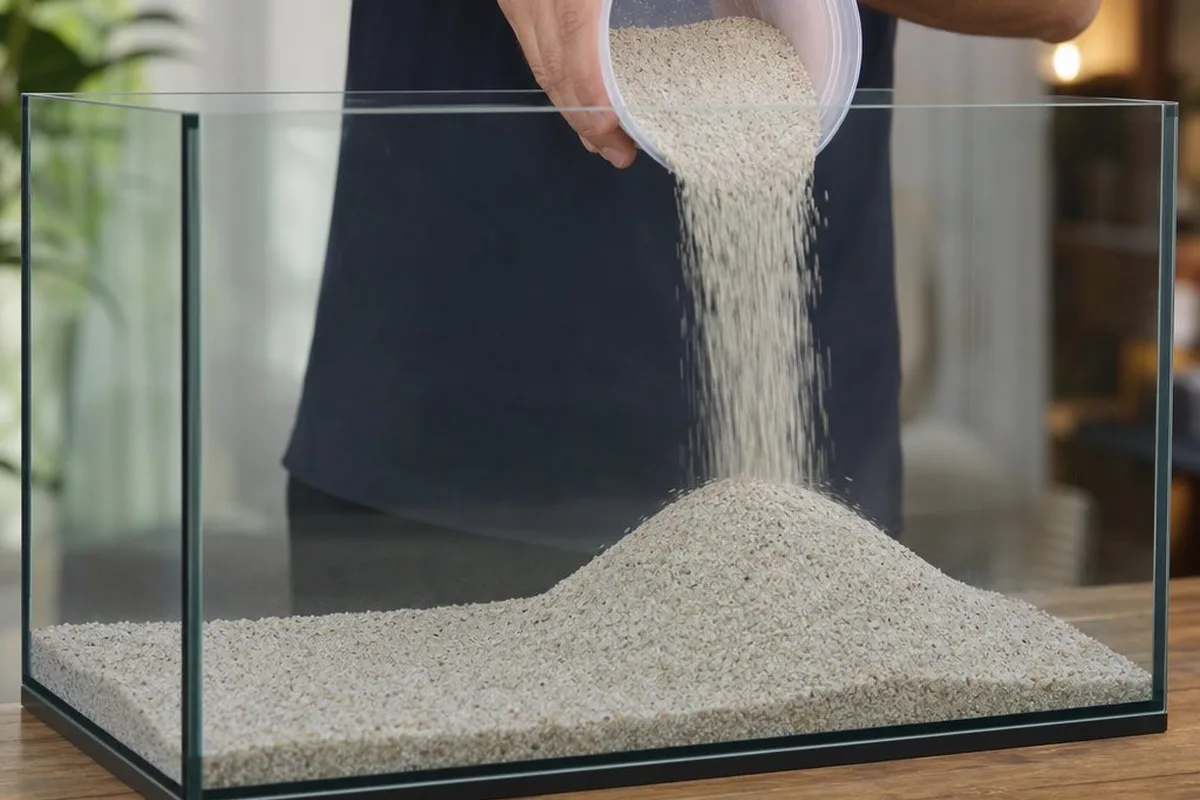
"How much sand do I need" sounds like it should have a single tidy number attached to it — and for a specific tank, footprint, and target depth, it does. The trouble is that "20-gallon tank" by itself isn't quite specific enough, because two tanks with that exact rating can have meaningfully different floors to cover.
Direct Answer: Roughly 20-30 lbs for a Thin Layer, More for Planted Depth
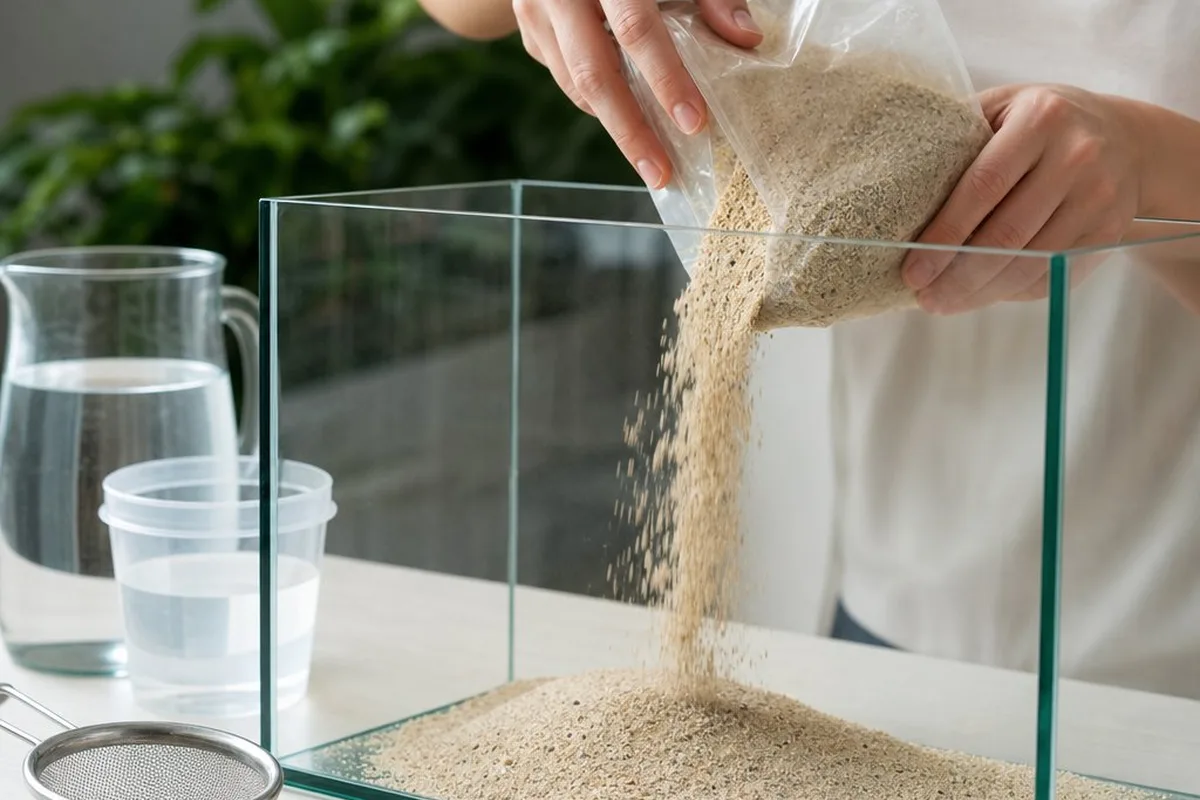
For a standard 20-gallon tank with a thin (~1 inch) sand layer, roughly 20-30 lbs is a reasonable estimate — based on a commonly used rule of about 1-1.5 lbs of sand per gallon of tank volume for that depth. For a planted tank with a 2-3 inch substrate depth, expect roughly 40-90 lbs, scaling with both depth and footprint. The biggest source of variation isn't the depth target — it's that a 20-gallon "long" and a 20-gallon "high" have different footprints despite holding the same volume, so the gallon number alone doesn't fully determine the answer.
Why "20 Gallons" Doesn't Tell the Whole Story
Two of the most common 20-gallon tank shapes:
- 20-gallon long — roughly 30 x 12 inches of footprint, shorter in height
- 20-gallon high — roughly 24 x 12 inches of footprint, taller
Both hold 20 gallons of water, but the long tank has a noticeably larger floor area. For the same target sand depth, that means more sand for the long tank than the high tank — even though both are labeled "20 gallons." This is the core reason gallon-based rules of thumb are a starting point rather than a precise answer: substrate quantity scales with footprint and depth, not volume.
A Practical Way to Estimate
For a more accurate number for your specific tank:
- Measure the footprint (length x width) of the substrate area
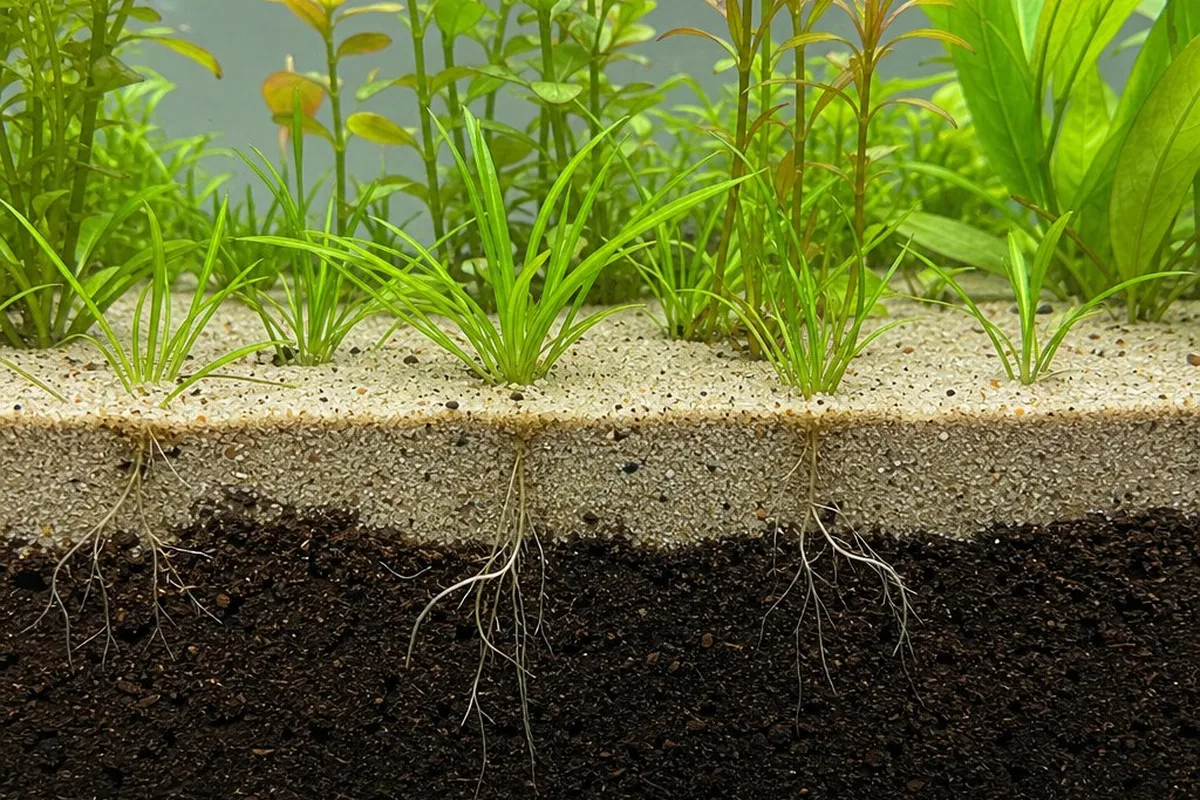
- Decide on a target depth — around 1 inch for a thin/aesthetic layer, 2-3 inches for planted tanks with root-feeders
- Scale from a known reference — if a given amount of sand produces a known depth in a known footprint, you can scale that ratio to your tank's footprint and target depth
Buying a bit more than your estimate is generally the safer direction — running short partway through is more disruptive than having a small amount of extra sand left over.
Sloped Aquascapes and Layered Substrates
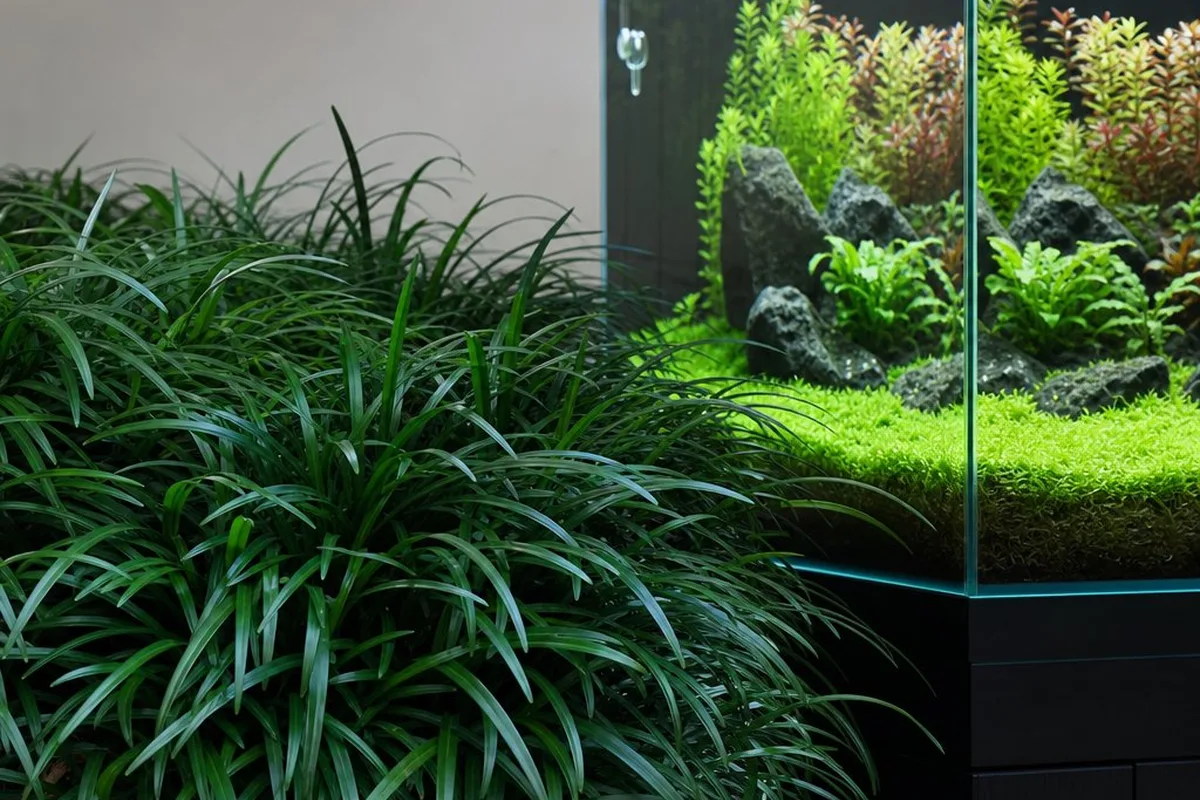
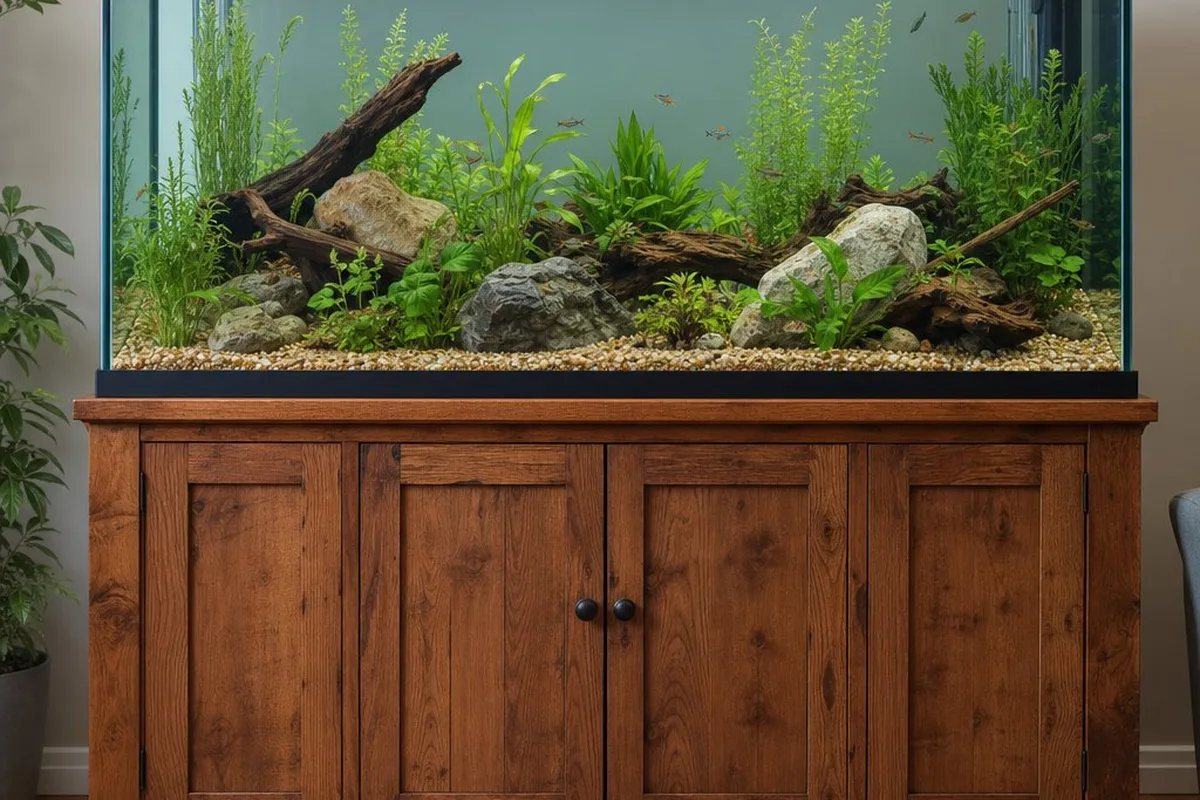
Many aquascaping layouts use a sloped substrate — deeper at the back of the tank, thinner toward the front — both for visual depth and to give taller background plants more root space. This increases the average depth across the footprint compared to a flat layer matching the front-edge depth, which means more total substrate than a flat-depth calculation would suggest.
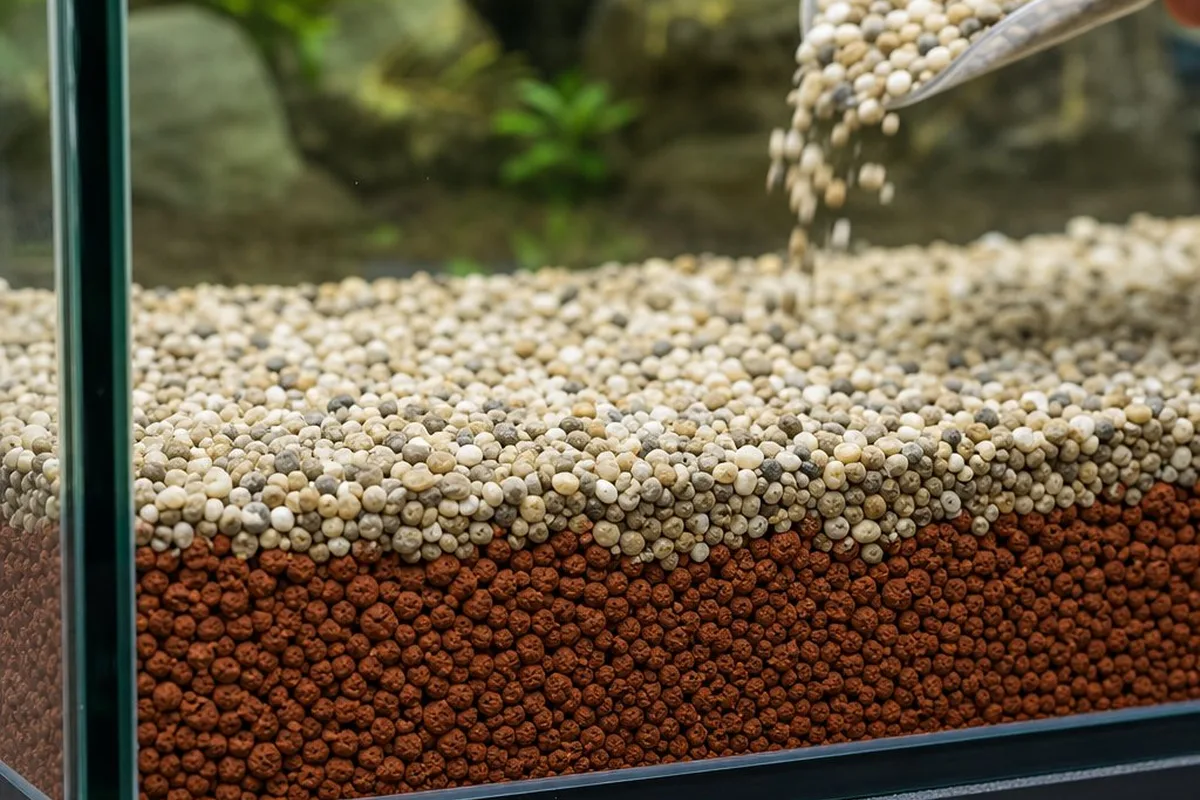
It's also common in planted tanks for the visible sand to be a cap layer over a nutrient-rich base — our guide to using potting soil as substrate covers one approach to that base layer, which adds to the total substrate depth (and weight) beyond the sand cap alone. Similarly, additives like laterite are sometimes mixed into or layered within the substrate for root-feeding plants, which can affect both depth and total substrate weight.
A Note on Substrate Type and Weight
Not all sand is created equal for aquarium use — our guide to whether Crayola play sand is aquarium-safe covers one common substitute people consider for cost reasons. Whatever sand is used, it adds real weight to the tank — 20-90 lbs for a 20-gallon tank's substrate alone, on top of the water. For a sense of how substrate weight fits into a tank's total filled weight at a larger scale, our guide to how much a 75-gallon tank weighs walks through that calculation.
Quick Reference
- Roughly 20-30 lbs of sand for a 20-gallon tank with a ~1 inch layer
- Roughly 40-90 lbs for a 2-3 inch planted-tank depth, depending on footprint
- A 20-gallon "long" and "high" hold the same volume but have different footprints — and different sand needs
- Measuring footprint and target depth gives a more accurate estimate than gallons alone
- Sloped aquascapes and substrate cap layers (over soil or laterite) increase total substrate needed
- Substrate adds meaningful weight on top of water — relevant when thinking about stands and floors