By Hektor Jorgo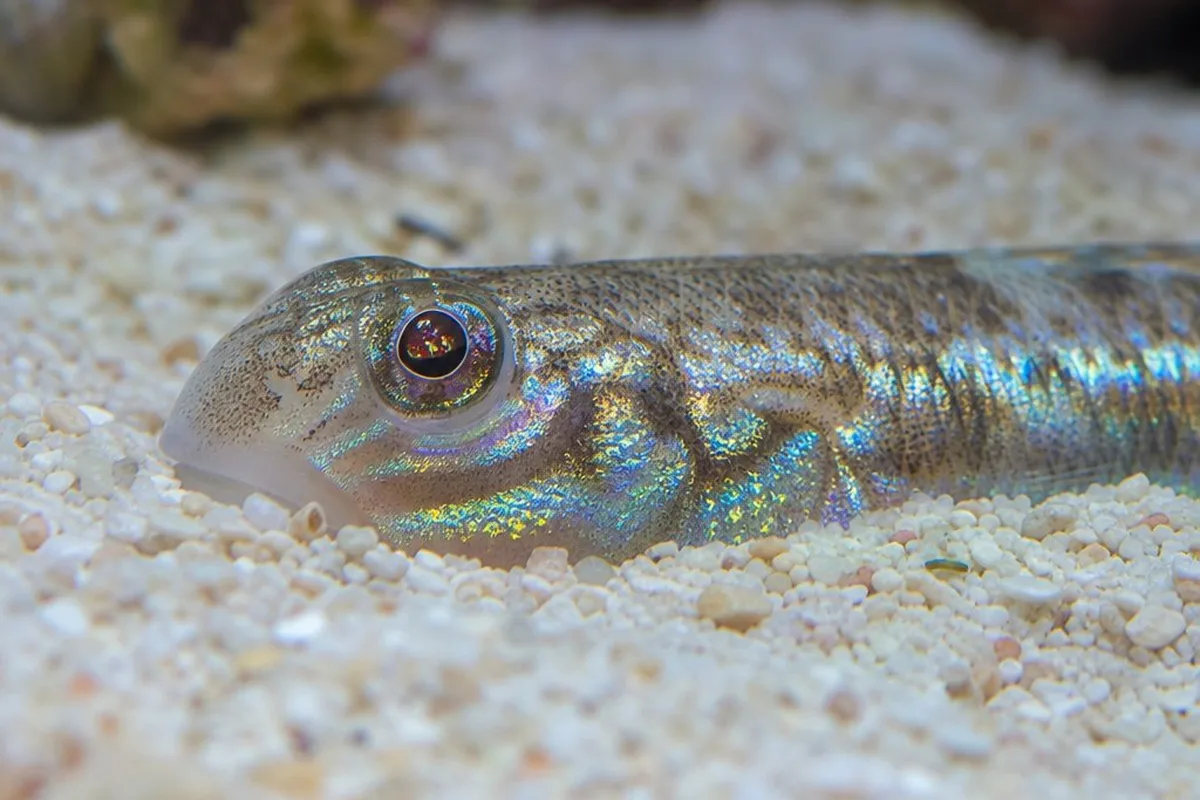
With its long, eel-like body, fanned dorsal fin, and habit of burrowing nose-first into the sand, the dragon goby (Gobioides broussonnetii) is one of the more visually distinctive fish sold for "freshwater" tanks — and also one of the more frequently misrepresented in terms of what it actually needs long-term.
Appearance and Natural Range
Dragon gobies have an elongated, almost eel-like body, typically a muted brown, grey, or violet-grey color, with a long dorsal fin running much of the body's length. Their eyes are small and their eyesight is notably poor, which shapes several aspects of their behavior — including a tendency to react to nearby movement more by feel and water displacement than by sight.
The species is native to brackish coastal waters and estuaries along the Atlantic coast of the Americas, from the southeastern United States down through parts of South America — habitats where salinity fluctuates with tides and freshwater river input, quite different from either a typical "freshwater" or "marine" aquarium setup.
As the name suggests, the dragon goby is a true member of the goby family (Gobiidae) — but, as covered in our broader overview of gobies, that family is so large and varied that "it's a goby" says very little about a fish's actual care needs. A brackish, sand-burrowing species like this one and a reef-associated marine goby share little beyond the family name.
Tank Requirements
Tank Size
50+ gallons is a reasonable long-term minimum for an adult dragon goby, which can reach 12-16 inches or more in captivity. A long, low-profile tank with ample substrate area is often more useful than a tall tank, given that dragon gobies spend much of their time at or below the substrate surface rather than swimming through open water.
Substrate and Aquascaping
Soft, fine sand is the most important substrate choice for this species — dragon gobies burrow and rest partially buried regularly (see our burrowing behavior guide), and coarse or sharp substrates can cause physical irritation. A few inches of fine sand gives the fish room to burrow comfortably. Driftwood, smooth rockwork, and hiding spots are appreciated, though the sand itself is the priority.
Water Parameters
| Parameter | Target Range |
|---|---|
| Temperature | 75-82°F (24-28°C) |
| pH | 7.0-8.5 |
| Ammonia / Nitrite | 0 ppm |
| Nitrate | <20 ppm |
| Salinity (specific gravity) | Low brackish, roughly 1.005-1.015 — true freshwater is tolerated but not ideal long-term |
The salinity row above is the detail most often missing from generic "freshwater" care information for this species. While dragon gobies can survive in fully freshwater tanks for extended periods, adding aquarium salt to reach a low brackish range is widely considered better for long-term health, reflecting the estuarine habitats this species actually comes from.
This flexibility isn't something most fish have — the dragon goby is one of the relatively small number of euryhaline species able to adjust its internal salt and water balance across a range of salinities, a trait covered in more general terms in our guide to whether saltwater fish can live in freshwater. Even so, any salinity adjustment for an established dragon goby should be done gradually, the same as for any euryhaline species moving between salinity levels. For the broader fundamentals of setting up and maintaining a brackish tank — salinity targets, equipment, and other species that share this fish's water chemistry needs — see our brackish water aquarium guide.
Diet and Feeding
Dragon gobies are detritivores and micro-predators in the wild, sifting through sediment for organic matter, small invertebrates, and algae. In the aquarium:
- Sinking foods — pellets or wafers designed to reach the substrate, since dragon gobies feed primarily at or near the bottom
- Live or frozen foods — bloodworms, blackworms, and similar foods are often well received
- A fine sand substrate that supports natural microfauna gives the fish something to forage on between feedings, similar in concept to how sand-sifting marine gobies rely on their substrate for part of their diet
For more detail on feeding this species, including common challenges with picky eaters, see our dragon goby feeding guide.
Tank Mates and Compatibility
Dragon gobies are generally peaceful, but a few factors narrow down realistic tank mate options:
- Eventual size — at 12-16+ inches, many community fish that seem like reasonable tank mates when the goby is young won't remain appropriate as it grows
- Salinity tolerance — tank mates need to tolerate at least a low brackish environment if the dragon goby's water is adjusted toward brackish, which rules out many strictly freshwater species
- Substrate-disturbance tolerance — burrowing behavior can disturb plants or substrate-dwelling tank mates
Other brackish-tolerant species and larger, calm tank mates that won't be bothered by an occasional burrowing neighbor tend to be the most realistic fits.
Some keepers also consider semi-terrestrial crustaceans for a paludarium-style setup built around a brackish dragon goby tank. Our guide to fiddler crabs and mudskippers covers a similar combination of brackish water needs and land access — the same general habitat overlap that makes those species worth considering alongside a dragon goby, though a dragon goby's substrate-burrowing habit and a crab's land-use needs would both need to be accommodated in the same tank design.
Burrowing Behavior
One of the most common questions about this species is whether burrowing is normal — and the short answer is yes, extensively. Dragon gobies often spend large portions of the day partially or fully buried, with just the head or dorsal fin visible. This is covered in detail, including when burrowing might instead signal a problem, in our dedicated guide to dragon goby burrowing behavior.
Common Health Issues
- Stress from inadequate substrate — coarse or insufficient substrate can lead to skin irritation or reluctance to engage in normal burrowing behavior
- Water quality sensitivity — like many fish from brackish/estuarine habitats, dragon gobies can be sensitive to ammonia and nitrite spikes, making the substrate's biological activity and overall filtration important
- Poor eyesight-related stress — sudden movements or fast tank mates can startle a dragon goby more than a fish with better vision, occasionally contributing to stress-related issues
Quick Setup Checklist
- Tank: 50+ gallons, long and low-profile, for an adult
- Substrate: several inches of soft, fine sand for burrowing
- Water: 75-82°F, pH 7.0-8.5, 0 ppm ammonia/nitrite
- Consider adding aquarium salt toward a low brackish range for long-term health
- Diet: sinking pellets/wafers plus live or frozen foods
- Tank mates: choose for eventual size and salinity tolerance
- Expect extensive burrowing — this is normal behavior, not a sign of stress on its own