By Hektor Jorgo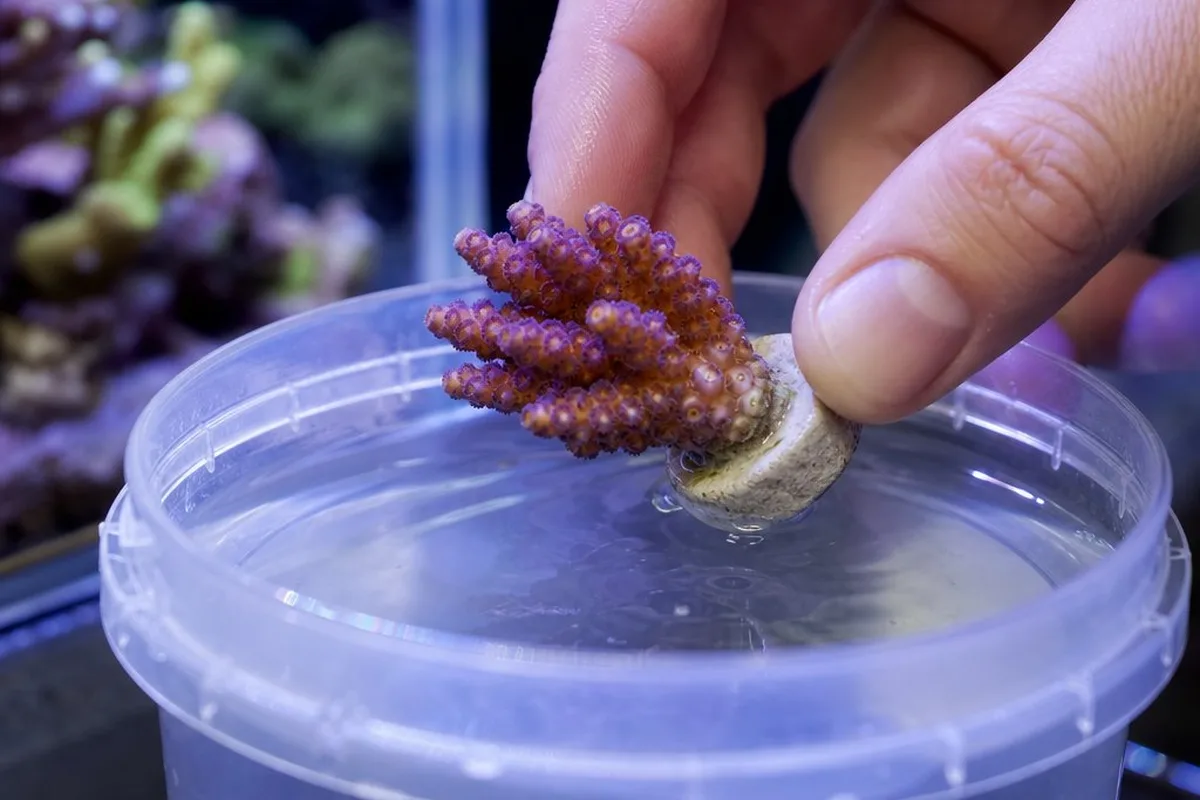
Aiptasia has a well-earned reputation as one of the most frustrating pests a reef tank can develop — small, fast-spreading, and capable of regrowing from fragments left behind during removal attempts. Coral dips are part of the standard prevention toolkit, but it's worth being clear about what they can and can't actually accomplish.
Short Answer
A coral dip can kill or dislodge small aiptasia attached directly to a new coral frag, which is exactly why dipping new frags before adding them to your tank is widely recommended as a preventive step. However, coral dips aren't a treatment for aiptasia that's already established in your display tank — dipping an entire system isn't practical or safe for existing corals and fish, and an established aiptasia population typically has root systems spread through the rockwork that a frag-scale dip wouldn't reach anyway. If aiptasia is already present in your tank, targeted injection, biological control, or careful manual removal are the appropriate next steps — not dipping.
What Coral Dips Actually Do
A coral dip is a chemical solution — often iodine-based, though many proprietary commercial products exist — that a coral frag is briefly submerged in, generally for a few minutes per the product's directions, in a separate container outside the main tank. The purpose is to address pests that may be hitchhiking on the frag itself:
- Aiptasia — small anemones that can hitchhike on a frag's base rock and quickly become a tank-wide problem if introduced
- Flatworms — flat, often brightly colored pests that can rapidly reproduce in reef tanks
- Pest snail eggs — eggs from snail species less desirable than common cleanup crew species
- Bristle worms — while many bristle worms are harmless detritivores, dipping can help manage populations of more problematic types
After dipping, the frag is rinsed and visually inspected, with any dislodged pests removed, before it goes into the display tank.
Using Coral Dips to Prevent Aiptasia From Entering Your Tank
This is where coral dips genuinely excel, and it's the use case they're designed for:
- Dip every new frag before it enters your tank, even if it looks clean — small aiptasia can be easy to miss, especially tucked into crevices on a frag's base rock (our guide to coral frags for beginners covers what else is worth checking on a new frag)
- Inspect carefully after dipping — look at the base, any attached rock, and the frag's underside for anything that's been dislodged or that appears unusual
- Treat new live rock similarly where practical — aiptasia commonly arrives on live rock, not just coral frags
This preventive approach is the same general logic that applies to other hitchhiker concerns covered elsewhere on this site, such as identifying hydroids on new additions — catching a potential pest before it's established in the main tank is far easier than dealing with it afterward.
Before reaching for a dip or any other treatment, it's worth being sure the organism in question actually is aiptasia. A small new growth that looks like a tiny anemone could also be a feather duster worm — a desirable filter feeder that's sometimes mistaken for aiptasia by newer keepers. Our guide to telling aiptasia and feather dusters apart covers the visual and behavioral differences.
If Aiptasia Is Already Established: Why Dipping the Main Tank Isn't the Answer
It's worth being direct about this, because "just dip it" is sometimes suggested as a catch-all pest solution. For an established aiptasia population:
- Concentration and exposure time in coral dips are calibrated for a single frag in an isolated container — applying anything close to that concentration tank-wide would risk harming corals, fish, and invertebrates you want to keep
- Aiptasia root systems can extend into rock in ways that a surface-level dip wouldn't address even if dipping the whole tank were otherwise safe
- Aiptasia reproduces from fragments — any approach that disturbs an aiptasia without fully addressing it risks creating more anemones from torn pieces, which a tank-wide dip could plausibly do at scale
Treating Established Aiptasia
For aiptasia that's already present and spreading, the standard toolkit looks different from prevention:
- Targeted injection — aiptasia-specific commercial products, or a kalkwasser (calcium hydroxide) paste, applied directly into the anemone's mouth/column with a syringe, aiming to kill the individual anemone without disturbing it enough to fragment it
- Biological control — peppermint shrimp are commonly added for aiptasia control, though results vary; Berghia nudibranchs are more specialized aiptasia predators but come with their own husbandry considerations
- Manual removal — for heavily affected rock, removing the rock and treating it outside the tank may be more effective than trying to address each anemone in place
Quick Reference
- Coral dips can kill or dislodge small aiptasia attached to a new frag — this is what they're designed for
- Always dip new frags (and inspect new live rock) before adding to your tank as prevention
- Coral dips are not a treatment for aiptasia already established in a display tank
- Dipping an entire tank risks harming existing corals, fish, and cleanup crew
- Established aiptasia needs targeted injection, biological control, or careful manual removal
- Aiptasia can reproduce from fragments — incomplete removal can make things worse
- Prevention (dipping incoming frags/rock) is far easier than treating an established population