By Hektor Jorgo
Every so often, a fish ends up in the aquarium trade that genuinely doesn't belong there — not because it's delicate or difficult, but because of the opposite problem: it's too hardy, too fast-growing, and too large for almost any home setup to accommodate as an adult. The channel catfish (Ictalurus punctatus) is one of the clearer examples of this, and "tank conditions" is almost the wrong framing — the more useful question is whether a home aquarium is the right place for this fish at all.
Short Answer
Channel catfish are native North American game fish that commonly reach 12-24+ inches in confined conditions (and considerably larger — sometimes 30+ pounds — in ponds or the wild), with a fast growth rate that can outpace a home aquarium within one to two years. They're cold-tolerant and don't need heating, which can make them seem hardy and easy at a young age, but this doesn't address the core issue: no realistic home aquarium provides adequate long-term space for this species. If you're considering one, or have one that's outgrowing its tank, a large pond (with appropriate permissions) is the main responsible option — not a bigger aquarium.
Why Channel Catfish Are a Problem Purchase
Channel catfish sometimes end up in the aquarium trade or as "feeder fish" sold without context about their adult size and needs — a small, a few-inch juvenile channel catfish doesn't look dramatically different from other small catfish species that genuinely do work in home aquariums. The problem isn't how they look at purchase size; it's the trajectory.
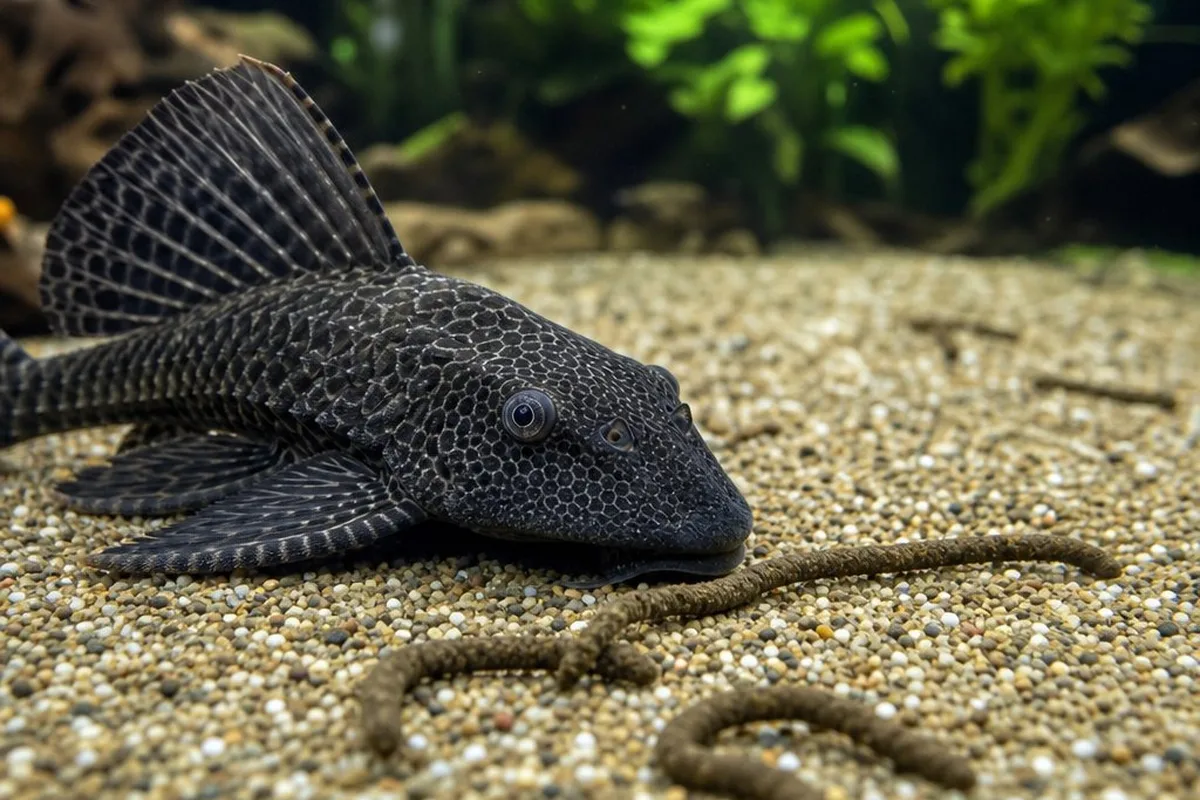
This is a more extreme version of a pattern that shows up with other species too — fancy L-number plecos sold small without species identification, or Colombian shark catfish sold as peaceful community fish despite their adult size — but channel catfish push this dynamic to its logical extreme: a fish that's genuinely a pond/game species, sold as if it were an aquarium fish.
Actual Adult Size and Growth Rate
12-24+ inches is a realistic range for channel catfish even in confined, suboptimal conditions — and in ponds or the wild, channel catfish are a well-known angling species specifically because they grow much larger, with specimens well over 20 pounds being notable but not extraordinarily rare catches.
The growth rate compounds the issue: under the kind of stable conditions and regular feeding a well-maintained aquarium provides, channel catfish can grow quickly, often reaching a foot or more in their first year or two. By the time a keeper has fully registered how large the fish has gotten, it's often already well beyond what the tank can comfortably hold — and still growing.
Water Conditions Channel Catfish Need
In terms of water chemistry and temperature, channel catfish are genuinely undemanding — they're a temperate species, tolerant of cold water, and don't require the heating that most popular aquarium fish need. On paper, this looks like an "easy" fish.
The catch is that water chemistry tolerance was never the limiting factor for this species in an aquarium — space is. A channel catfish kept in water chemistry it's perfectly comfortable with, in a tank that's far too small for its body size, doesn't become a "hard" fish to keep in the traditional sense (disease-prone, finicky) — it becomes a fish whose basic spatial needs simply can't be met, which is a different (and in some ways harder to address) kind of welfare problem.
What "Tank Conditions" Really Means for This Species
For most species, "tank conditions" means temperature, pH, filtration, and decor. For channel catfish, the honest answer is that the relevant "tank condition" is whether the tank is pond-sized — hundreds of gallons at minimum for an adult, with filtration to match the substantial waste output of a large, actively-growing fish (a bioload consideration that's relevant at a smaller scale for other catfish too, as discussed in our pleco waste guide, but reaches an entirely different order of magnitude with a 20+ inch fish).
There isn't a meaningful answer to "what tank size works for an adult channel catfish" within the range of tanks most home aquarists have or could reasonably set up — which is the core point of this article.
Responsible Options If You Already Have One
If you have a channel catfish that's outgrowing its tank (or are considering acquiring one and have read this far):
- A large outdoor pond is the main realistic option for an adult — but check local regulations, since channel catfish are often a managed game species and stocking may require permits or have restrictions depending on location.
- Don't release it into a wild waterway. This is generally illegal and carries ecological risks (disease, localized population effects, genetic impacts) even for a species native to the broader region — "it's native here anyway" doesn't make releasing an aquarium-raised fish into a specific wild water body a neutral act.
- Reach out to local resources — aquarium societies, pond owners, or wildlife/extension agencies in your area may be able to advise on rehoming options that exist specifically because this is a recurring issue, not a unique one.
- For future purchases, this is a strong case for researching adult size and growth rate before buying any unfamiliar catfish — a question worth asking for any "interesting-looking small catfish" at a pet store, including species like Berney's shark catfish or Asian banjo catfish, where common names don't always convey adult size clearly.
Quick Reference
- Channel catfish reach 12-24+ inches in confined conditions, much larger in ponds
- Fast growth rate — can outgrow a home aquarium within 1-2 years
- Cold-tolerant, no heater needed — but this doesn't solve the core space problem
- No realistic home aquarium provides adequate long-term space for an adult
- If outgrowing a tank: large pond (with permits/permissions) is the main option
- Never release into wild waterways — illegal and ecologically risky even for native species
- Research adult size before buying any unfamiliar small catfish