By Hektor Jorgo
Arowana temperature requirements aren't, on their own, especially unusual — they fall within a fairly typical tropical freshwater range. What makes this topic worth its own guide is that arowana are kept in tanks measured in hundreds of gallons, and heating, monitoring, and stability all work differently at that scale than they do in a standard aquarium.
Short Answer
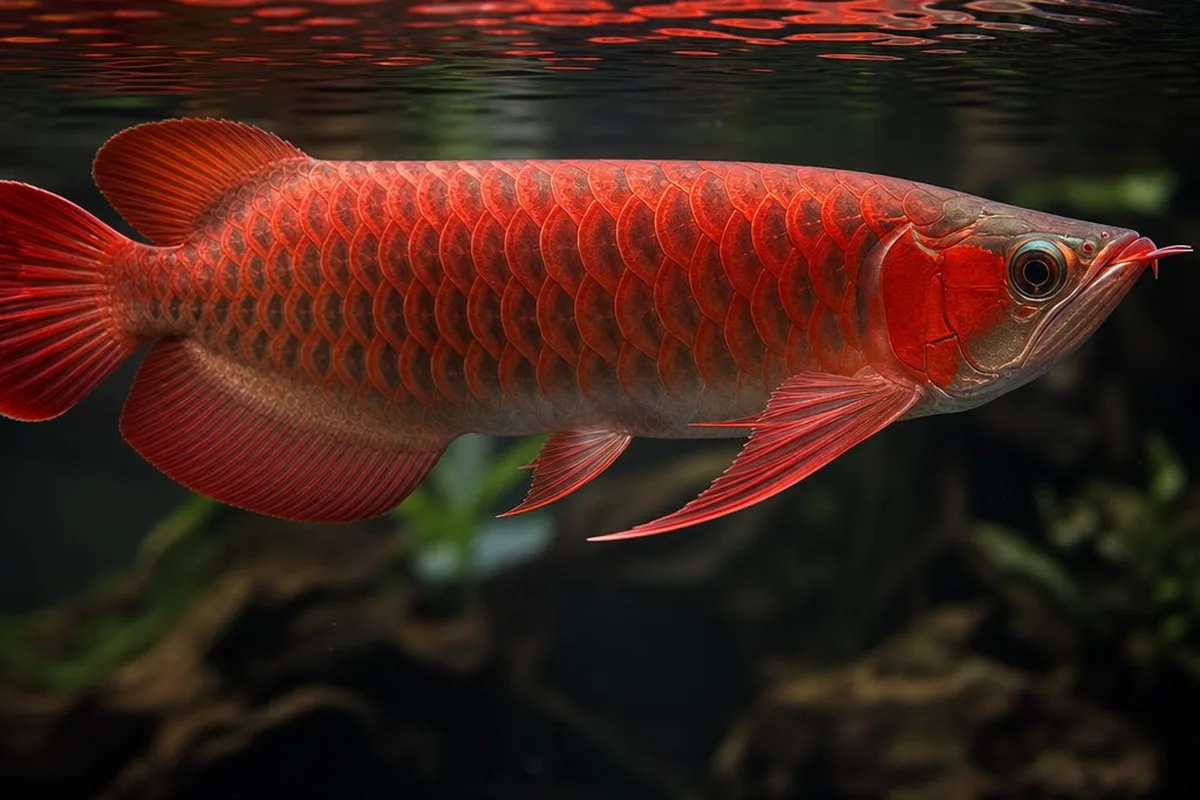
The ideal range for arowana, including the Red Jardini arowana, is roughly 75-86°F (24-30°C), with many keepers targeting the middle of that range (around 78-82°F) day to day. The number itself is unremarkable for a tropical fish — the real challenge is heating and maintaining that temperature evenly across a tank of 250+ gallons, where equipment sizing, cold-spot risk, and the consequences of equipment failure all scale up substantially compared to a typical-sized aquarium.
Ideal Temperature Range for Arowana
75-86°F (24-30°C) covers the range generally cited for arowana care, which is broad enough to accommodate normal day-to-day fluctuation without concern. Most keepers don't aim to hit a single exact number but instead maintain a stable target somewhere in the middle of this range — commonly cited as roughly 78-82°F — leaving headroom on both ends for normal equipment behavior and room temperature influence.
This range is broadly similar to what many tropical freshwater fish need, including species discussed elsewhere on this site like Colombian shark catfish (75-80°F) — the overlap means an arowana tank's temperature requirements aren't, by themselves, a barrier to housing compatible large tank mates, if the tank's overall size and the arowana's predatory nature allow for tank mates at all.
Why Temperature Stability Matters More at This Scale
A larger volume of water has more thermal mass — it resists rapid temperature changes from things like a brief room temperature swing better than a small tank would. This sounds like an advantage, and in some ways it is.
The flip side: if something goes wrong — a heater fails, a heater is undersized for the tank, or a room's ambient temperature shifts seasonally — a large tank's temperature will drift more slowly, which means the problem can go unnoticed for longer before someone checks a thermometer and realizes the tank has drifted several degrees from target. In a small tank, a failed heater often produces a noticeable, relatively fast temperature change that prompts a check. In a 250+ gallon tank, the same failure might take much longer to become apparent — by which point the fish may have been outside its ideal range for an extended period.
Practical takeaway: large tanks need more deliberate temperature monitoring, not less, even though they're more thermally stable in the short term.
Heating a Large Arowana Tank
Heating equipment needs to be calculated for the actual volume of the tank, not scaled up casually from what works for a smaller aquarium:
- Total heating capacity should be sized for the full tank volume, accounting for the room's typical ambient temperature (a cooler room requires more heating capacity to maintain the same target temperature)
- Multiple heaters, positioned at different points in the tank, are common for large setups — this both provides the necessary total capacity and helps avoid cold spots that a single heater (even a powerful one) might not fully address in a tank that's many feet long
- Redundancy matters more here: if one heater in a multi-heater setup fails, the others can help limit the temperature drop while the issue is identified, compared to a single-heater setup where failure means no heating at all
This is part of the broader equipment-budget reality of arowana keeping discussed in our Red Jardini arowana guide — heating a tank this size is a genuinely different undertaking than heating a 20-75 gallon tank, not just a bigger version of the same task.
Temperature, Growth, and Immune Function
Within the ideal range, temperature is one of several factors (along with diet and water quality) supporting the fast growth rate arowana are known for. Outside that range, in either direction, effects can include:
- Chronically low temperatures: slowed metabolism, reduced digestion efficiency, slower growth — and potentially increased susceptibility to issues that affect stressed fish more broadly, a pattern that comes up across species, including the stress-related concerns discussed for American flagfish in a very different context
- Sustained high temperatures (toward the upper end of the range or beyond): increased metabolic rate and oxygen demand, which interacts with the tank's overall oxygenation and bioload — a consideration that compounds with the substantial waste output already discussed for large, fast-growing fish in our pleco waste guide
The practical goal is a stable target within the range, monitored consistently, rather than treating temperature as a "set it and forget it" parameter — which is true for most fish, but carries more weight here given the scale involved. For more on why fish are affected by temperature this way in the first place — and why sudden swings matter more than the absolute number — see our guide to how temperature affects fish.
Quick Reference
- Target range: 75-86°F (24-30°C), with 78-82°F as a common day-to-day target
- Size heating equipment for the tank's actual volume (250+ gallons for an adult arowana setup)
- Consider multiple heaters for both capacity and redundancy
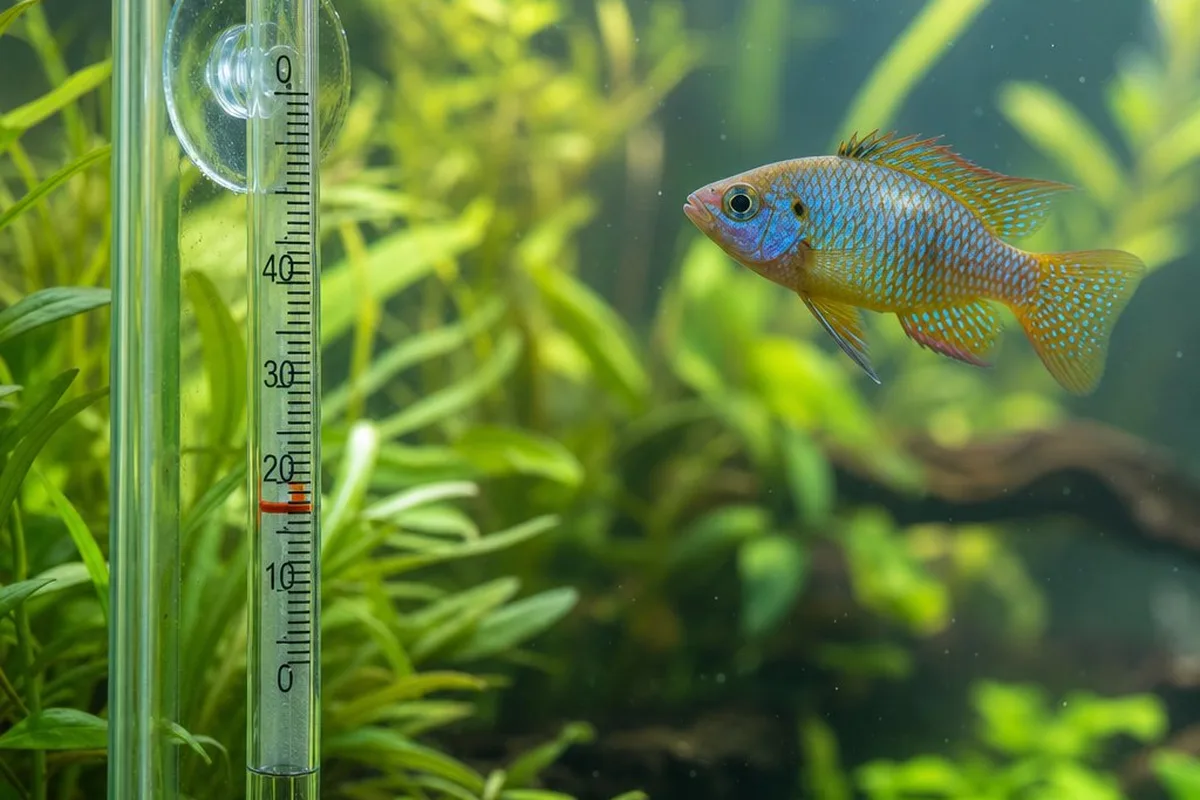
- Place thermometers at multiple points to catch cold spots or uneven heating
- Check temperature regularly — large tanks drift slowly, so problems can go unnoticed longer
- Avoid chronic temperatures near either edge of the range
- Allow a new tank to stabilize at target temperature before adding fish