Best Lighting for a 40-Gallon Breeder Tank

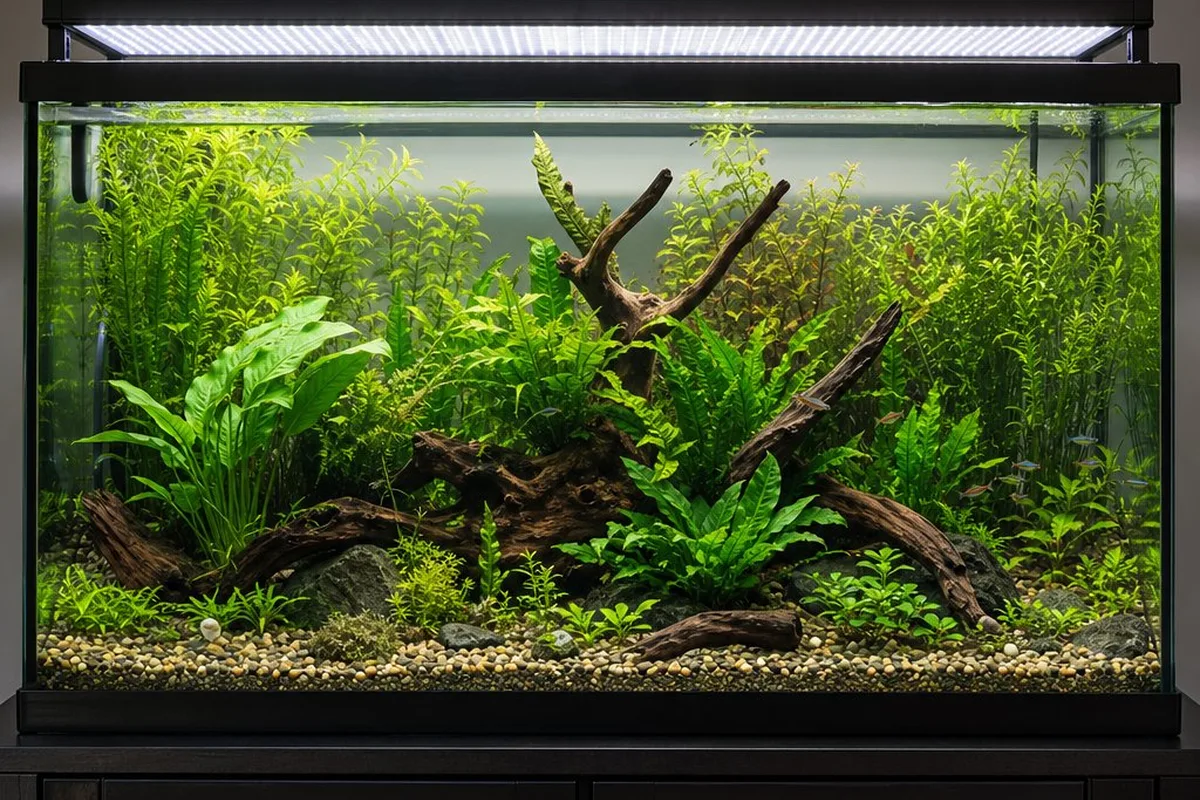
A 40-gallon breeder aquarium with a wide LED light fixture spanning the tank's width

Quick Facts

Tank Dimensions
Roughly 36in x 18in x 16in — wider and shallower than a standard 40-gallon long (36in x 12in x 18in)
Coverage Over Intensity
The 18in width means a narrow strip light may leave the front or back edges dimmer than the center
Low-Light Planted
Many low/moderate-light plants do well under a single full-spectrum LED fixture rated for the tank's footprint
High-Light Planted/Reef
Demanding plants or corals may need a higher-output fixture, or two fixtures, to maintain adequate intensity across the width
Shallower Depth Helps
16in depth means light has less distance to travel to the substrate than in a taller tank, somewhat offsetting the wider footprint
Fish-Only Setups
Lighting requirements are mostly about visibility and appearance rather than photosynthesis — more flexibility in fixture choice
Multiple Fixtures
Two smaller fixtures side-by-side often give more even coverage across the width than one fixture sized for a narrower tank
Photoperiod
8-10 hours/day is a common starting point for planted or reef setups, adjusted based on algae response

The "40-gallon breeder" is one of those tank sizes that doesn't quite fit the lighting advice written for a standard 40-gallon — and the reason comes down to its shape, not its volume.

Short Answer

A 40-gallon breeder (roughly 36in x 18in x 16in) is wider and shallower than a standard 40-gallon long (36in x 12in x 18in), which means lighting coverage across that extra width matters more than raw intensity for most setups. A single fixture sized for a narrower tank can leave the front or back edges dimmer than the center. For low-to-moderate planted setups, a full-spectrum LED rated for the wider footprint generally works well. For high-light planted tanks or reef setups, a higher-output fixture or two fixtures run side-by-side tend to give more even coverage. Fish-only setups have the most flexibility, since lighting is mostly about appearance rather than photosynthesis.

Why the Shape Matters More Than the Gallons

A 40-gallon breeder and a 40-gallon long hold the same volume of water, but distribute it differently:

40-Gallon Breeder 40-Gallon Long
Length ~36in ~36in
Width ~18in ~12in
Height ~16in ~18in

The 6-inch wider footprint is the key difference for lighting. A fixture designed and rated for a 12in-wide tank may genuinely cover that width well, but stretched across an 18in-wide breeder, the outer edges (front and back from the light's perspective) can fall well below the intensity at the center. The 2-inch shallower depth works somewhat in your favor — light has less distance to travel to reach the substrate — but it doesn't fully offset the wider coverage requirement.

Matching Lighting to How You're Using the Tank

Low to Moderate-Light Planted Setups

Many popular, less-demanding plant species do well under a single full-spectrum LED fixture, as long as its stated coverage width is appropriate for 18in — checking coverage specs (not just overall fixture length) avoids ending up with bright center growth and struggling plants along the front and back glass.

High-Light Planted or Reef Setups

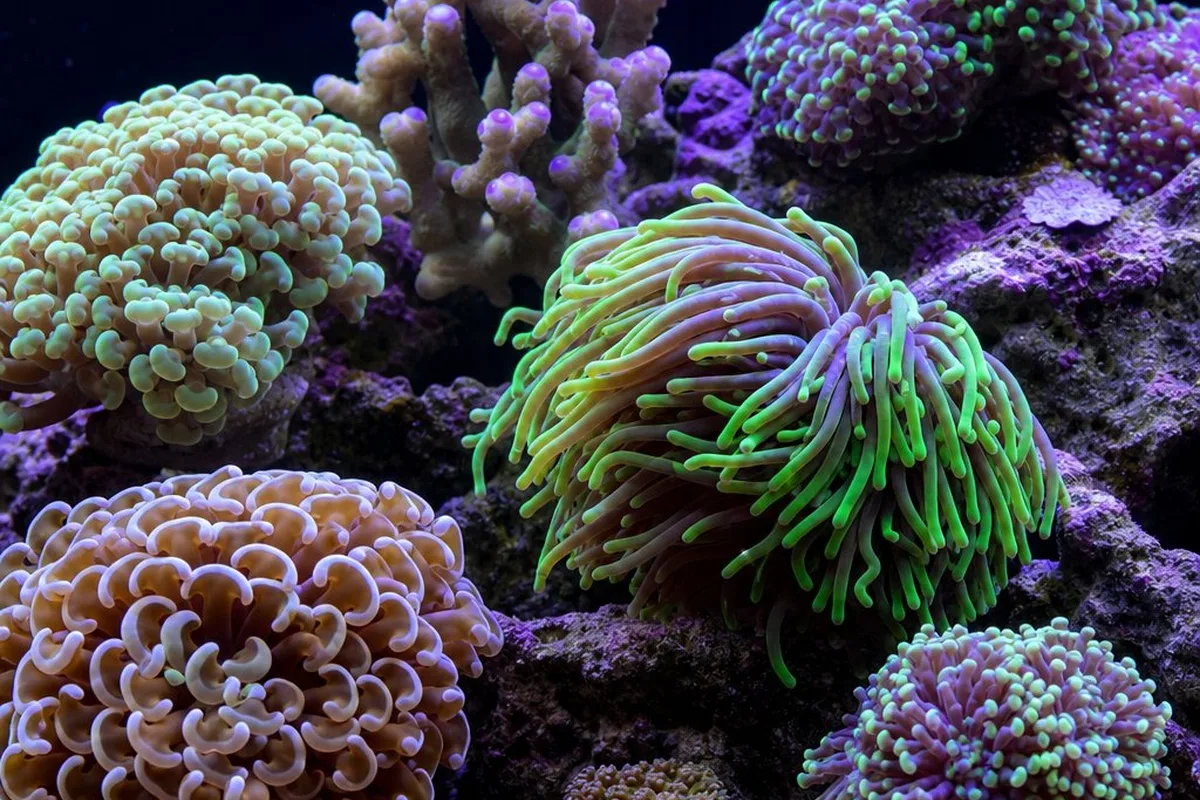
For carpeting plants, more demanding stem plants, or a reef setup, a higher-output single fixture or two smaller fixtures placed side-by-side across the width tend to produce more even intensity than relying on one fixture to stretch across 18in at high output. For reef setups specifically, the white/blue balance and acclimation considerations in our guide on how much white light corals need apply regardless of tank shape — the breeder's footprint mainly affects where corals can be placed relative to the light's coverage area, given the extra width to work with.

Fish-Only Setups

Lighting requirements here are driven by appearance and providing a day/night cycle rather than supporting photosynthesis, so there's considerably more flexibility in fixture choice — coverage evenness matters less when there's no plant or coral growth depending on it.

Multiple Fixtures: A Practical Option

Running two smaller fixtures side-by-side along the tank's length is a common approach for breeder tanks specifically, because it naturally addresses the width problem — each fixture covers its section of the 18in width more evenly than one fixture trying to span the whole thing. This also offers some built-in redundancy: if one fixture has an issue (see our hood light troubleshooting guide or Juwel-specific guide if applicable), the tank isn't left completely dark while it's resolved.

Photoperiod: Duration Matters Too

8-10 hours per day is a reasonable starting point for planted or reef setups. If algae becomes an ongoing issue, adjusting the photoperiod (how long the light runs) is often a more useful first lever than adjusting intensity, since total light exposure depends on both — and reducing duration is easier to dial in via a timer than swapping intensity settings repeatedly. For fish-only tanks, consistency via a timer matters more than the specific number of hours chosen.

Quick Reference

  • A 40-gallon breeder is ~36x18x16in — 6in wider and 2in shallower than a standard 40-gallon long
  • Check a fixture's coverage width (not just length) — narrow-rated fixtures can leave edges dim on the wider footprint
  • Low/moderate-light planted setups: a single appropriately-rated full-spectrum LED generally works
  • High-light planted or reef setups: consider a higher-output fixture or two fixtures side-by-side for even coverage
  • Fish-only setups have the most flexibility, since lighting is mainly about appearance
  • Two smaller fixtures can solve the coverage problem and add redundancy
  • 8-10 hours/day is a common photoperiod starting point; adjust duration first if algae becomes an issue

Frequently Asked Questions

What makes lighting for a 40-gallon breeder different from a standard 40-gallon tank?

The main difference is the footprint shape, not the volume. A 40-gallon breeder is roughly 36in long x 18in wide x 16in tall, while a standard 40-gallon 'long' is closer to 36in x 12in x 18in. The breeder is the same length, 6 inches wider, and 2 inches shallower. For lighting, this matters because a fixture sized for the narrower 12in-wide tank may not adequately cover the full 18in width of a breeder — the front and back edges (relative to the light) can end up noticeably dimmer than the center. The shallower depth helps somewhat, since light has less distance to travel to reach the substrate, but coverage across the width is the bigger consideration when choosing a fixture for a breeder tank specifically.

What lighting works well for a planted 40-gallon breeder?

For low to moderate-light plants (many common beginner-friendly species), a single full-spectrum LED fixture rated for a tank of this footprint generally provides adequate coverage and intensity — check that the fixture's stated coverage width is close to or exceeds 18in, rather than just checking its length rating. For higher-light plant setups (carpeting plants, more demanding stem plants), either a higher-output single fixture or two smaller fixtures run side-by-side tend to give more even intensity across the full width than stretching a single narrower-rated fixture to cover 18in. As with any planted tank, increasing light intensity should be paired with attention to nutrients and CO2 if applicable — high light without those tends to favor algae over plant growth, which ties into the same blackout/algae dynamics covered in our guide on how long algae survives without light.

Can I run a reef tank in a 40-gallon breeder, and what lighting does that need?

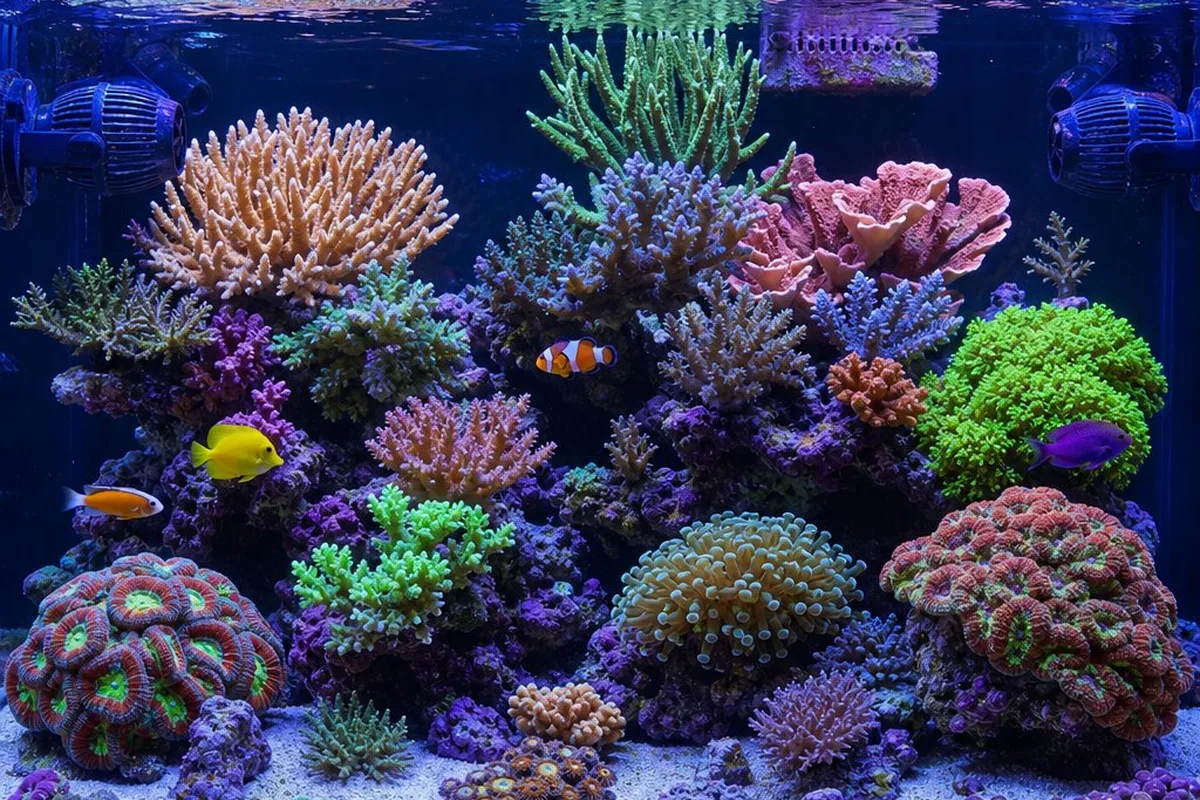
Yes — the wide, shallow footprint is actually a popular choice for reef tanks, since it provides a lot of usable floor space for coral placement at relatively shallow depths. Reef lighting for this size generally means an LED fixture (or two) with both white and blue/actinic channels, sized for the 18in width to avoid dim edges where corals might be placed. The considerations covered in our guide on how much white light corals need apply directly here — coral type affects how much intensity is appropriate, and acclimating gradually to a new fixture's output matters regardless of the fixture's rated capability. For LPS-heavy stocking, a more modest fixture is often sufficient; for SPS-heavy stocking, a higher-output fixture with good edge-to-edge coverage becomes more important given the width.

How many hours per day should the light run on a 40-gallon breeder?

Around 8-10 hours per day is a common starting point for planted or reef setups, with adjustments based on how the tank responds. If algae becomes a recurring issue, reducing the photoperiod (rather than necessarily reducing intensity) is often the first adjustment to try, since total light exposure is a combination of both intensity and duration. For fish-only setups, the photoperiod is more about providing a consistent day/night cycle for the fish than meeting a photosynthetic requirement, and there's more flexibility — though consistency (using a timer) still matters more than the exact number of hours chosen.

Sources & Further Reading

  1. Aquarium Lighting Buying Guides — Practical Fishkeeping
  2. Reef and Planted Tank Lighting Discussion — Reef2Reef DIY Projects
Hektor Jorgo

About the Author: Hektor Jorgo

Co-Founder & Marine Biologist

Hektor is a co-founder of Sea Life Planet and has kept reef and freshwater aquariums for over 15 years. He holds a background in marine biology and focuses on species care accuracy, water chemistry, and tank husbandry.