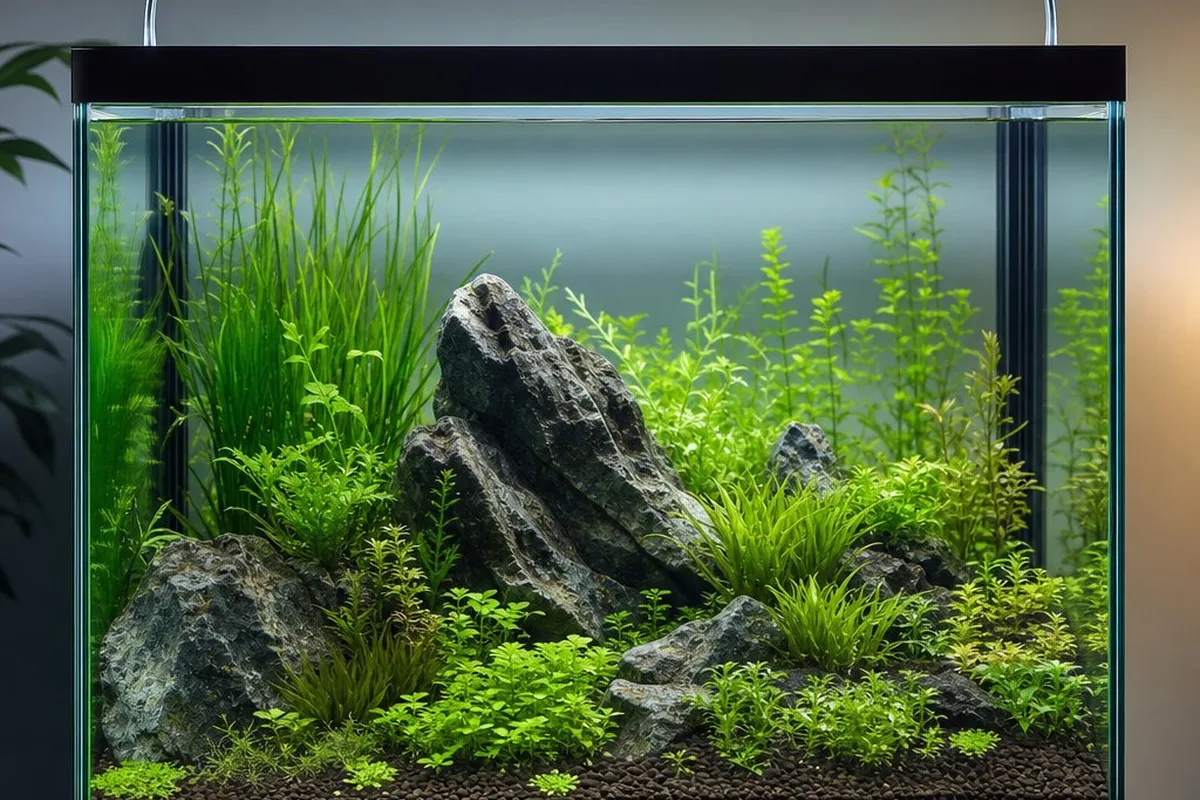
What Do Fish See From Inside the Tank? Fish Vision Explained

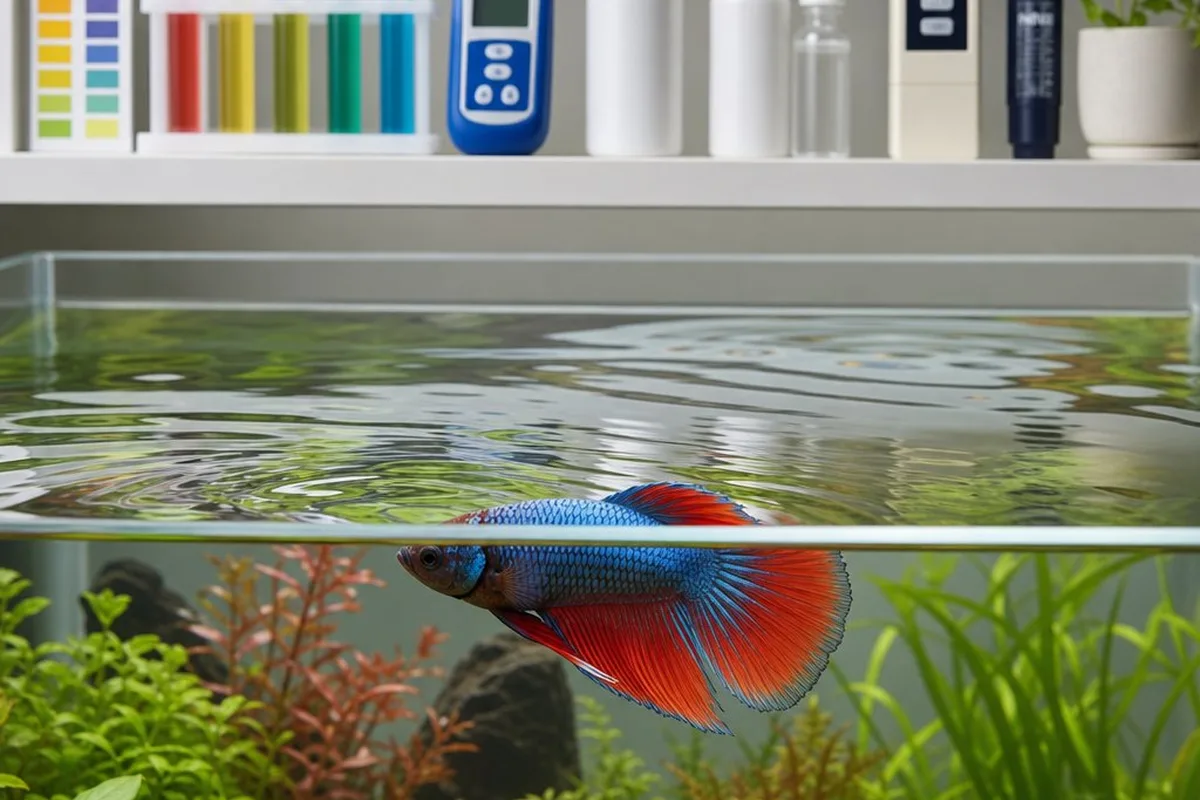
A view from underwater looking up toward the surface of an aquarium, showing a compressed view of the room above

Quick Facts

What Fish See Looking Up
A compressed 'window' of the world above water (sometimes called Snell's window), surrounded by a mirror-like reflection of the tank's interior
Why It's Compressed
Light bends (refracts) when passing between water and air, compressing the above-water view into a cone roughly 97 degrees wide
Outside the Window
Light hitting the surface at a shallow angle reflects back down rather than passing through - total internal reflection
Glass Adds Distortion
A tank's glass walls add their own refraction on top of the water's effect
Fish Can See Movement Outside
Sudden movements or approaches near the tank are visible to fish and can trigger a startle response
Color Vision Varies
Many fish see a wider range of wavelengths than humans, including some species that can detect UV light
Practical Implication
Tank placement (foot traffic, sudden light or shadow changes) affects how often fish experience startling visual changes
Bottom Line
Fish have a genuinely different visual experience of 'outside the tank' than most people assume, shaped by physics as much as biology

It's easy to assume a fish's view of "outside the tank" is basically the same as ours, just from a different angle and through some glass and water. It isn't — and the difference comes down to straightforward physics that most people never have a reason to think about.

Direct Answer: A Compressed Window Surrounded by a Mirror

A fish looking up through the water's surface sees a compressed circular "window" onto the world above — roughly 97 degrees wide — surrounded by what looks like a mirror reflecting the tank's own interior. This happens because light bends (refracts) when it passes between water and air, compressing everything above the surface into that central window. Outside the window, light arriving at a shallow angle doesn't pass through the surface at all — it reflects back down, a phenomenon called total internal reflection. A tank's glass walls add their own refraction on top of this. The result is a visual experience of "outside the tank" that's genuinely different from what a person standing nearby experiences — not just a different angle, but a different optical structure altogether.

Why This Happens: Refraction and Snell's Window

When light travels from air into water (or vice versa), it bends because light travels at different speeds in the two media. The practical consequence, looking up from underwater, is that the entire 180-degree hemisphere of sky and surroundings above the water gets compressed into a cone of roughly 97 degrees directly overhead — this compressed view is often called Snell's window. Beyond the edge of that window, instead of seeing more of the world above (compressed further), the surface acts like a mirror, reflecting whatever's below the surface back down — the tank's bottom, decor, or the fish itself.

Fish Can See You — Within the Window

Because of this structure, movement and light changes outside the tank are visible to fish, but specifically within that window region relative to the fish's position and depth. This is part of why fish often respond to:

  • Someone approaching the tank (sometimes with anticipation, especially around feeding times)
  • Sudden movements, especially from above — a direction many natural predators would approach from
  • Changes in room lighting that shift quickly

A consistent pattern — like a caretaker always approaching from a particular direction before feeding — can become a recognized cue over time, while sudden, unfamiliar movement tends to provoke more of a startle response, consistent with how many prey species are generally wired to respond to overhead motion.

Color Vision Adds Another Layer

On top of the refraction effects (which shape field of view, not color), many fish have color vision that differs from humans' — including, in a number of species, the ability to perceive ultraviolet light, which humans can't see at all. The specifics vary by species and aren't fully mapped for every fish in the hobby, but the general takeaway is the same as for field of view: a fish's visual experience isn't simply a human's experience from a different angle — it's shaped by genuinely different underlying biology and physics.

This UV-sensitivity is also relevant to a different, frequently confused topic: the vivid "glow" many reef fish and corals show under blue or UV aquarium lighting. That effect is almost always fluorescence, not bioluminescence — a distinction covered in our guide to bioluminescent aquarium fish, which explains why that glow depends entirely on the tank's lighting rather than being light the animal produces itself.

Does This Matter for Tank Placement?

It's a minor but real factor. Positions with less abrupt visual change — away from high-traffic paths directly in front of the tank, or away from light switches that create sudden bright/dark transitions right at the tank — can reduce how often fish experience a startling visual shift. This is a smaller consideration than core husbandry factors, but it's part of the same general goal of a lower-stress environment that things like consistent lighting setups also contribute to.

Quick Reference

  • Fish looking up see a compressed "window" (Snell's window) onto the world above, roughly 97 degrees wide
  • Outside that window, the surface acts as a mirror reflecting the tank's interior
  • This is caused by refraction — light bending between water and air — plus the tank's glass
  • Fish can see movement and people outside the tank within that window
  • Sudden or overhead movement tends to provoke more of a startle response than consistent patterns
  • Many fish have different color vision than humans, including UV sensitivity in some species
  • Tank placement that avoids abrupt visual changes is a minor but real factor in reducing fish stress

Frequently Asked Questions

What does a fish actually see when it looks up out of the water?

A compressed, circular 'window' onto the world above the surface, surrounded by what looks like a mirror. This happens because of refraction — light bends when it passes between water and air, and the amount of bending compresses everything above the surface into a cone roughly 97 degrees wide directly overhead (sometimes called Snell's window). Outside that cone, light arriving at the water's surface from a shallower angle doesn't pass through at all — it reflects back downward instead, a phenomenon called total internal reflection. From the fish's perspective looking up, this means the world above is visible only within that central window, while everything around it shows a reflection of the tank's own interior (the bottom, decor, etc.) rather than the room beyond. It's a real, physical optical effect — not an approximation or a simplification for explanatory purposes.

Can fish see people and movement outside the tank?

Yes — within that 'window' region, fish can see movement, shapes, and changes in light happening outside the tank, including people approaching, walking past, or making sudden movements. This is part of why fish often react to someone walking up to the tank — sometimes with anticipation if it's associated with feeding, sometimes with a startle response if the movement is sudden or unexpected. The reaction depends on the angle and position relative to the tank (whether the activity falls within the visible 'window' or not) and on the fish's prior experience with that kind of movement. A consistent pattern — like always approaching from the same direction before feeding — can become a recognizable cue over time, while sudden, unfamiliar movement (especially from above, where many natural predators would approach from) tends to provoke more of a startle response.

Do fish see colors differently than humans?

In many cases, yes — a number of fish species have a wider range of color vision than humans, including the ability to see ultraviolet (UV) light, which is entirely outside human visual range. The specifics vary considerably by species — some fish have more color receptor types than humans, some fewer, and the practical effect on what a given fish 'sees' as color is an active area of study rather than something with one universal answer across all fish. What's reasonably consistent is that assuming a fish's visual experience matches a human's — in terms of color, brightness, or field of view — isn't a safe assumption, given both the UV-sensitivity differences in many species and the refraction effects covered above that shape the field of view itself, independent of color perception.

Does any of this affect where I should place my tank or how I approach it?

It's a reasonable factor to consider, though not usually a dominant one. Since fish can perceive movement and light changes happening outside the tank within their visual 'window,' placement choices that involve less abrupt visual change — avoiding spots directly in the path of frequent fast foot traffic, or positions where a light switch creates a sudden bright/dark transition right at the tank — can reduce how often fish experience a startling visual change. This connects to broader lighting considerations too: a tank's own lighting setup (covered in guides like our 40-gallon breeder lighting guide, or troubleshooting topics like aquarium hood lights not working) affects how a tank looks from outside, but the refraction and reflection effects covered here are about what the fish sees looking out, which is a separate (though related) consideration from what a tank looks like from the room. Neither is usually a make-or-break factor in tank placement, but both are worth being aware of as part of a generally lower-stress environment for the fish.

Sources & Further Reading

  1. Underwater Optics and Snell's Window — Seriously Fish
  2. Fish Vision and Color Perception Discussion — Practical Fishkeeping
Hektor Jorgo

About the Author: Hektor Jorgo

Co-Founder & Marine Biologist

Hektor is a co-founder of Sea Life Planet and has kept reef and freshwater aquariums for over 15 years. He holds a background in marine biology and focuses on species care accuracy, water chemistry, and tank husbandry.