By Hektor Jorgo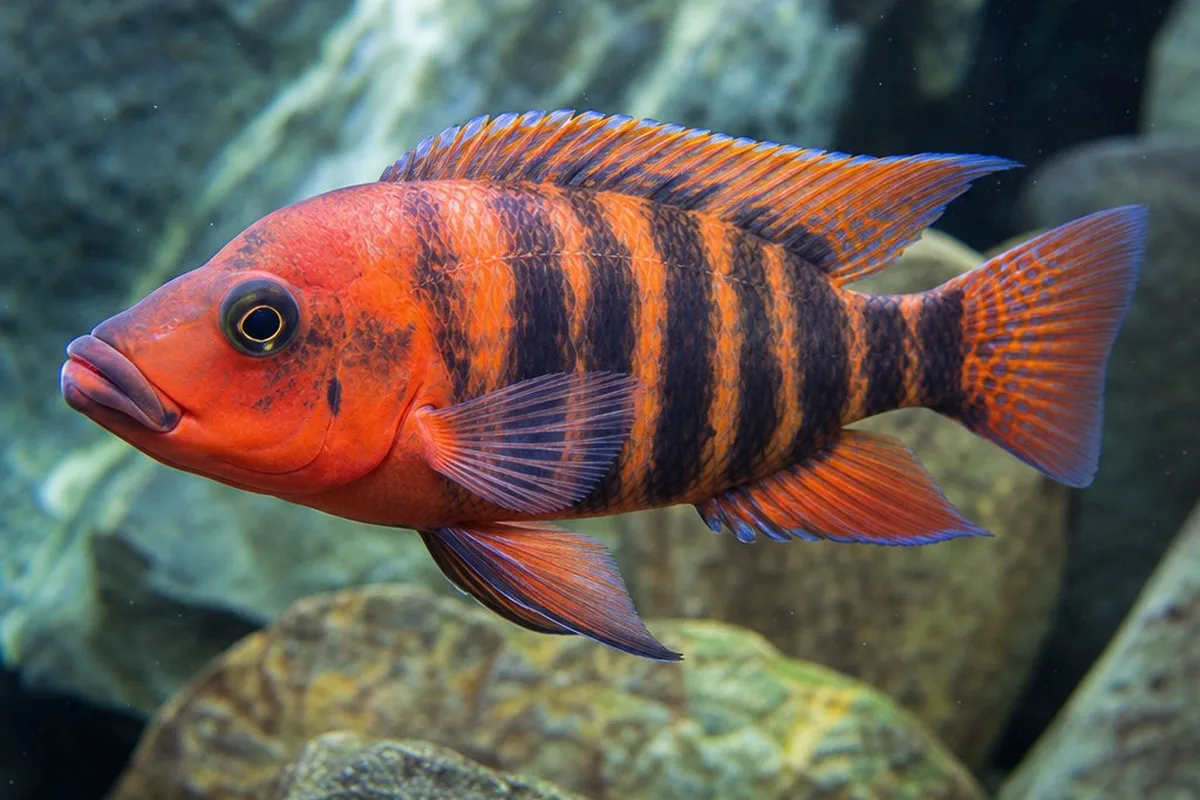
"Red Tiger Motaguense" is the kind of name that sounds like it should map to a specific species — and the fact that it doesn't is the single most useful thing to understand before buying one or trying to research its care.
Direct Answer: A Hybrid Trade Name, Not a Species
"Red Tiger Motaguense" is a hybrid/trade name used in the cichlid hobby, not a single formally recognized species. The name draws on the Motagua River region of Guatemala and Honduras — home to several Central American cichlid species that have been used in hybrid breeding lines — combined with descriptive terms for the fish's red coloration and dark, tiger-like vertical barring. Fish sold under this name are large (commonly 10-12+ inches), aggressive, and require the same robust setup as other big Central American cichlids: a 75+ gallon tank, strong filtration, and tankmates that can hold their own.
Where the Name Comes From
Hybrid cichlid names in the trade often combine a geographic reference with descriptive traits, and "Red Tiger Motaguense" follows that pattern. The "Motaguense" portion points toward the Motagua River drainage, an area whose native cichlid fauna has contributed to various lines kept and crossed in the ornamental fish trade. "Red Tiger" describes the targeted coloration (red base color) and pattern (dark vertical bars resembling a tiger's stripes) that breeders have selected for. The result is a fish with a name that sounds geographically and taxonomically precise but actually describes a trade lineage, similar in spirit to how "red devil" (covered in our Red Devil vs. Oscar comparison) is a trade name rather than a single species designation.
Size and Tank Requirements
Red tiger motaguense cichlids reach 10-12 inches or more as adults, depending on the specific line and individual. This puts them squarely in large cichlid territory:
- 75+ gallons minimum for a single adult
- Strong filtration rated well above the tank's nominal volume, given how much waste large cichlids produce
- Secure decor — large, powerful fish can rearrange or topple lightweight decorations
- Regular large water changes to manage the bioload
Temperament and Tank Mates
Like most large Central American cichlids, red tiger motaguense are aggressive and territorial, especially as they mature. The realistic tankmate pool is other large, similarly robust Central American cichlids — the same compatibility logic discussed in our Red Devil vs. Oscar comparison and relevant to anyone considering tankmates for an oscar as well: size parity and similar temperament matter more than species identity. Small, peaceful, or slow-moving fish are not appropriate tankmates at any tank size — territorial aggression in these fish is a temperament trait, not purely a space issue.
Why Individuals Look So Different
Because "Red Tiger Motaguense" describes a hybrid lineage rather than a genetically consistent species, it's normal to see real variation in color intensity, barring pattern, and body shape between individuals — even those sold under the identical name. This is the same underlying genetics story as hybridization in livebearers (see our sailfin/shortfin molly hybridization guide): when a population's ancestry comes from a cross rather than a single stable line, offspring naturally show a range of traits. If your fish doesn't look identical to a photo you saw online, that's expected, not a sign of a different or "lesser" fish.
Diet
Red tiger motaguense, like other large Central American cichlids, do well on a high-quality pellet formulated for large cichlids as a staple, supplemented with occasional meaty foods (prawn, earthworm, or similar) for variety. As omnivores leaning carnivore, they're not particularly fussy eaters, but consistent feeding amounts matter for water quality in a tank already carrying a heavy bioload from a large fish.
Quick Reference
- "Red Tiger Motaguense" is a hybrid trade name, not a single recognized species
- The name references the Motagua River region (Guatemala/Honduras) plus descriptive coloration/pattern terms
- Adults commonly reach 10-12+ inches — large cichlid territory
- 75+ gallons minimum, with strong filtration and secure decor
- Aggressive and territorial — tankmates limited to similarly large, robust cichlids
- Color/pattern variation between individuals is normal for a hybrid line
- Diet: large-cichlid pellet staple plus occasional meaty foods