By Hektor Jorgo
Alkalinity is the parameter that drifts the most in an established reef tank, and it's also the one where rushing a correction does more damage than the low reading you were trying to fix. The target is 8-12 dKH, the safe rate of change is no more than about 1-2 dKH per day, and the right method depends on whether you're making a one-time correction or setting up an ongoing dosing routine.
Short Answer: Target Range and Safe Rate
Aim for 8-12 dKH, with many SPS-focused reefers narrowing that to 7-9 dKH to sit closer to natural seawater (roughly 7 dKH), and softie/LPS-heavy tanks comfortable toward the upper end. The number you pick matters less than holding it steady — a tank stable at 11 dKH week after week is healthier than one that swings between 7 and 11.
When correcting alkalinity, never move more than 1-2 dKH in a 24-hour period. If your tank reads 6 dKH and your target is 9 dKH, that's a 3 dKH correction — spread it over at least 2-3 days, not a single dose. Corals and coralline algae are adapted to slow, seasonal shifts in seawater chemistry, not rapid day-to-day swings, and alkalinity swings are one of the most common triggers for unexplained coral tissue recession and bleaching in otherwise healthy-looking tanks.
What Alkalinity Measures and Why It Drops
Alkalinity (often expressed in dKH, degrees of carbonate hardness) measures the water's capacity to buffer pH — specifically, the concentration of carbonate and bicarbonate ions available to neutralize acids and resist pH swings. In a reef tank, it has a second, equally important role: carbonate ions are one of the two raw materials (alongside calcium) that corals and coralline algae use to build their calcium carbonate skeletons.
This is why alkalinity drops over time in any tank with actively growing corals — calcification consumes carbonate from the water. The more coral growth and coralline algae coverage you have, the faster alkalinity depletes, and the more consistent your dosing routine needs to be to keep pace. A tank that's freshly set up with minimal coral growth might barely move week to week; a mature, heavily stocked SPS tank can consume measurable alkalinity daily.
Alkalinity also interacts with the source water you use for mixing and top-off — water carrying contaminants or inconsistent mineral content (see our guide on acceptable TDS for reef tank source water) makes it harder to get consistent, repeatable test readings, which in turn makes it harder to dial in a stable dosing routine.
Methods to Raise Alkalinity
Baking Soda (Sodium Bicarbonate)
Food-grade sodium bicarbonate dissolved in RO/DI water is one of the simplest and cheapest ways to raise alkalinity. It's chemically similar to the active ingredient in many commercial "alkalinity buffer" products. Dissolve a measured amount in a container of RO/DI water and add it slowly to a high-flow area of the tank (sump return or near a powerhead) so it disperses evenly rather than creating a localized spike.
Baking soda raises alkalinity only — it doesn't touch calcium or magnesium. That makes it a good tool for a one-time correction or for topping up alkalinity between larger dosing routines, but it's not a complete long-term solution on its own if your tank is also consuming calcium at a meaningful rate.
Two-Part Dosing
Two-part dosing systems pair an alkalinity solution with a calcium solution, dosed daily (often via a dosing pump) in matched amounts calibrated to your tank's consumption rate. This is the most common long-term solution for tanks with moderate-to-heavy coral growth, because it replenishes both of the "Big Three" elements that calcification consumes together, in roughly the ratio corals actually use them.
The setup process involves testing alkalinity and calcium, dosing a known amount of each part, re-testing after 24 hours, and adjusting the daily dose until both parameters hold steady without drifting in either direction.
Kalkwasser (Limewater)
Kalkwasser — a saturated solution of calcium hydroxide — raises both alkalinity and calcium simultaneously while also nudging pH upward, which makes it popular for tanks that struggle with low pH. It's typically dripped in slowly to replace evaporated water (via an auto top-off system) rather than dosed in a bulk addition, since adding it too quickly can spike pH sharply.
Kalkwasser dosing needs to be matched to your tank's evaporation rate, which makes it less flexible than two-part dosing for tanks with inconsistent evaporation, but it's an efficient, low-cost option for tanks where evaporation volume roughly matches alkalinity/calcium demand.
The Big Three: Alkalinity, Calcium, and Magnesium
Alkalinity doesn't exist in isolation — it's one corner of what reefers call the "Big Three" reef parameters, alongside calcium and magnesium. All three are consumed together by calcification, and magnesium specifically plays a buffering role that keeps calcium and carbonate from precipitating out of solution together when both are present at reef-tank concentrations.
Raising alkalinity without considering calcium and magnesium can create a different problem: if magnesium is too low, high alkalinity and calcium together can cause calcium carbonate to precipitate out as a fine white "snow," dropping both readings and clouding the water. Before chasing an alkalinity correction, it's worth confirming calcium and magnesium are both in range — and confirming your specific gravity is stable too, since a shifting salinity makes every other test reading harder to interpret consistently.
Symptoms of Low Alkalinity
A reef tank running persistently low on alkalinity (well under 7 dKH, or any reading trending steadily downward) tends to show:
- Coral tissue recession — tissue pulling back from the base of the skeleton, especially in SPS corals with high calcification rates
- Slowed or stalled growth — corals that were growing visibly week-to-week plateau without an obvious cause
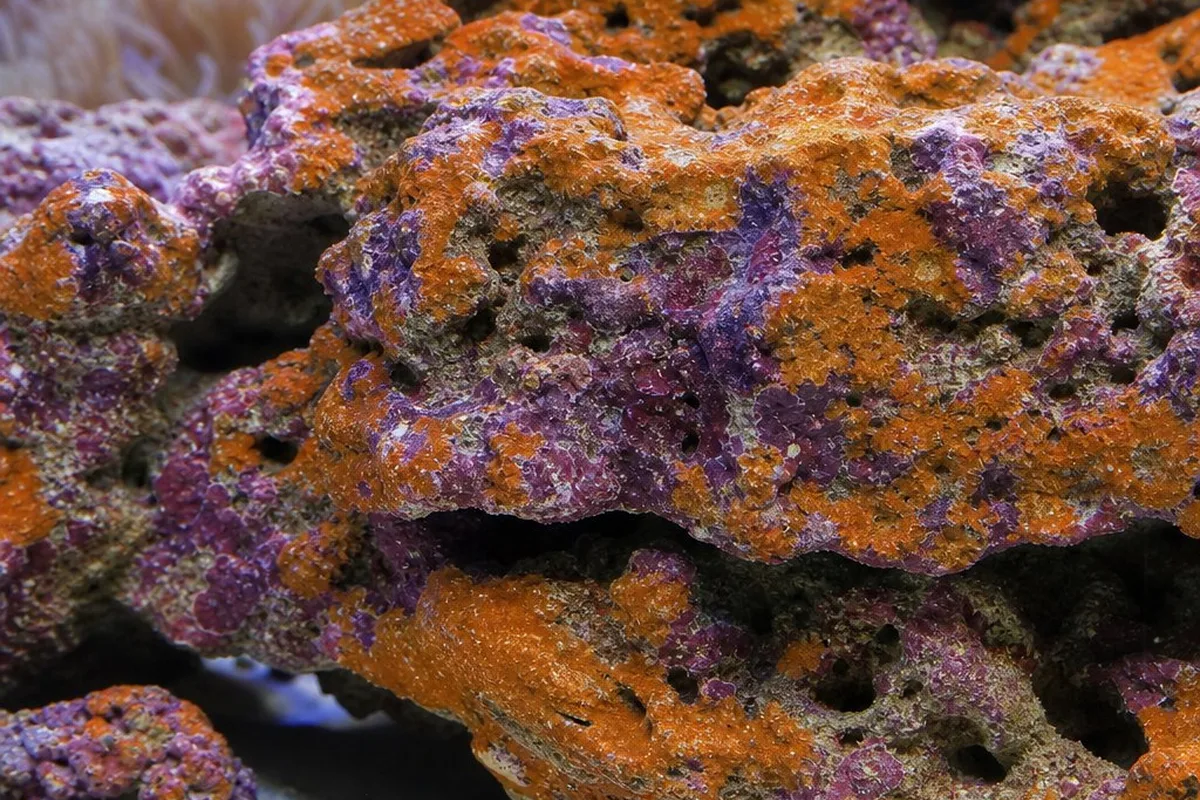
- Brittle or receding coralline algae — coralline algae is highly sensitive to alkalinity and often shows stress (paling, receding edges) before corals do, making it a useful early-warning indicator. This applies regardless of which color coralline you have established — our orange coralline algae guide covers why coralline color varies and how to read its growth (or lack of it) as a chemistry signal
- pH instability — since alkalinity is fundamentally a pH buffer, low alkalinity often shows up alongside wider-than-normal pH swings over the day/night cycle
How to Raise Alkalinity Step by Step
- Test first. Confirm your current alkalinity with a titration-based test kit — these are more accurate than colorimetric (color-match) kits for the precision reef chemistry requires.
- Calculate the gap. Subtract your current reading from your target (e.g., 6 dKH current, 9 dKH target = 3 dKH gap).
- Spread the correction. Divide that gap across at least 2-3 days, raising alkalinity by no more than 1-2 dKH per 24-hour period.
- Choose your method. Baking soda for a quick, calcium-independent bump; two-part dosing if calcium also needs ongoing supplementation; kalkwasser if it fits your top-off routine.
- Re-test before each additional dose. Don't dose on a schedule blindly — confirm the previous dose moved the reading as expected before adding more.
- Once at target, switch to maintenance dosing. Test 2-3 times weekly, and establish a consistent daily or every-other-day dose that matches your tank's actual consumption rate, adjusting gradually if readings start to drift in either direction.
As with most reef chemistry, the goal of a stable saltwater system is consistency over perfection — a tank holding steady at 8 dKH week after week will outperform one that bounces between 7 and 12 chasing an "ideal" number.
Quick Reference
- Target 8-12 dKH (7-9 dKH for SPS-focused systems)
- Never raise alkalinity more than 1-2 dKH per day
- Spread larger corrections (3+ dKH gaps) over multiple days
- Use baking soda for quick, calcium-independent corrections
- Use two-part dosing for ongoing calcium + alkalinity maintenance
- Use kalkwasser if your evaporation rate matches your demand
- Check calcium and magnesium alongside alkalinity — they move together
- Watch coralline algae as an early-warning indicator of low alkalinity
- Test 2-3x weekly with a titration kit once stable