By Hektor Jorgo
The pajama cardinalfish (Sphaeramia nematoptera) doesn't get the same attention as its close relative, the Banggai cardinalfish, but it shares most of the same beginner-friendly traits — hardy, peaceful, reef safe — while bringing its own distinctive look: a yellow front half, a dark band running through the eye, and a rear half covered in red-brown spots that genuinely does resemble a pajama print. It's an easy fish to recommend, with one small feeding-related caveat worth knowing about before you buy.
Appearance and Natural Range
The pajama cardinalfish has one of the more immediately recognizable patterns in the marine aquarium trade: a yellowish-tan head and front body, a dark vertical band running through the eye, and a rear half covered in dense reddish-brown to maroon spots over a silvery-white background — the "pajama" pattern that gives the species its common name. Adults reach up to about 3.1 inches (8 cm), making it a genuinely small, manageable fish for a wide range of tank sizes.
S. nematoptera is found throughout the Western Pacific, typically in sheltered lagoons and reef areas, often forming small groups near structure during the day and becoming more active at dusk and into the evening — a crepuscular/nocturnal feeding pattern that's worth keeping in mind when planning feeding times in the aquarium.
Tank Requirements
Tank Size
A minimum of 20-30 gallons is suitable for a single pajama cardinalfish or a bonded pair, putting it in similar territory to the common clownfish and other small reef fish covered in our beginner stocking guide. If you're working with a smaller setup, our 10-gallon stocking guide and 30-gallon stocking guide both cover where a fish this size realistically fits relative to other options.
Aquascaping
Pajama cardinalfish appreciate rockwork with crevices and overhangs where they can shelter, particularly during brighter daytime lighting — this species is more active at dusk and into the evening, and having secure retreats for the brighter parts of the day supports more natural, less stressed behavior. A tank that's entirely open water with minimal structure can leave this species feeling more exposed than it would prefer.
Water Parameters
| Parameter | Target Range |
|---|---|
| Temperature | 75-82°F (24-28°C) |
| Salinity | 1.023-1.025 SG |
| pH | 8.1-8.4 |
| Ammonia / Nitrite | 0 ppm |
| Nitrate | <10 ppm (reef tanks) |
| Alkalinity | 8-11 dKH |
Standard reef parameters apply, with no unusual chemistry requirements for this species beyond what a healthy reef tank already maintains.
Diet and Feeding
Pajama cardinalfish are carnivores, feeding on small meaty foods and plankton in the wild. In the aquarium:
- Frozen mysis shrimp is the staple food and is usually well accepted once the fish is settled
- High-quality marine pellets sized appropriately for a small fish round out the diet once the fish is established
- Feeding at dusk or with lights dimmed can help with newly introduced individuals, mirroring this species' more crepuscular natural activity pattern
The one feeding caveat: some individuals, particularly recent imports, can be slow to recognize prepared foods at first and may not compete well with faster, more aggressive feeders. If you're adding a pajama cardinalfish to a tank with boisterous eaters, watching specifically to confirm it's getting food — not just that food is present in the tank — is worth doing for the first couple of weeks.
Tank Mates and Compatibility
Pajama cardinalfish are peaceful and generally make excellent community fish:
Good tank mates:
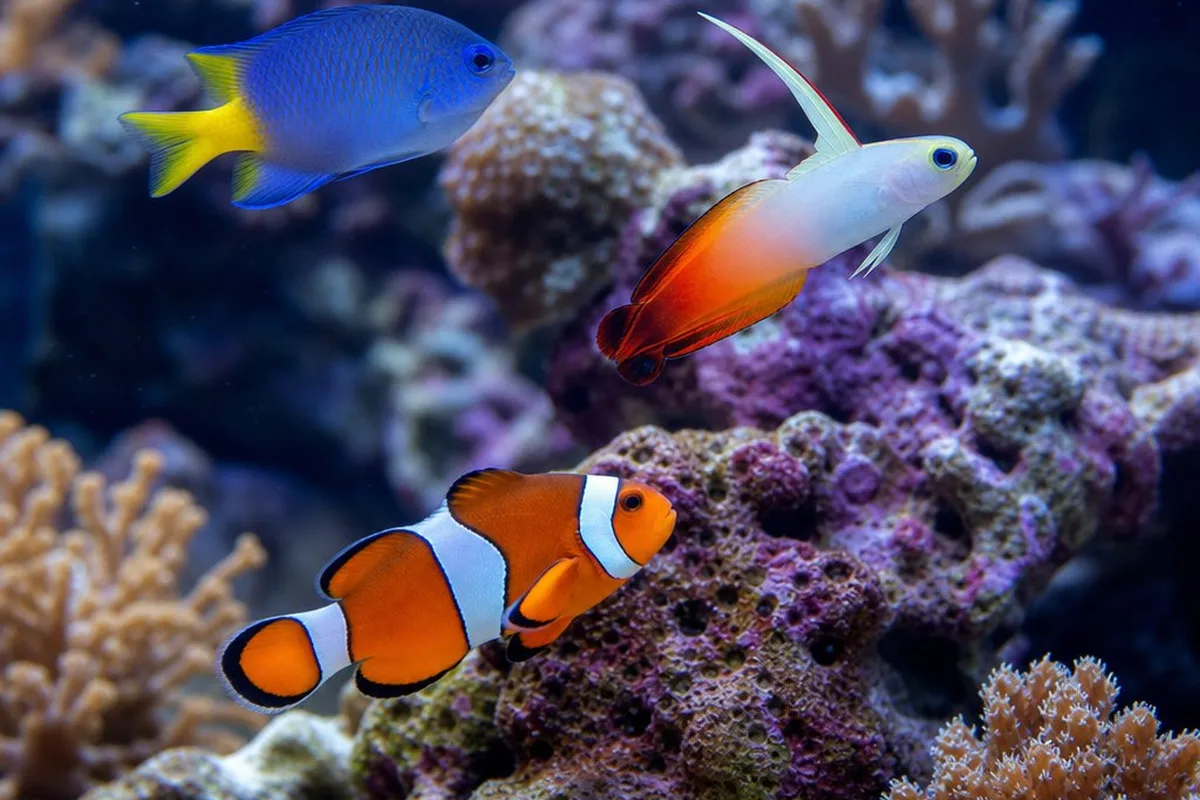
- Common clownfish, firefish, and other peaceful small reef fish from our beginner guide
- Gobies, blennies, and other bottom/rock-oriented fish that don't compete directly for the same feeding style
- Other pajama cardinalfish — unlike many damselfish, this species can often be kept in small groups without the territorial conflict covered in how many azure damselfish should you get
Considerations:
- Avoid overly boisterous or aggressive tankmates, particularly fast, assertive feeders that might out-compete a pajama cardinalfish at feeding time, especially during its initial settling-in period
- Avoid predatory fish that might view a 3-inch fish as prey — this isn't a species suited to a tank built around larger predators
On reef compatibility: Pajama cardinalfish are unambiguously reef safe, joining the common clownfish, firefish, and Banggai cardinalfish on the "fully reef-safe" list in our reef-safe stocking guide — no caveats needed for this species on the coral or invertebrate front.
A Note on Reproduction
Like the Banggai cardinalfish, pajama cardinalfish are mouth-brooders — males carry fertilized eggs in their mouths until the young are ready to be released. This is sometimes observed by accident in well-maintained tanks with a bonded pair, and while raising the resulting fry to adulthood requires dedicated effort (separate rearing setup, appropriate first foods), the breeding behavior itself doesn't require any special intervention from the keeper.
Common Health Issues
Pajama cardinalfish are generally hardy and don't have species-specific health problems beyond the general considerations that apply to most small reef fish:
- Stress-related color fading — like many reef fish, a stressed or recently introduced pajama cardinalfish may show duller coloration that improves as the fish settles in
- Underfeeding due to competition — as noted above, the main practical risk for this species is being out-competed for food rather than a specific disease vulnerability
- General marine ich susceptibility — standard quarantine practices (2-4 weeks) apply as they would for any new marine fish
Quick Setup Checklist
- Tank: 20-30 gallons minimum for one fish or a bonded pair
- Provide rockwork with crevices for daytime shelter
- Salinity 1.023-1.025, temperature 75-82°F, standard reef parameters
- Feed frozen mysis shrimp as a staple, supplemented with marine pellets
- Watch newly introduced fish closely to confirm they're getting food, especially with boisterous tankmates
- Quarantine new arrivals 2-4 weeks like any marine fish
- Pair with peaceful tankmates — clownfish, firefish, gobies, blennies
- Can be kept in small groups in larger tanks without typical damselfish-style aggression