By Hektor Jorgo
A power outage tends to produce the same first reaction in fishkeepers: a slightly panicked glance at the tank, followed by "how much time do I actually have here?" The honest answer is that it depends — but for most tanks in most situations, it's less urgent than it feels in the moment, as long as you understand which clock is actually running.
Short Answer
Most moderately stocked tanks can go several hours without a filter or air pump running before it becomes a real problem — but this isn't a fixed number, and it shrinks with heavier stocking, warmer water, smaller tank volume, or a tank that was already running close to capacity. There are two separate issues at play: oxygen depletion in the water, which is the more time-sensitive concern for the fish themselves, and biological filter bacteria decline, which doesn't cause an immediate crisis but can lead to water quality problems in the days after power returns. If you're in the middle of an outage, a few simple manual steps (covered below) help with the oxygen side and cost almost nothing to do.
The Two Clocks: Oxygen and Bacteria
It helps to think of these as separate problems with separate timelines, because the right response depends on which one you're worried about:
- Oxygen — fish need continuously available dissolved oxygen, and without a filter or air pump creating surface agitation, the rate at which oxygen from the air dissolves into the water slows down. In a heavily stocked or warm tank (warm water holds less dissolved oxygen to begin with), this can become a real stressor within hours. In a lightly stocked, cooler, or larger-surface-area tank, the margin is considerably wider.
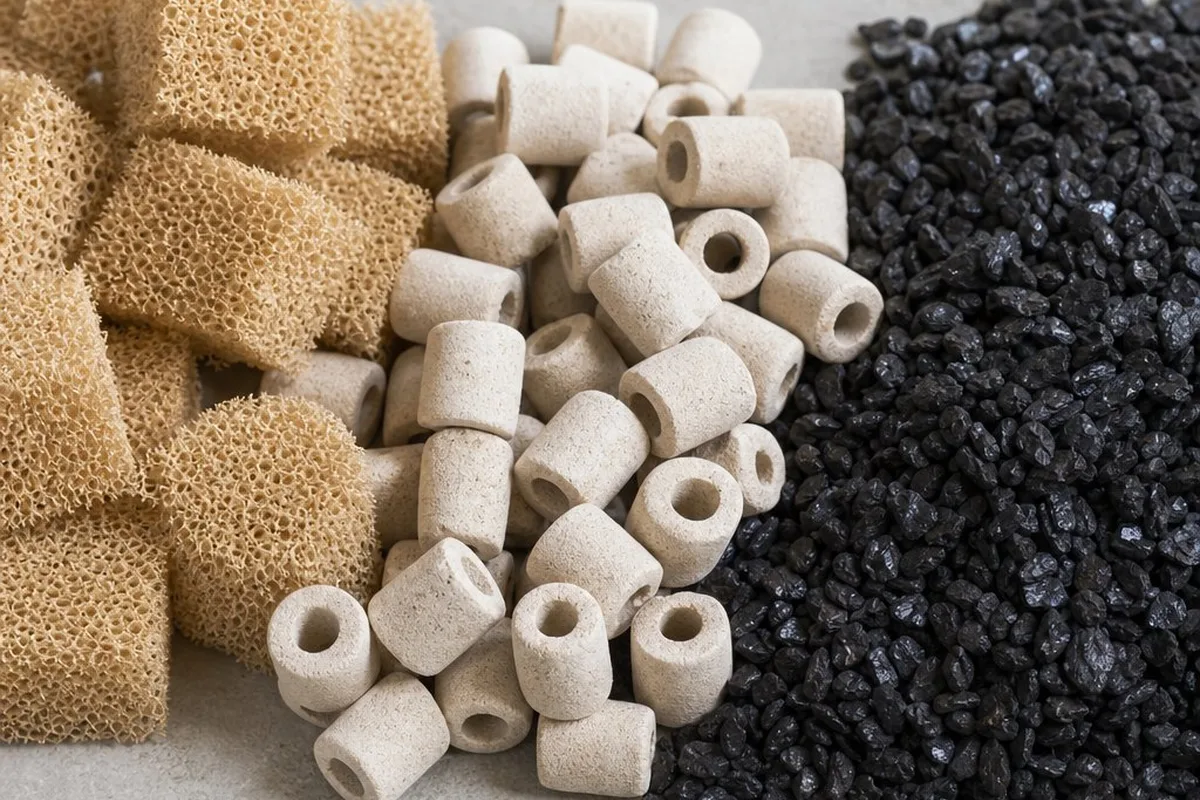
- Biological filter bacteria — the bacteria that process ammonia and nitrite live mainly in the filter media and need continuous oxygenated flow. An extended outage can reduce this population. This usually isn't an immediate crisis during the outage itself, but it means the filter may have reduced processing capacity for days afterward, which is its own follow-up problem.
The oxygen clock is the one with more immediate stakes; the bacteria clock is the one that causes problems later, after everything seems to be running normally again.
What Affects How Much Time You Have
A few factors stretch or shrink the safe window:
- Stocking density — more fish (and more bioload generally) relative to water volume means oxygen gets consumed faster and the margin shrinks.
- Tank surface area — a wider, shallower tank has more surface area relative to its volume than a tall, narrow tank of the same volume, and surface area is where gas exchange with the air happens. More surface area generally means a slower oxygen decline even without active agitation.
- Water temperature — warmer water holds less dissolved oxygen at saturation than cooler water, so tropical tanks running at higher temperatures have less of a buffer than cooler setups.
- How close to capacity the tank was already running — a tank that was already lightly oxygenated or running near its filtration limit under normal conditions has less margin to lose before things become noticeable.
None of these turn a brief outage into an emergency on their own, but in combination — a heavily stocked, warm, tall tank — the window can be considerably shorter than "a few hours."
What to Do During an Outage
If the power is out and you want to help, a few low-effort steps address the more time-sensitive oxygen issue:
- Manually agitate the surface — gently stirring the water with a clean container, or scooping out a cup and pouring it back in from a height, increases the surface area exposed to air and speeds up gas exchange.
- Use a battery-powered air pump if you have one — these are inexpensive, widely available specifically for this situation, and provide ongoing agitation without needing mains power. Keeping one on hand is a low-cost form of preparedness, similar in spirit to thinking through where a canister filter's intake and outlet should sit before you need it rather than after.
- Don't feed during an extended outage — uneaten food adds to the waste load right when biological filtration is least able to process it.
- Avoid opening the tank lid unnecessarily in a heated tank — this can speed heat loss, adding a second stressor (temperature swings) on top of the oxygen and filtration issues.
A power outage also means the lights are off for its duration — for most outages this is inconsequential, but our guide on how long algae survives without light covers the related question of how an extended lighting gap affects algae, plants, and photosynthetic corals, which follows a similar "it depends on duration" pattern to the filtration concerns here.
After the Power Comes Back
For a brief outage (an hour or less in a normally stocked tank), this is usually the end of it — the filter restarts, and life goes on. For a longer outage, keep testing ammonia and nitrite over the following days, not just immediately. The biological filter bacteria may take time to recover their full capacity — similar in nature to the disruption covered in our guide on filters not working properly after cleaning, where rinsing too much media at once has a similar (if usually milder) effect. If readings climb, treat it like a mini-cycle: test regularly, do partial water changes if needed, and hold off on new fish or heavier feeding until things stabilize.
Quick Reference
- Most moderately stocked tanks have a window of several hours before an outage becomes urgent — but this varies a lot
- Oxygen depletion is the more time-sensitive issue; biological filter bacteria decline causes problems afterward, not immediately
- Heavier stocking, warmer water, smaller volume, and less surface area all shrink the safe window
- Manual surface agitation (stirring, pouring water back in) helps with oxygen during an outage
- A battery-powered air pump is an inexpensive form of preparedness worth having on hand
- Don't feed during an extended outage
- After an extended outage, monitor ammonia/nitrite for days afterward — the biological filter may need time to recover