By Hektor Jorgo
"Goby" is one of those fish names that gets applied to an enormous range of species — tiny reef cleanup fish, mud-loving brackish species, and (incorrectly) at least one famous reef fish that isn't actually a goby at all. The family behind the name is genuinely one of the largest in the fish world, and understanding what actually unites it helps make sense of why the name shows up in so many different contexts.
Short Answer
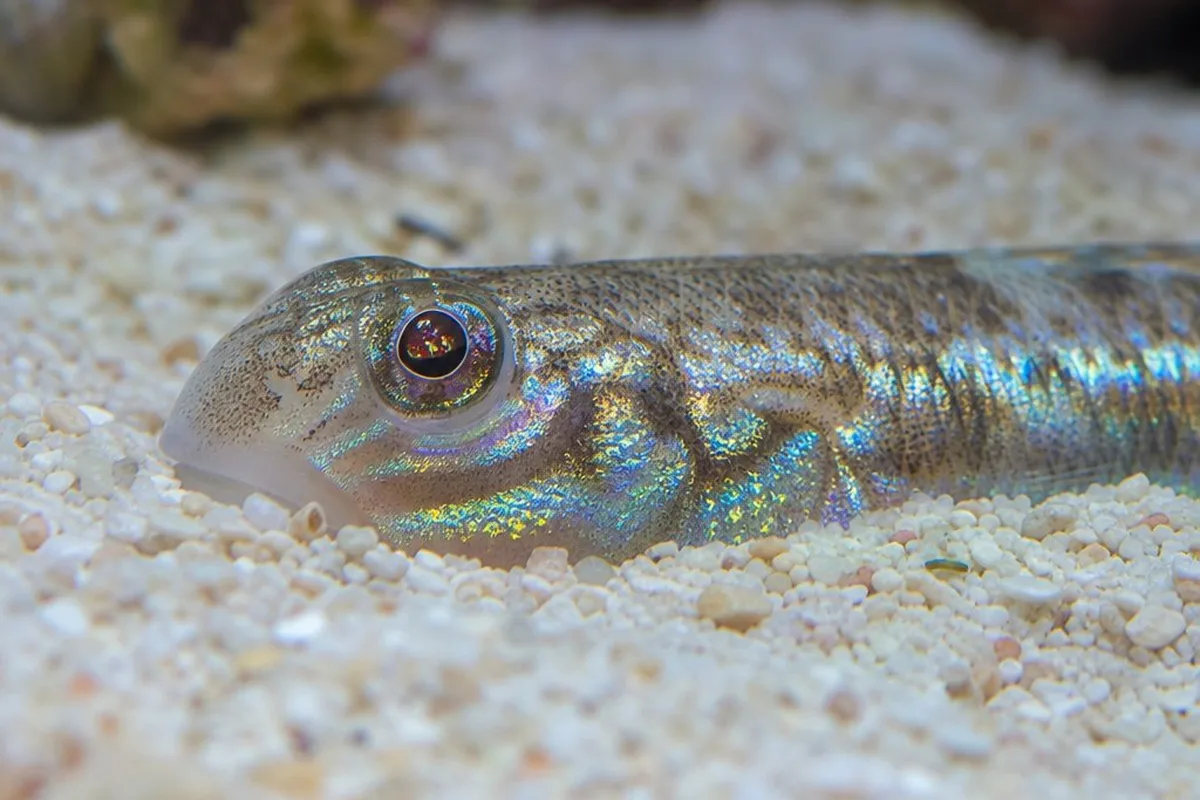
A goby, in the strict sense, is a member of the family Gobiidae — one of the largest fish families, with well over a thousand species spanning marine, brackish, and freshwater habitats. Many (though not all) gobies share a few general traits: small size, a bottom-dwelling lifestyle, and in many species, pelvic fins fused into a suction-like disc for perching on rock or coral in current. Beyond that, the family is hugely diverse — a reef-associated marine goby and a brackish mud-dwelling goby like the dragon goby share a family name but very little else in terms of care requirements. And at least one famous "goby" — the mandarin fish — isn't actually a true goby at all.
A Genuinely Huge Family
Gobiidae is consistently cited as one of the largest vertebrate families, with well over a thousand described species — a scale that puts it in a different league from most fish families hobbyists are familiar with. This sheer size is part of why gobies show up across so many different aquarium contexts: reef tanks, brackish setups, and even some freshwater systems all have their own goby representatives, often without much overlap in care approach between them.
What (Loosely) Unites Them
Despite the diversity, a few traits show up repeatedly across the family:
- Small size — most gobies are modest-sized fish, rarely the centerpiece "big fish" of a tank
- Bottom-dwelling habits — gobies are generally associated with substrate, rock, or coral rather than open-water swimming
- Fused pelvic fins — in many species, the pelvic fins form a disc-like structure that functions similarly to a suction cup, letting the fish hold position on a surface in moving water
These are tendencies, not universal rules — the family is large and varied enough that exceptions exist for nearly every generalization.
Marine, Brackish, and Freshwater — All in One Family
One of the more surprising things about gobies is just how much habitat range the family covers. Popular saltwater aquarium gobies (watchman gobies, neon gobies, the sand-sifting cow goby, and others) are reef-associated marine fish. But the family also includes brackish estuarine species — the dragon goby being a well-known aquarium example — which live in a completely different kind of environment and have correspondingly different tank requirements (salinity, substrate, tankmates). Freshwater gobies exist as well, though they're less commonly kept than their marine and brackish relatives. The practical lesson: "it's a goby" doesn't tell you much about salinity, diet, or temperament on its own — the family is too broad for that.
The Pistol Shrimp Partnership
One of the more memorable goby behaviors is a symbiotic relationship with pistol shrimp, seen in certain goby species. The shrimp — which has poor eyesight — digs and maintains a shared burrow, while the goby acts as a lookout, alerting the shrimp to approaching threats (often through physical contact, with the shrimp keeping an antenna on the goby at all times) so both animals can retreat to safety. It's a frequently cited example of mutualism in reef ecosystems, though it's specific to certain species rather than a goby-wide behavior — most gobies don't have a shrimp partner at all.
The Mandarin Fish Isn't Actually a Goby
No discussion of gobies is complete without addressing the elephant in the room: the mandarin fish, one of the most recognizable fish in the reef-keeping hobby, is commonly called a "mandarin goby" — but it's actually a dragonet (family Callionymidae), a different family entirely. The resemblance is largely behavioral and superficial — both dragonets and gobies are small, bottom-associated fish — but the families diverge meaningfully, including in ways that matter practically (the mandarin's famously difficult live-copepod diet isn't a "goby" trait). Our mandarin fish guide covers this in more detail.
Quick Reference
- Gobies belong to family Gobiidae — one of the largest fish families, with 1,000+ species
- Common (not universal) traits: small size, bottom-dwelling, fused pelvic-fin "sucker" disc
- The family spans marine, brackish, and freshwater habitats with very different care needs
- Some gobies form symbiotic burrow-sharing relationships with pistol shrimp
- The dragon goby is a brackish/estuarine species, quite different from reef gobies
- The mandarin fish ("mandarin goby") is actually a dragonet, not a true goby
- "It's a goby" doesn't reliably predict a fish's habitat, diet, or temperament — the family is too broad