Frogspawn vs. Hammer Coral: How to Tell These Euphyllia Apart

Side-by-side comparison of frogspawn coral with branching tentacle tips and hammer coral with anchor-shaped tentacle tips

Quick Facts

Genus
Both are Euphyllia — frogspawn is typically Euphyllia divisa; hammer coral is typically Euphyllia ancora, paradivisa, or glabrescens
Key Visual Difference
Tentacle tip shape — frogspawn branches into smaller clusters; hammer coral ends in a flattened, anchor/hammerhead shape
Care Requirements
Essentially identical between the two — moderate light, moderate flow, similar feeding
Sweeper Tentacles
Both extend long sweeper tentacles, especially at night, that can sting nearby corals — spacing matters for both equally
The Third Relative
Torch coral (often Euphyllia glabrescens/paradivisa) rounds out a commonly discussed trio with frogspawn and hammer
Feeding
Both accept meaty foods (mysis, chopped shrimp) via target feeding
Fragging
Both are fragged the same way — cutting between individual heads/branches
Growth Rate
Both grow at a moderate, comparable pace under similar conditions

Frogspawn and hammer coral show up in nearly every reef tank photo gallery, often labeled interchangeably by sellers and hobbyists alike — and there's a reason for that confusion: they're genuinely very similar corals. Same genus, same general care, same behavior. The difference that actually distinguishes them is narrower than the names might suggest, but it's also the difference that makes identification possible at a glance.

Same Genus, Same Basic Coral

Both frogspawn coral (typically Euphyllia divisa) and hammer coral (typically Euphyllia ancora, paradivisa, or glabrescens, depending on the variety) belong to the genus Euphyllia — a group of large-polyp stony (LPS) corals known for fleshy, extended tentacles that give the coral most of its visible "body" most of the time, with the hard skeleton mostly hidden underneath. Both grow as branching colonies, with each branch ending in a "head" that extends its own set of tentacles.

The Difference: Tentacle Tip Shape

The actual distinguishing feature between the two is the shape of the tentacle tips:

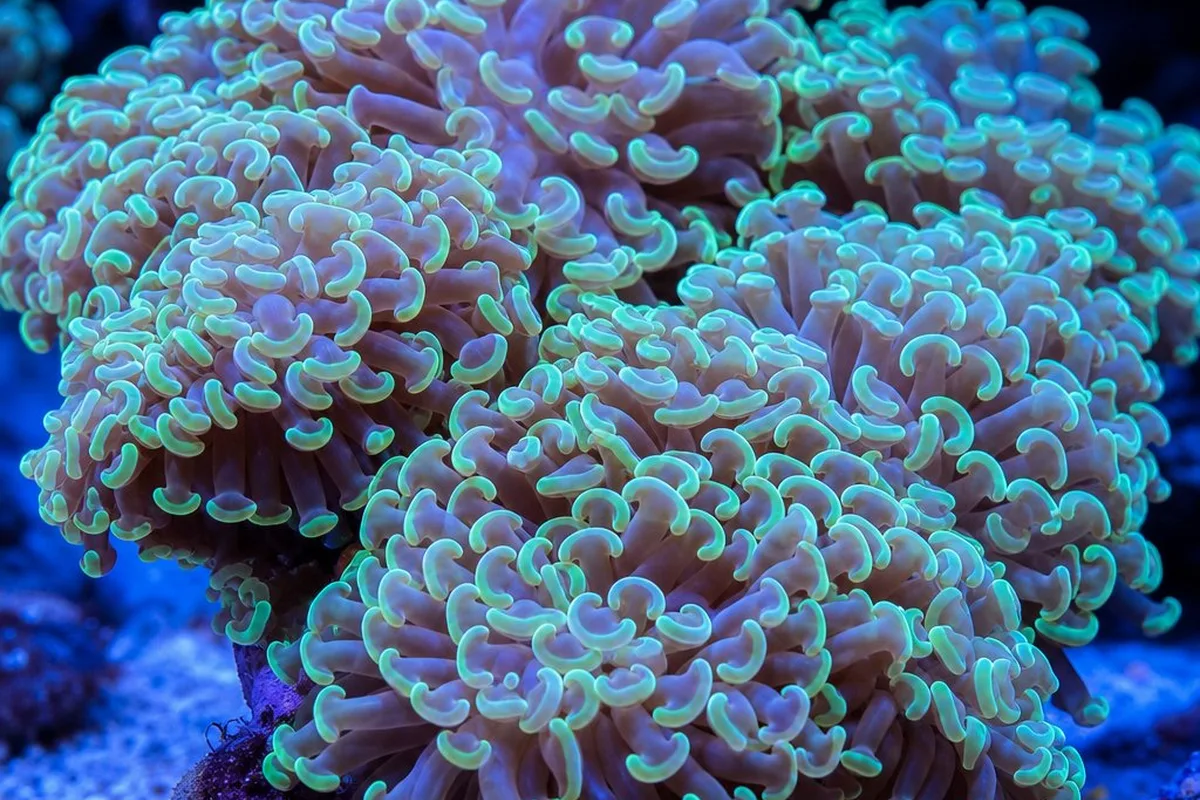
  • Frogspawn coral tentacles branch further at the tip into smaller clusters — giving the overall look that earns the "frogspawn" name, resembling a cluster of small eggs or branches at the end of each tentacle.
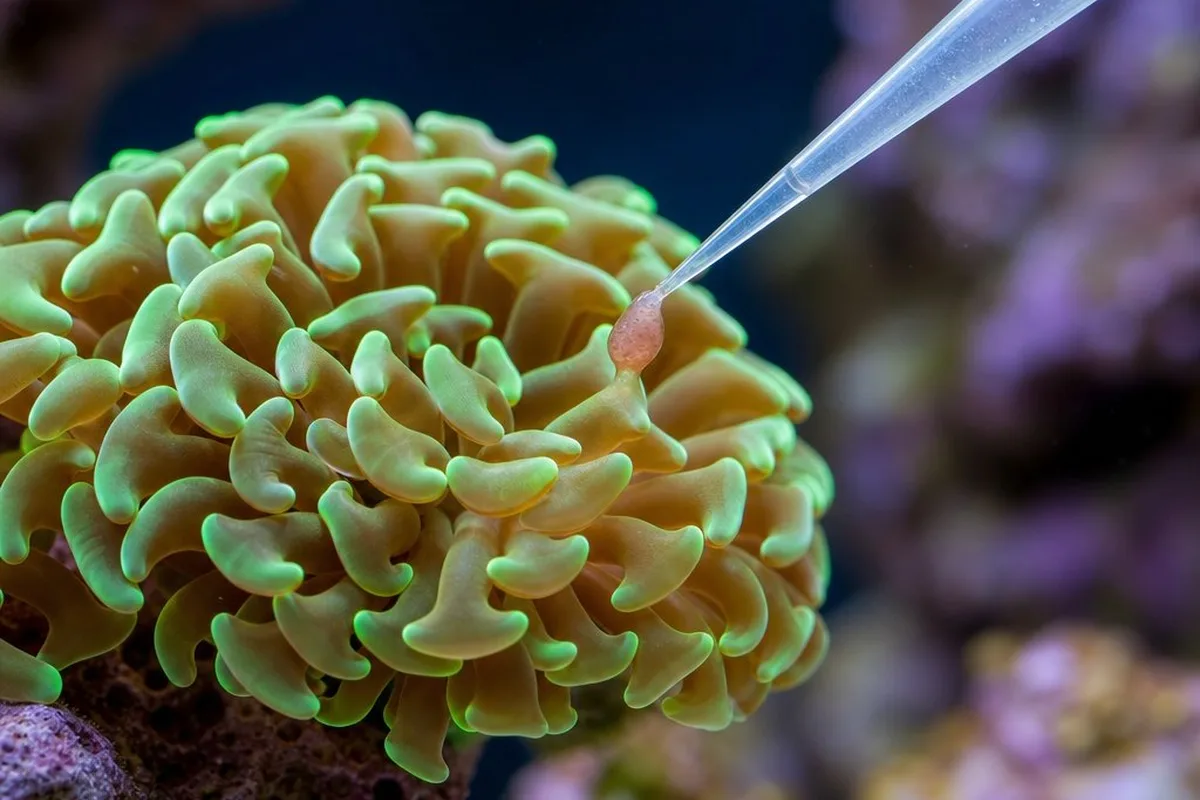
  • Hammer coral tentacles flatten out at the tip into a distinct hammerhead or anchor shape — a single flattened, often T-shaped or curved tip, which is also why this coral is sometimes sold as "anchor coral."

If you're looking at two corals side by side and trying to tell them apart, the tentacle tips are where to look — the rest of the coral (branching skeleton structure, overall coloration range, general size) overlaps enough between the two that it's not a reliable identifier on its own.

A Third Relative Often Mentioned Alongside Both

Torch coral — frequently Euphyllia glabrescens or paradivisa, depending on classification — rounds out a trio that's often discussed together. Torch coral's tentacles end in a single rounded tip, often in a contrasting color from the rest of the tentacle, creating the "torch flame" look that gives the species its name. Our guide to how fast torch corals grow covers this species in more detail — but the broader takeaway across all three (frogspawn, hammer, and torch) is the same: closely related Euphyllia species, distinguished primarily by tentacle tip shape, with care needs that are close enough to identical that the species-level distinction matters more for identification than for husbandry decisions.

Care: Effectively Identical

If you can keep one of these corals successfully, you can keep the other — the care overlap is that close:

  • Lighting: Moderate intensity works well for both; neither needs the high-intensity lighting some SPS corals require.
  • Flow: Moderate and indirect — direct, forceful flow can damage the fleshy tentacles of either species.
  • Feeding: Both will accept target feeding of meaty foods like mysis shrimp or finely chopped seafood, as covered in our hammer coral feeding guide — the same approach applies to frogspawn.
  • Fragging: Both are fragged by cutting between individual heads or branches of the skeleton, exactly as described in our hammer coral fragging guide.
  • Growth rate: Comparable between the two under similar conditions — our guide to hammer coral growth rates gives a sense of what to expect for either.

What Actually Matters: Sweeper Tentacles and Spacing

The single most important practical consideration for either coral isn't species-specific at all: both extend long sweeper tentacles, especially at night or around feeding times, that reach well beyond the visible "resting" size of the colony and can sting neighboring corals on contact. This is a Euphyllia-wide trait, not something that differs between frogspawn and hammer.

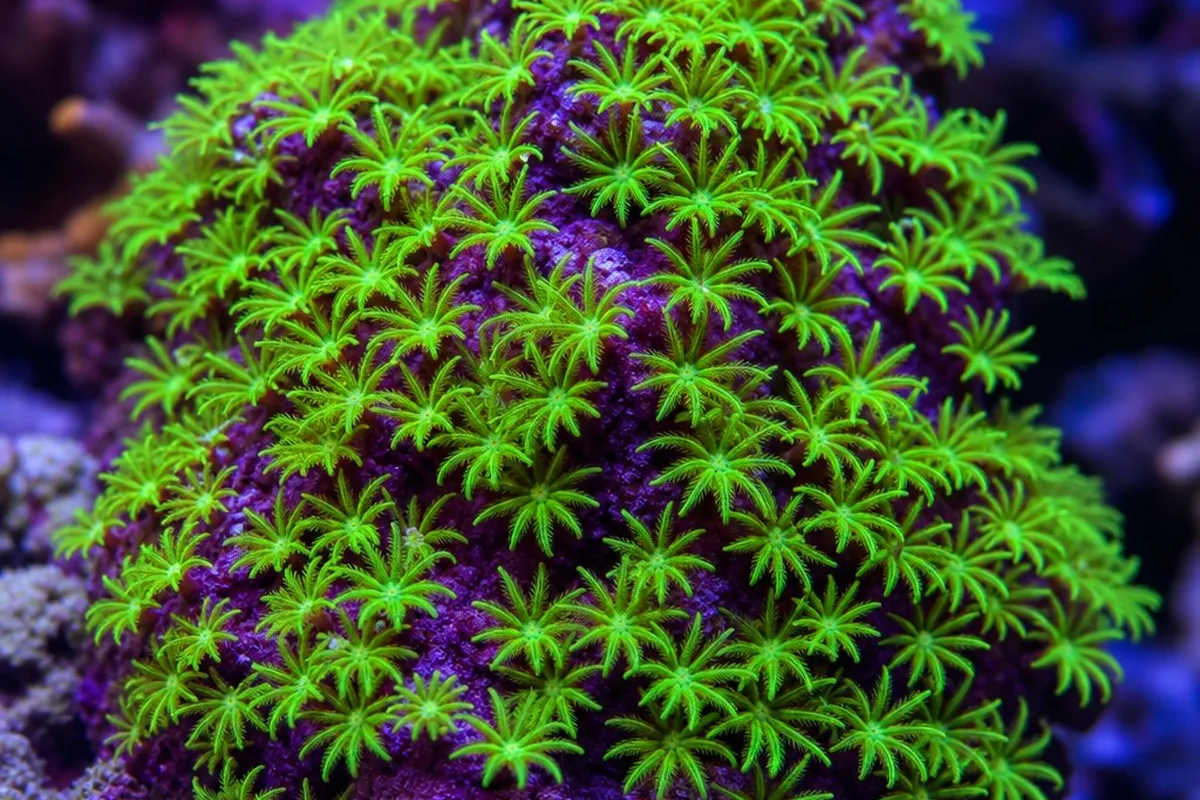
The practical implication is about placement, not species choice: leave generous open space around either coral, and be cautious about placing fast-growing, encrusting corals like green star polyps close enough that their growth could eventually bring them into contact with a Euphyllia's sweeper tentacle range. Get the spacing right, and frogspawn and hammer coral are both genuinely easy, rewarding LPS corals — the "which one is this" question becomes mostly a matter of curiosity rather than anything that changes how you'd care for it.

Quick Reference

  • Frogspawn and hammer coral are both Euphyllia — same genus, very similar care
  • The defining visual difference is tentacle tip shape: frogspawn branches into clusters, hammer flattens into an anchor/hammerhead shape
  • Torch coral is a closely related third species, identified by single rounded (often contrasting-color) tentacle tips
  • Lighting, flow, feeding, fragging, and growth rate are effectively the same for frogspawn and hammer coral
  • Both extend stinging sweeper tentacles, especially at night — spacing from neighboring corals matters more than species identity
Frequently Asked Questions

What's the actual difference between frogspawn and hammer coral?

Mostly the shape of the tentacle tips — care-wise, they're close to interchangeable. Both belong to the genus Euphyllia, both extend long, fleshy tentacles from a branching skeleton, and both have essentially the same lighting, flow, and feeding requirements. The visual difference that gives each its common name is in the tip of each tentacle: frogspawn coral (commonly Euphyllia divisa) has tentacle tips that branch further into smaller clusters, giving a 'frogspawn' or clustered-eggs appearance. Hammer coral (commonly Euphyllia ancora, paradivisa, or glabrescens, depending on the specific variety) has tentacle tips that flatten out into a distinct hammerhead or anchor shape — which is also why hammer coral is sometimes called 'anchor coral.' If you're trying to identify one versus the other in a tank or at a store, the tentacle tip shape is the most reliable visual cue.

Is there a third coral that gets confused with these two?

Yes — torch coral, often Euphyllia glabrescens or paradivisa depending on the source, is frequently mentioned alongside frogspawn and hammer as a closely related trio, and the three are sometimes confused at a glance, especially in photos. Torch coral's tentacle tips end in a single, rounded tip — often a different, contrasting color from the rest of the tentacle, giving it a 'torch flame' look — rather than branching (frogspawn) or flattening into an anchor shape (hammer). Our guide to torch coral growth covers this species specifically, but the broader point applies to all three: they're closely related Euphyllia species with very similar care requirements, distinguished mainly by tentacle tip shape rather than anything that changes how you'd keep them.

Do frogspawn and hammer coral need to be kept differently?

No — in practice, care for the two is essentially the same. Both do well with moderate lighting and moderate, indirect flow (direct blasting can damage the fleshy tentacles of either), and both will accept target feeding of meaty foods like mysis shrimp or finely chopped seafood, similar to what's covered in our guide to what hammer corals eat. Growth rates are comparable between the two under similar conditions, as is the fragging process — both are fragged by cutting between individual heads or branches of the skeleton, the same approach covered in our hammer coral fragging guide, which applies equally to frogspawn. If you already know how to care for one, you effectively already know how to care for the other.

What's the most important thing to know before keeping either one?

Sweeper tentacles and spacing — this matters more than the species-level differences. Both frogspawn and hammer coral extend long sweeper tentacles, especially at night or during feeding, that can reach well beyond the visible skeleton and sting neighboring corals they come into contact with. This isn't unique to one species over the other — it's a Euphyllia-wide trait, and it means placement decisions (how much open space to leave around the colony) matter just as much as lighting or flow. A coral known for vigorous, encrusting growth — like green star polyps — placed too close to either a frogspawn or hammer coral can create exactly this kind of conflict from the GSP side, while the Euphyllia's own sweeper tentacles create the same risk in the other direction. Planning generous spacing around either coral from the start avoids most of the conflicts that come up later.

Sources & Further Reading

  1. Euphyllia Species Identification — Reef Builders
  2. Frogspawn and Hammer Coral Care — Reef2Reef
Hektor Jorgo

About the Author: Hektor Jorgo

Co-Founder & Marine Biologist

Hektor is a co-founder of Sea Life Planet and has kept reef and freshwater aquariums for over 15 years. He holds a background in marine biology and focuses on species care accuracy, water chemistry, and tank husbandry.