By Hektor Jorgo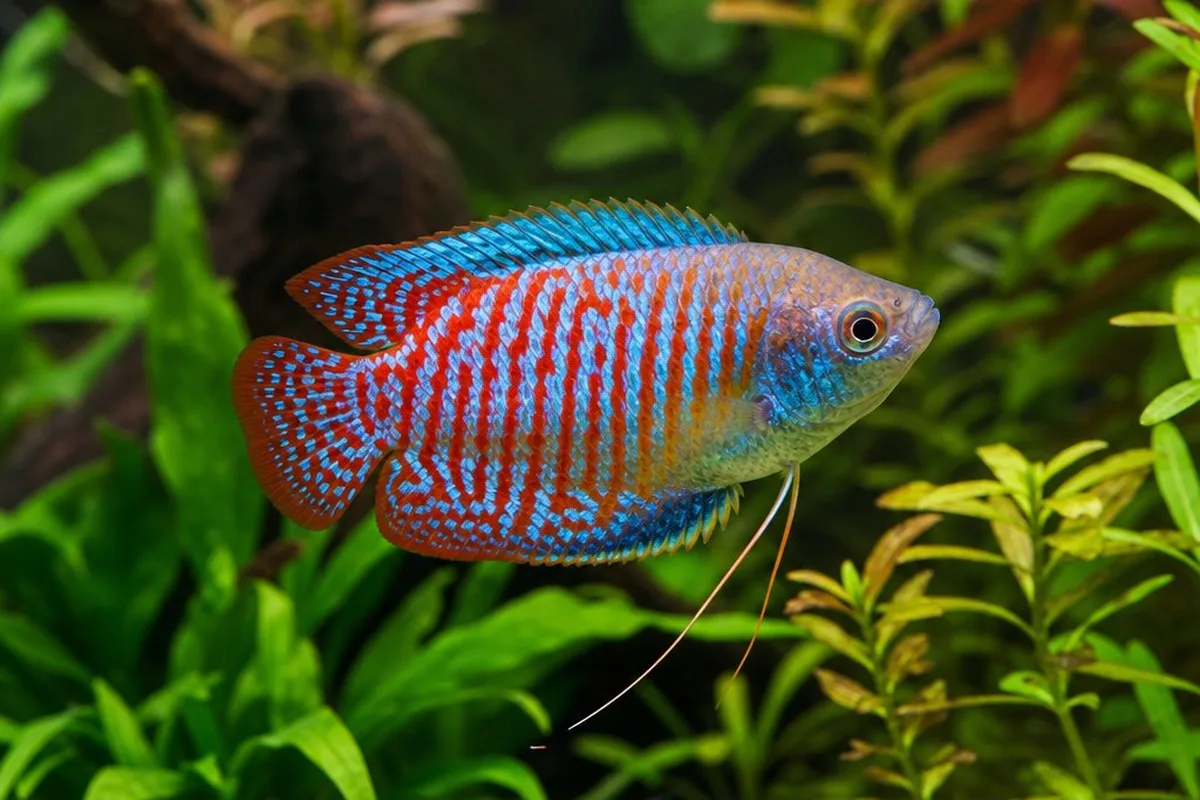
Dwarf gouramis (Trichogaster lalius) are a long-time community tank staple — colorful, generally peaceful, and related to bettas through a shared group of "labyrinth fish" that can breathe air at the surface. The care side of keeping dwarf gouramis is genuinely approachable. The harder part is upstream of care entirely: a significant share of commercially-farmed dwarf gouramis carry a viral disease with no cure, and that reality shapes how this species should be approached from the moment of purchase.
Appearance and Natural Range
Dwarf gouramis have a compact, deep-bodied shape with long, thread-like pelvic fins (used partly for sensing their surroundings) and, in males especially, vivid coloration — often blue, red, and orange patterning that varies by individual and by the color "strains" developed in the trade. The species is native to slow-moving, vegetated waters in South Asia (the Indian subcontinent), habitats that inform their general preference for calmer water and planted tanks.
Tank Requirements
Tank Size
10-15 gallons is a reasonable minimum for a single dwarf gourami or a pair. Community setups, or tanks housing more than one male (which can be territorial toward each other, though typically less intensely than the territorial disputes seen in bettas), benefit from more space.
Aquascaping
Live or artificial plants, including some floating plants, suit dwarf gouramis well — they come from vegetated habitats and appreciate cover, and floating plants in particular are relevant given that, as labyrinth fish, dwarf gouramis periodically take breaths of air at the surface. A tank with a tight-fitting lid that still allows access to warm, humid air just above the water's surface is generally considered beneficial for labyrinth fish.
Water Parameters
| Parameter | Target Range |
|---|---|
| Temperature | 74-82°F (23-28°C) |
| pH | 6.0-7.5 |
| Ammonia / Nitrite | 0 ppm |
| Nitrate | <20 ppm |
| Water hardness | Soft to moderately hard |
Diet and Feeding
Dwarf gouramis are omnivores that do well on a varied diet:
- Quality flake or pellet food as a staple
- Live or frozen foods (bloodworms, daphnia, similar) as supplements, which can also help condition fish for breeding
- Generally not picky eaters, making day-to-day feeding straightforward compared to some of the more specialized feeders discussed elsewhere on this site, like the small Asian stream catfish in our banjo catfish guide
Tank Mates and Compatibility
Dwarf gouramis are generally peaceful toward unrelated species and make reasonable community tank residents. A few considerations:
- Multiple males can be territorial toward each other, particularly in smaller tanks — providing visual breaks (plants, decor) helps reduce direct conflict
- Fin-nipping tank mates are a poor match given the dwarf gourami's flowing fins — the same caution discussed for black skirt tetras in a too-small group applies here from the gourami's perspective as a potential target
- Similar water parameter needs make many soft-to-moderate-water community fish reasonable companions, though as always, researching the specific combination before stocking is worthwhile
Dwarf Gourami Iridovirus: A Significant Health Concern
This is the part of dwarf gourami care that's most important to understand before buying, not after: dwarf gourami iridovirus (DGIV) has been documented at notably high rates in commercially-farmed dwarf gourami populations in various surveys. Infected fish may show non-specific symptoms — lethargy, color loss, appetite changes — or in some cases show no obvious signs before a sudden decline.
There is no cure for DGIV. This places it alongside other incurable conditions discussed on this site, like neon tetra disease and fish tuberculosis in guppies — situations where the lack of treatment options means prevention (sourcing and quarantine) carries more weight than it would for a treatable condition.
Practical implications:
- Quarantine new dwarf gouramis for an extended period (longer than you might quarantine a hardier species) before introducing them to an established tank
- Observe closely for any signs of illness during quarantine, understanding that the absence of symptoms doesn't guarantee the absence of DGIV
- Be realistic about risk — given how widespread DGIV has been found to be in farmed stock, acquiring dwarf gouramis carries a real risk of introducing this virus regardless of how careful a keeper is about other aspects of fishkeeping
Common Health Issues
- Dwarf gourami iridovirus (DGIV) — covered above; the most significant health consideration for this species specifically
- General stress-related susceptibility — like most fish, dwarf gouramis under chronic stress (poor water quality, inadequate space, aggressive tank mates) are more vulnerable to secondary issues
- Fin damage from aggressive tank mates — given their long, flowing fins, dwarf gouramis can be vulnerable to fin-nipping in the wrong community setup
Quick Setup Checklist
- Tank: 10-15 gallons minimum for a single fish or pair
- Plants, including floating plants, for cover and surface access
- Water temperature 74-82°F, pH 6.0-7.5
- Diet: quality flake/pellet + occasional live/frozen foods
- Avoid fin-nipping tank mates given long, flowing fins
- Quarantine new dwarf gouramis for an extended period before adding to a main tank
- Understand that DGIV is common in farmed stock and has no cure — sourcing matters more than for most species
- Multiple males: provide visual breaks to reduce territorial conflict