 By Hektor Jorgo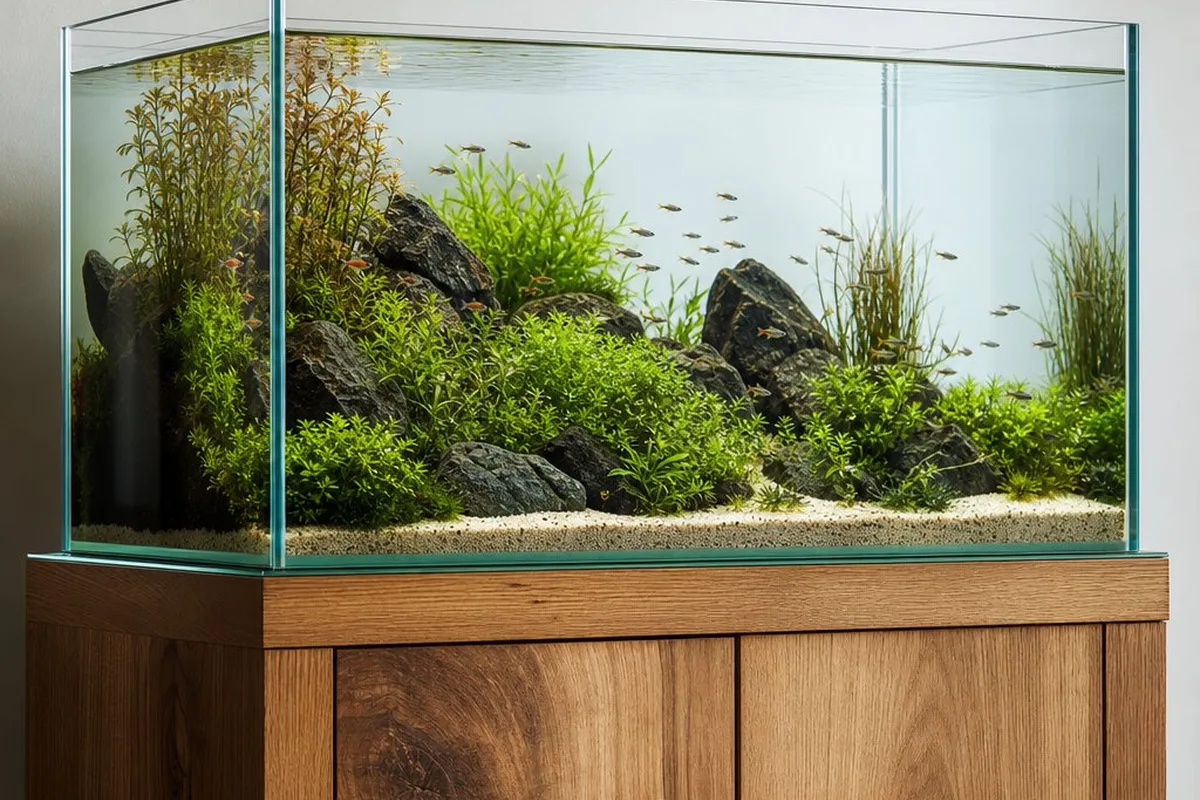
A tank that looks slightly larger than the stand underneath it is a more common sight than most aquarists expect — sometimes by design, sometimes by accident. The question of whether that's a problem comes down to one thing: what's actually holding up the glass.
Short Answer
A small amount of visual overhang isn't automatically a problem — but a tank's glass bottom panel needs to be fully supported by a flat, level surface across its entire footprint, with no exceptions. If any part of that bottom panel doesn't have solid support beneath it, that's a real structural concern regardless of how minor it looks. The key distinction is between overhang of the tank's outer frame or rim past a stand's decorative edge (usually fine) and overhang of the actual glass bottom past the stand's load-bearing surface (not fine, regardless of how small).
Why This Isn't Just an Aesthetic Question
A filled aquarium is heavy — water alone weighs roughly 8.3 lbs per gallon, and that's before accounting for substrate, rock, equipment, and the tank itself. All of that weight bears down on the glass bottom panel, which in turn needs to transfer that load into whatever is underneath it.
Glass aquariums (and the silicone seams holding them together) are built on the assumption that the entire bottom panel will be supported. When part of that panel has no support — even a relatively narrow strip along one edge — the glass in that area is subjected to stress it wasn't designed to handle. The danger isn't usually immediate; it's the kind of stress that can lead to cracking, seam separation, or failure over time, often starting at the line where supported glass meets unsupported glass.
Visual Overhang vs. Structural Overhang
This is the distinction that actually matters:
- Visual/frame overhang: The tank's outer rim, frame, or trim extends past the stand's decorative edge or molding, but the glass bottom panel itself remains fully supported by the stand's actual load-bearing platform underneath. This is common with stands that have decorative trim slightly smaller than their structural top, and is generally not a problem.
- Structural/bottom-panel overhang: Part of the glass bottom panel extends past the stand's load-bearing surface, meaning that portion of the glass has nothing supporting it directly. This is the scenario that matters, and it doesn't become "fine" just because the unsupported strip is narrow.
If you're unsure which situation you're looking at, the practical test is simple: look underneath, or measure. Identify the stand's actual top support surface (not trim), and compare it to the tank's actual bottom footprint (not its advertised size, which can refer to overall dimensions rather than the bottom panel specifically).
Rimless Tanks Need Extra Care
This issue is more critical for rimless tanks. A framed tank has a rigid frame around its bottom perimeter that can help, to a limited extent, distribute weight even where support is imperfect — though this isn't something to rely on. A rimless tank has no frame at all; the glass bottom is the only thing in contact with the stand. There's nothing to redistribute load if even part of that contact area is unsupported, which means zero tolerance for unsupported overhang is the right standard for rimless setups.
DIY and Custom Stands
If you're building or modifying a stand, the same principle applies, just with more variables in your control: the top support surface needs to match or exceed the tank's actual bottom footprint, be flat, and be level. This is also where aquarium bracing is worth understanding — bracing addresses the top of the tank and resists wall-bowing from water pressure, while stand/overhang is about the bottom of the tank and weight support. They're separate structural questions, but both come from the same underlying fact: a full aquarium is under continuous, significant load, and every part of its design assumes that load is handled correctly.
Non-Rectangular Tanks: An Extra Check
Most stands are designed around standard rectangular footprints, which is straightforward to match. Non-rectangular tanks — a 65-gallon hexagon aquarium being a good example — have a footprint shape that won't match a generic rectangular stand top at all. For these tanks, confirming that the stand was specifically designed for (or matched to) that footprint shape isn't an optional extra step; it's the entire question. A hexagon tank centered on a rectangular stand top might look reasonably supported from some angles while actually leaving significant portions of the bottom panel's corners unsupported.
Quick Reference
- Identify the stand's actual load-bearing top surface, not decorative trim or molding
- Measure the tank's actual glass bottom footprint, not its advertised overall size
- Confirm the support surface is flat, level, and equal to or larger than the footprint
- Visual overhang of the tank's frame/rim past trim is usually fine if the glass bottom is fully supported
- Any unsupported portion of the glass bottom panel is a real concern, regardless of size
- Rimless tanks require zero tolerance for unsupported edges — no frame to compensate
- Non-rectangular tanks (hexagon, etc.) need a stand specifically matched to that footprint shape
- When in doubt, look underneath or measure directly rather than assuming from the side view


