By Hektor Jorgo
Bala sharks (Balantiocheilos melanopterus) have a reputation as a peaceful, active "filler" fish for large community tanks, and that reputation sometimes leads to them being suggested as tankmates for African cichlids — large, active, and unlikely to be bullied once grown. The reasoning isn't crazy, but it runs into three separate problems: size, water chemistry, and temperament — and any one of these alone is often enough to make this pairing more trouble than it's worth.
Short Answer: Generally Not Recommended
Bala sharks and African cichlids are generally not a good long-term pairing, mainly because Bala sharks grow large (12-14 inches), need to be kept in schools of 6+ (requiring 125+ gallons), and prefer softer, slightly acidic to neutral water — the opposite of the hard, alkaline water most African cichlids need. Even setting chemistry aside, Bala sharks are skittish and prone to startling, which doesn't mix well with the more boisterous, territorial behavior common in cichlid tanks. There are better-suited tankmates for both groups.
Why Bala Sharks Are Often Suggested (And Why It's a Mismatch)
The logic behind suggesting Bala sharks for cichlid tanks usually goes something like: cichlids can be aggressive toward smaller or slow fish, so you need tankmates that are either too big to bother with, too fast to catch, or both. Bala sharks, as adults, are both — they're large, fast-swimming, mid-water fish that aren't an easy target.
The catch is that "as adults" is doing a lot of work in that sentence. Bala sharks are typically sold small, at 2-3 inches, when they'd be an easy target for cichlid aggression — and by the time they've grown into the size and speed that makes them a workable cichlid tankmate, they also require a tank size that most cichlid setups don't have.
Size and Tank Size Considerations
12-14 inches is a realistic adult size for a well-cared-for Bala shark — considerably larger than the 2-3 inch juveniles typically sold. Combined with their schooling requirement (6+ individuals for the school to feel secure and display natural behavior), a proper Bala shark setup needs 125 gallons or more.
For comparison, our 75-gallon peacock cichlid guide treats 75 gallons as a solidly-sized cichlid tank — and a school of adult Bala sharks alone would need a tank substantially larger than that, before adding any cichlids at all.
Water Parameter Mismatch
Bala sharks are native to fast-flowing rivers in Southeast Asia, with soft to moderately hard, slightly acidic to neutral water (roughly pH 6.0-8.0 depending on source, with a preference toward the lower-to-middle end of that range). Most African cichlids from Lake Malawi and Lake Tanganyika need hard, alkaline water (pH 7.8-8.6).
This is a similar mismatch to the one discussed in our driftwood and cichlid tank guide — it's not that Bala sharks would immediately suffer in slightly harder, more alkaline water than their ideal, but you're asking one or both groups of fish to tolerate water chemistry outside their preferred range on an ongoing basis, which adds a baseline level of stress that compounds with other factors.
Temperament and Stress Issues
Bala sharks are peaceful but notably skittish — they're prone to sudden startled "dashes" around the tank, including jumping or crashing into tank walls and decor when frightened. In a tank with territorial, sometimes boisterous cichlids (a dynamic also relevant to symptoms like the ones in our cloudy eyes in cichlids guide, where physical injury from collisions or aggression is one possible cause), this skittishness becomes a liability — a startled Bala shark crashing through a cichlid's territory can trigger aggression, and the resulting chase can cause real injury to a fish that's already prone to panicked swimming.
Better Tankmates for Both Groups
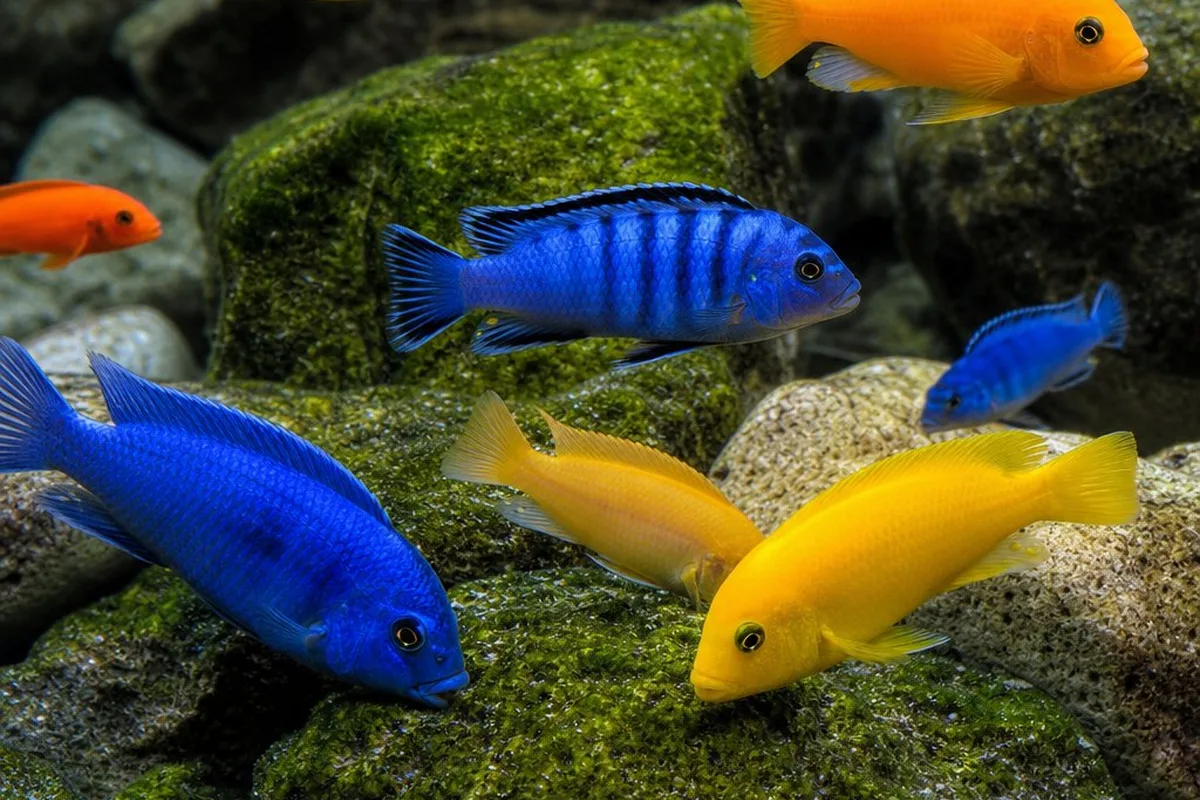
For African cichlid tanks: other Rift Lake cichlids that share the same water chemistry — peaceful Malawi haps with peacocks, or appropriately selected Mbuna species (see our Mbuna diet guide for more on this group). Larger, robust catfish (certain Synodontis species, for example) are also commonly successful, tolerating both the water chemistry and the temperament of Rift Lake cichlids.
For Bala sharks: large, peaceful community tanks with soft-to-neutral water — think large barbs, other peaceful schooling fish, and species that won't be stressed by Bala sharks' active swimming. A 125+ gallon community tank built around Bala sharks' actual needs, rather than around fitting them into a cichlid tank, tends to be a much better outcome for the Bala sharks specifically.
Worth noting: despite the shared "shark" name, Bala sharks have little in common with other freshwater fish marketed under similar names — see our guide to freshwater "shark" fish for more on why the name itself isn't a useful guide to compatibility or care needs.
Quick Reference
- Bala sharks grow to 12-14 inches and need schools of 6+ → 125+ gallon tanks
- Water chemistry: Bala sharks prefer soft-to-neutral; African cichlids need hard/alkaline
- Bala sharks are skittish — collisions with decor/tankmates are a real injury risk
- The "dither fish" logic isn't wrong in concept, but Bala sharks' requirements don't fit most cichlid tanks
- Better cichlid tankmates: other Rift Lake cichlids, robust catfish (Synodontis)
- Better Bala shark tankmates: large peaceful community fish in soft-to-neutral water
- If you already have both: monitor closely for stress/injury and water parameter compromises