By Hektor Jorgo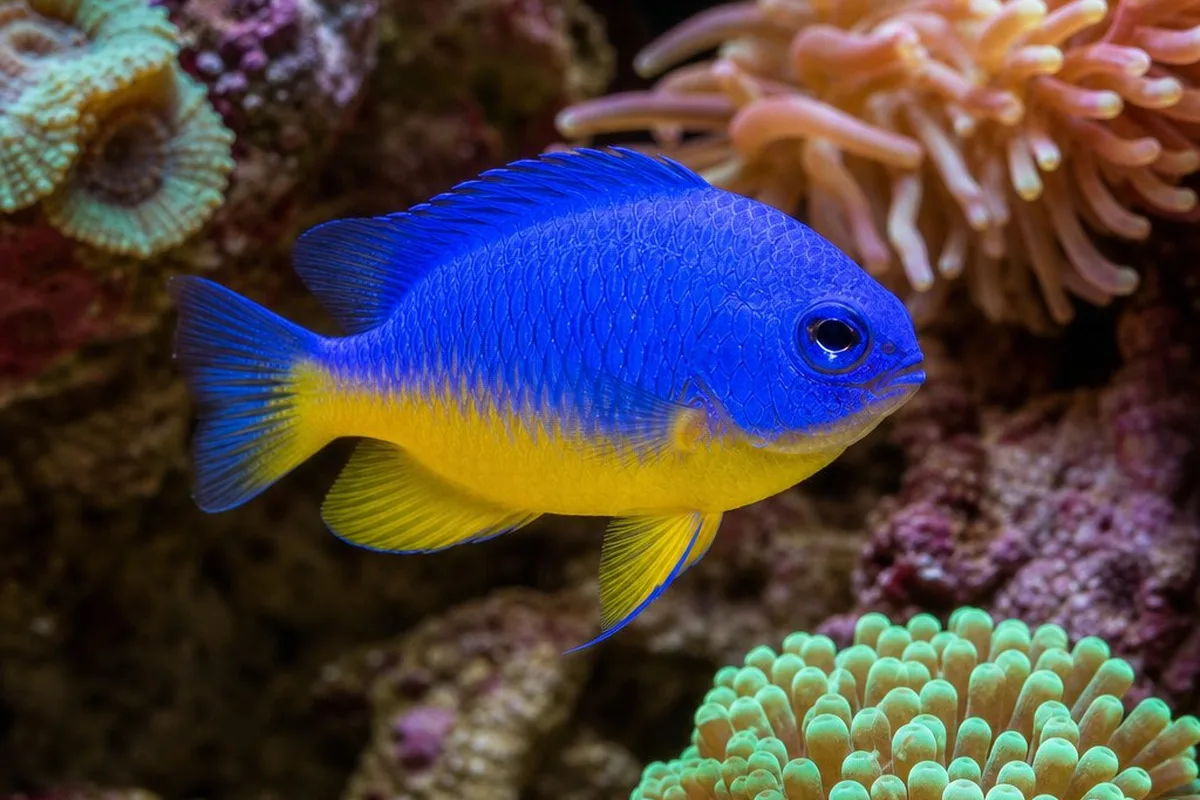
The azure damselfish (Chrysiptera hemicyanea) is one of the more understated members of the Chrysiptera genus — a small, two-toned fish that's often overlooked on the dealer's wall in favor of flashier damsels, but that holds its own once it settles into a tank. Its electric-blue upper body and pale yellow underside give it a clean, almost painted look, and it brings the same bulletproof hardiness that makes damselfish a staple of the beginner saltwater hobby. This guide covers tank setup, water parameters, diet, and — because this is where most azure damselfish problems originate — how to manage its territorial streak around tank mates.
Appearance and Natural Range
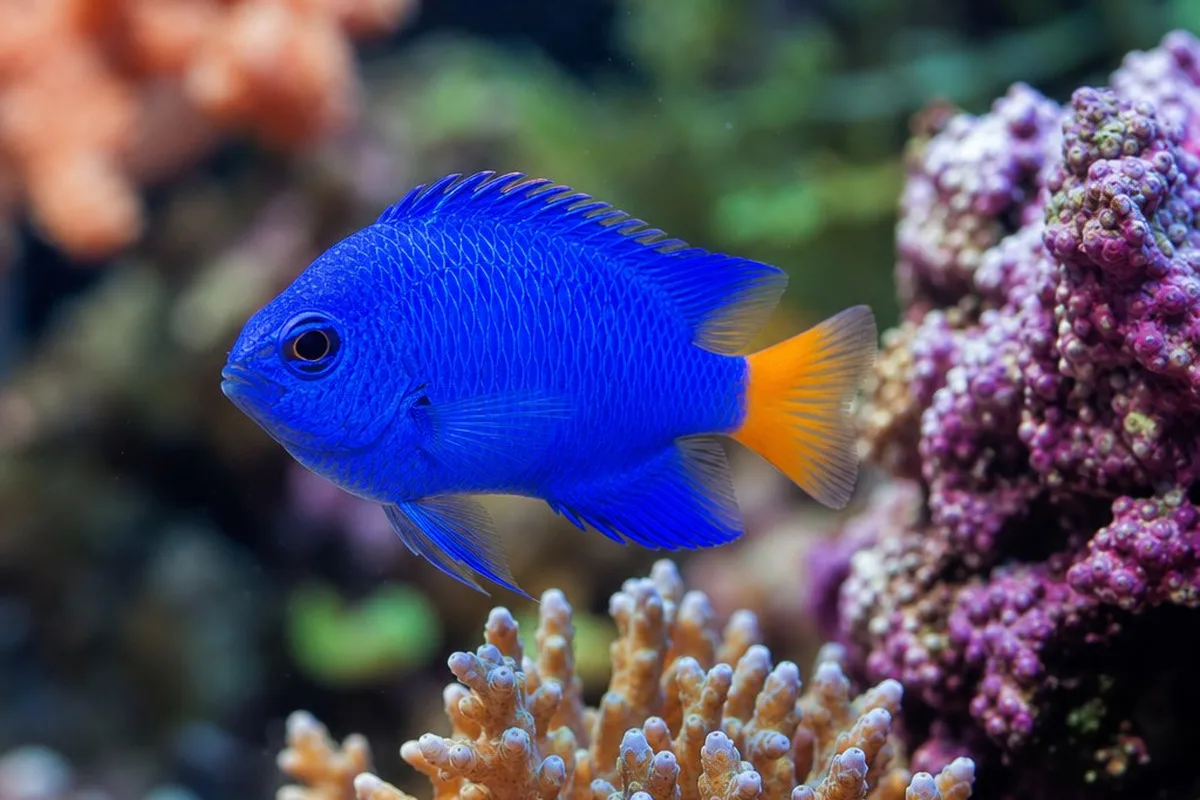
Azure damselfish are small, deep-bodied fish that top out around 2.5 inches (6.5 cm), making them one of the more compact damsels commonly available in the trade. The defining feature is the split coloration: a bright azure-to-cobalt blue covers the upper two-thirds of the body, fading into a pale yellow or cream belly and lower fins. Some individuals show a faint dark spot near the base of the pectoral fin, which can help distinguish them from similarly colored Chrysiptera species.
In the wild, C. hemicyanea is found across the Indo-Pacific, typically in shallow, sheltered reef lagoons and seagrass-adjacent rubble zones at depths of 1-15 meters. It's often seen in loose aggregations over open sandy or rubble patches near coral cover, darting back to shelter when threatened. That instinct — staying close to a bolt-hole — is the single most important thing to replicate in a home aquarium.
Tank Requirements
Tank Size
A single azure damselfish does well in a tank as small as 20 gallons (75 liters). Because of its small adult size, it's a reasonable choice for nano and pico reef setups, though a 20-gallon-plus tank gives it more room to establish a territory without constantly bumping into tank mates. If you're building out a broader saltwater aquarium stocked with multiple small fish, azure damselfish slot in well as one of several mid-sized residents.
Aquascaping
Give it plenty of live rock with caves, overhangs, and narrow crevices — azure damselfish are quick to dart into cover when startled, and a tank without enough structure will produce a permanently stressed, washed-out-looking fish. Open sand or rubble areas near the rockwork are a nice touch too, since this mirrors the rubble flats where this species is often found in the wild and gives it a "home base" to patrol.
Water Parameters
| Parameter | Target Range |
|---|---|
| Temperature | 74-78°F (23-26°C) |
| Salinity | 1.021-1.025 SG |
| pH | 8.1-8.4 |
| Ammonia / Nitrite | 0 ppm |
| Nitrate | <20 ppm (lower for reef tanks with sensitive corals) |
| Alkalinity | 8-12 dKH |
Azure damselfish tolerate the normal swings of a maturing system better than almost any other marine fish, which is why damsels in general have a long history as "starter fish" for cycling tanks. That tolerance is a buffer, not a license — sustained poor water quality will still dull their coloration, suppress their appetite, and shorten their lifespan, even if they don't show obvious symptoms right away.
Diet and Feeding
Azure damselfish are easy, unfussy eaters. In the wild they take a mix of zooplankton and filamentous algae, and in the aquarium they'll eat almost anything offered:
- High-quality marine flake food
- Small (1mm) marine pellets
- Frozen mysis shrimp or brine shrimp, enriched if possible
- Nori or dried seaweed for grazing
Feed 1-2 times per day, in amounts your fish can finish in 2-3 minutes. Like most damsels, azure damselfish will beg constantly and appear "hungry" even when well-fed — resist the urge to overfeed, since excess food breaks down into nitrate and phosphate that feed nuisance algae far more reliably than it feeds your fish.
Tank Mates and Compatibility
Azure damselfish are semi-aggressive and territorial, particularly once they've claimed a section of rockwork as their own. They're not the most aggressive damsel you can buy, but they're not passive either, and they follow the same general rule as most Chrysiptera species: aggression escalates with time in the tank and tends to target fish added later, especially ones of similar size, shape, or color.
Practical stocking advice:
- Add azure damselfish toward the end of your stocking order, or alongside other semi-aggressive fish of similar size so no single species gets an unchallenged head start on claiming territory.
- Good tank mates include the common clownfish, firefish, gobies, blennies, and other peaceful-to-semi-aggressive reef fish.
- Be cautious mixing with other blue Chrysiptera damsels — an azure damselfish housed with a blue devil damselfish or a yellowtail damselfish can result in ongoing squabbles, since both species read similarly colored fish as rivals. If you want to keep multiple blue damsels together, add them simultaneously to a large tank (50+ gallons) with rockwork divided into multiple distinct territories.
- A domino damselfish is a poor match for an azure damselfish in anything but a large tank — dominoes grow much larger and more aggressive over time and will likely bully a smaller azure damsel once they outgrow it.
If you're wondering whether to get more than one azure damselfish, see our dedicated guide on how many azure damselfish to get — the short version is that a single individual is the simplest choice, and a group requires a larger tank with carefully divided territories.
Behavior and Temperament
Azure damselfish aren't typically observed breeding in home aquariums the way some damselfish are — while Chrysiptera species are egg-layers with demersal (rock-attached) eggs and male egg-guarding behavior in the wild and in dedicated breeding setups, spontaneous pairing and spawning in a mixed display tank is uncommon for this species compared to, say, the yellowtail damselfish. Most home aquarists will never see this fish breed, and that's worth knowing upfront so you don't go looking for behavior that isn't likely to appear.
What you will see is a clear territorial pattern. A newly introduced azure damselfish typically spends its first one to two weeks staying close to cover, venturing out cautiously to feed. Once it settles in, it picks a section of rock — usually near its preferred hiding spot — and begins defending it, chasing off smaller or similarly colored fish that wander too close. This isn't constant aggression; it's localized to "its" patch of rock, and fish that avoid that area are generally left alone. Color also shifts with mood: a stressed or recently transported azure damselfish often looks noticeably duller and can darken temporarily, brightening back up to its full azure-and-yellow contrast once it feels secure.
Common Health Issues
Azure damselfish are hardy and often the last fish in a tank to show signs of illness, but they're not immune:
- Marine ich (Cryptocaryon irritans) — small white spots on the body and fins; damsels can act as a reservoir for this parasite even when they show few symptoms themselves.
- Fin and tail fraying — usually a result of territorial scuffles rather than disease; check for aggressive tank mates if you see this.
- Loss of color/appetite — most often linked to water quality issues or stress from inadequate hiding spots, both of which are correctable without medication.
A 2-4 week quarantine period for new arrivals remains the best single step toward keeping disease out of your main display, even for a fish as tough as this one. Because azure damselfish are small and inexpensive, it can be tempting to skip quarantine on the assumption that "it's just a damsel" — but a quarantine tank doesn't just protect your existing fish from a new arrival's parasites; it also gives the azure damselfish itself a low-stress environment to start eating well before it has to compete for food and territory in the main display. A bare 10-gallon tank with a heater, a small filter, and a piece of PVC pipe for cover is enough for this purpose.
Quick Setup Checklist
- Tank: 20+ gallons, fully cycled before adding fish
- Live rock with caves, overhangs, and crevices for shelter
- Open sand/rubble area near rockwork for natural foraging behavior
- Salinity 1.021-1.025, temperature 74-78°F
- Marine flake/pellet diet plus occasional frozen mysis and nori
- Stocking order: add azure damsel later in sequence, avoid pairing with other blue Chrysiptera in small tanks