Are Fiddler Crabs Reef Safe? Why the Question Doesn't Quite Apply

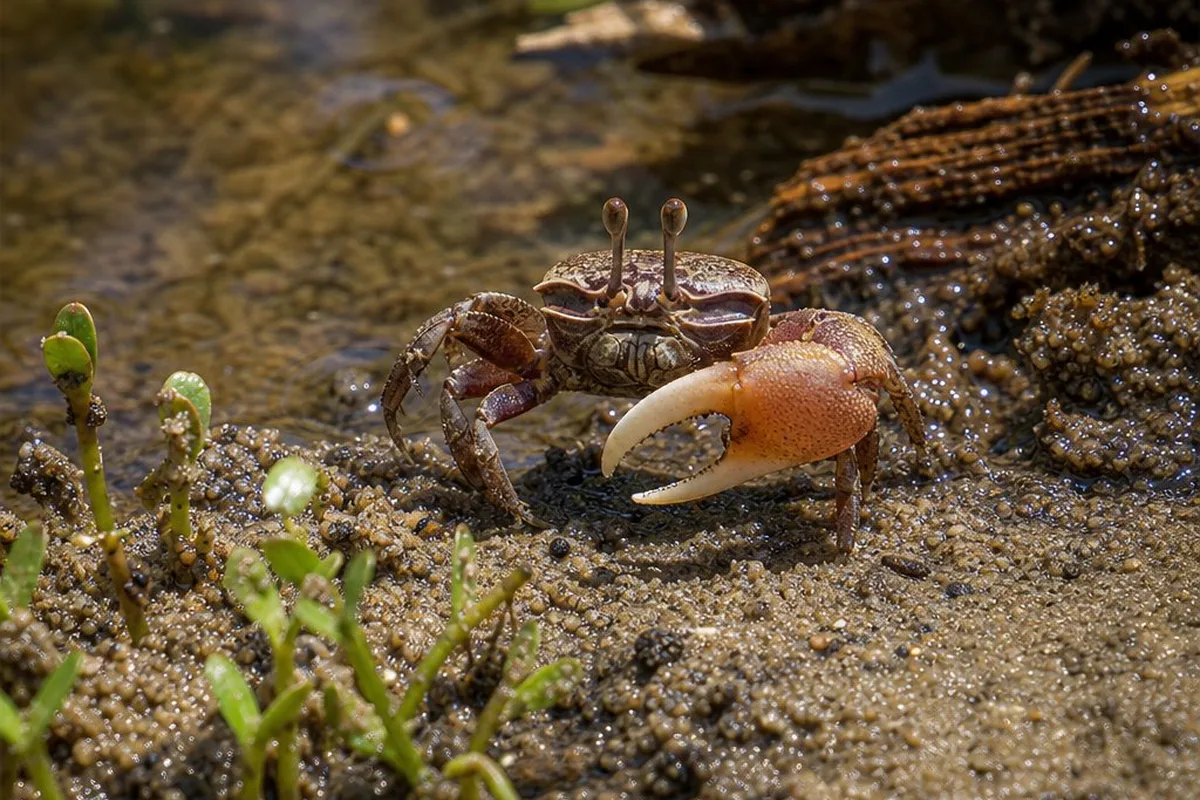
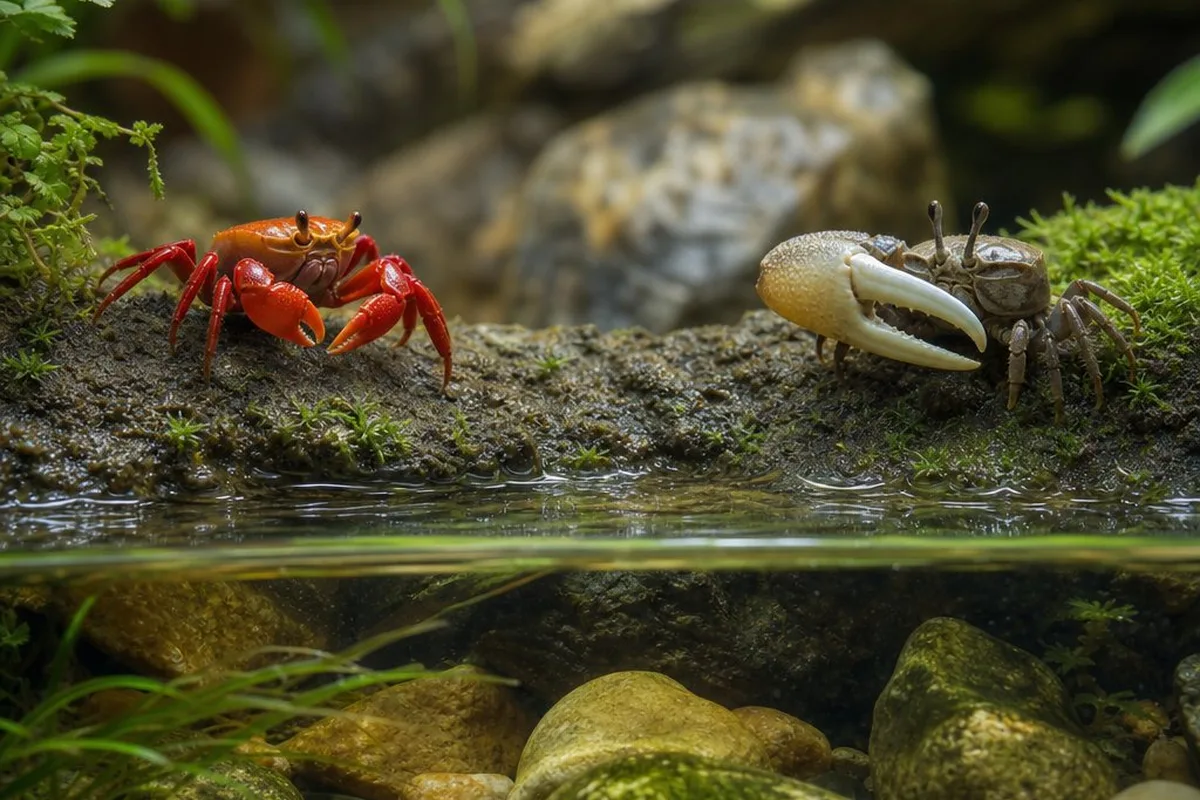
A fiddler crab on a muddy bank, with a coral reef tank shown separately in the background for contrast

Quick Facts

What 'Reef Safe' Means
Whether an animal can be kept in a marine reef tank without harming corals, fish, or other reef inhabitants
Fiddler Crab Habitat
Brackish mudflat and estuarine environments — not marine reef environments
Salinity Mismatch
Fiddler crabs aren't adapted to full-strength reef-tank saltwater conditions
Setup Mismatch
Fiddler crabs need land/emergent areas; reef tanks are fully submerged marine systems
Short Answer
'Reef safe' isn't really an applicable question for fiddler crabs — they're not reef animals at all
Comparable Distinction
Similar to how land hermit crabs are explicitly excluded from reef-safe discussions for marine hermit crabs
If Looking for Reef Tank Crabs
Marine species like emerald crabs, porcelain crabs, or reef-appropriate hermit crabs are the relevant category
If Looking for Fiddler Crab Care
Paludarium/brackish setups are the appropriate framework, not a marine reef tank

"Is it reef safe?" is one of the most common compatibility questions in the marine aquarium hobby — but applying it to a fiddler crab reveals more about what "reef safe" actually means than it does about fiddler crabs themselves.

Short Answer

Fiddler crabs aren't reef animals, so "reef safe" isn't really a question that applies to them. "Reef safe" specifically describes whether a marine species can be kept in a marine reef tank without causing harm to corals or other reef inhabitants. Fiddler crabs are brackish, semi-terrestrial mudflat animals — covered in our freshwater crabs for aquariums guide — with no connection to marine reef environments at all. This is a similar situation to land hermit crabs, which our reef-safe hermit crab guide specifically calls out as a separate, terrestrial group unrelated to the marine hermit crab species that "reef safe" discussions are actually about.

What "Reef Safe" Actually Means

"Reef safe" is shorthand for a fairly specific question: if you add this marine species to a reef tank, will it leave the corals, fish, and other invertebrates alone — or will it eat, damage, or otherwise harm them? It's a question that only makes sense in the context of:

  • A marine reef tank — full-strength saltwater, corals, and the broader reef ecosystem
  • A marine species being considered for that environment

Both halves of that context are necessary for the question to mean anything. Remove either one, and "reef safe" stops being a meaningful framework.

Why Fiddler Crabs Fall Outside That Framework

Fiddler crabs fail both halves of the "reef safe" framework simultaneously:

  • They're brackish-water, semi-terrestrial animals — not adapted to the full marine salinity of a reef tank, a distinction covered more generally in our guide on whether saltwater crabs can live in freshwater (and its mirror image here, since reef tanks represent the opposite end of the salinity spectrum from where fiddler crabs naturally live)
  • They need land/emergent areas as part of their normal behavior, covered in our freshwater crabs for aquariums guide — a fully submerged marine reef tank doesn't provide that

There's no scenario where a fiddler crab ends up in a reef tank as a deliberate, appropriate addition — which means the "would it harm the corals" question never actually comes up in practice. It's not that fiddler crabs are "not reef safe" in the sense of being a known threat to corals; it's that the entire premise doesn't apply.

The Land Hermit Crab Parallel

This isn't a unique situation. Our reef-safe hermit crab guide makes a similar point about land hermit crabs — explicitly noting they're a "completely different, terrestrial group, not relevant to marine reef tanks at all," distinct from the marine hermit crab species that reef-safe discussions are actually evaluating. Fiddler crabs occupy a comparable position: a real, distinct group of animals with their own care considerations, but simply outside the category that "reef safe" is asking about — not a failed candidate, but a non-candidate.

If You're Actually Interested in Fiddler Crabs

If the underlying interest is genuinely in keeping fiddler crabs, the useful framework is a brackish paludarium setup — covered in our freshwater crabs for aquariums guide and fiddler crab diet guide — along with compatibility questions for that setup type, like our guides on fiddler crabs and mudskippers or red claw crabs and fiddler crabs. And if the underlying interest is genuinely in reef tank crabs, species like emerald crabs (see our molting guide), porcelain crabs (see our reef safety guide), and reef-appropriate marine hermit crabs are the relevant category.

Quick Reference

  • "Reef safe" describes marine species in marine reef tanks specifically
  • Fiddler crabs are brackish, semi-terrestrial mudflat animals — not marine reef animals
  • Fiddler crabs fail both the salinity and habitat requirements for the "reef safe" question to apply
  • This parallels how land hermit crabs are excluded from reef-safe hermit crab discussions
  • It's not that fiddler crabs are "unsafe" for reefs — the question is simply a non-fit
  • For reef tank crabs, look at emerald crabs, porcelain crabs, or marine hermit crab species
  • For fiddler crabs, a brackish paludarium setup is the relevant framework, not a reef tank

Frequently Asked Questions

Are fiddler crabs reef safe?

'Reef safe' isn't really the right question for fiddler crabs, because they're not marine reef animals to begin with. 'Reef safe' is a term used to describe whether a marine species can be kept in a reef tank without causing harm — eating corals, preying on other invertebrates, and so on. Fiddler crabs are brackish, semi-terrestrial mudflat animals, covered in our freshwater crabs for aquariums guide — they're not adapted to full-strength marine salinity, and they're not part of the marine reef ecosystem in any sense. Asking whether a fiddler crab is reef safe is a bit like asking whether a desert lizard is reef safe — the animal simply isn't part of that category of question.

Why would someone even ask if a fiddler crab is reef safe?

Probably because 'reef safe' has become a fairly common shorthand in the aquarium hobby for 'is this animal okay to add to my tank without it causing problems' — and that shorthand sometimes gets applied more broadly than its original, more specific meaning (which is about marine species in marine reef tanks specifically). Fiddler crabs are popular, visually interesting animals, and it's a reasonable instinct to wonder about compatibility with other things in 'a tank.' But the more useful question for a fiddler crab isn't 'is it reef safe' — it's 'is it compatible with [whatever brackish/freshwater paludarium setup it would actually live in]', covered for specific pairings in our guides on fiddler crabs and mudskippers and red claw crabs and fiddler crabs.

Is this similar to the 'land hermit crab' situation in reef tank discussions?

Yes, actually — it's a similar pattern. Our guide to reef-safe hermit crabs specifically notes that land hermit crabs are a completely different, terrestrial group, not relevant to marine reef tanks at all — distinct from the marine hermit crab species that the 'reef safe' question is actually about. Fiddler crabs fall into a comparable category: they're a real, interesting group of animals with their own care considerations, but they're simply outside the scope of what 'reef safe' is asking about, the same way land hermit crabs are. In both cases, the answer isn't 'no, not reef safe' so much as 'this isn't a reef animal, so the question doesn't apply.'

If I want crabs for my reef tank, what should I look at instead?

For an actual marine reef tank, the relevant crab species are things like emerald crabs (covered in our emerald crab molting guide), porcelain crabs (see our porcelain crab reef safety guide), and the marine hermit crab species discussed in our reef-safe hermit crab guide — all of which are adapted to marine, full-salinity reef conditions and are evaluated specifically for reef compatibility. If, on the other hand, your actual interest is in fiddler crabs themselves, the relevant framework is a brackish paludarium setup, covered in our freshwater crabs for aquariums guide and fiddler crab diet guide — a completely different (and for fiddler crabs, more appropriate) category of tank.

Sources & Further Reading

  1. Reef Tank Cleanup Crew & Species Categorization — Reef2Reef
  2. Brackish & Paludarium Species Guides — Practical Fishkeeping
Hektor Jorgo

About the Author: Hektor Jorgo

Co-Founder & Marine Biologist

Hektor is a co-founder of Sea Life Planet and has kept reef and freshwater aquariums for over 15 years. He holds a background in marine biology and focuses on species care accuracy, water chemistry, and tank husbandry.