By Hektor Jorgo
The American flagfish's reputation as a useful algae-eater (covered in our care guide) often comes with a footnote that's easy to miss in a quick product description: this is not a guaranteed-peaceful community fish. Understanding when and why aggression shows up — and which tank mates are most at risk — makes the difference between a flagfish that quietly does its job and one that turns into the tank's main source of stress.
Short Answer
American flagfish are semi-aggressive and territorial, not outright predatory — but their behavior is more assertive than their 2-2.5 inch size suggests. Males, especially multiple males in the same tank, and breeding behavior are the most common triggers for increased aggression. Slow-moving or long-finned tank mates (fancy guppies, sailfin mollies) are at the most risk from fin-nipping. A single flagfish, or a well-managed group in a spacious, densely planted tank, often works fine — but it's a combination to monitor, not assume.
When Flagfish Aggression Shows Up
Male-to-male competition. Multiple male flagfish in the same tank, especially a smaller one, commonly results in territorial disputes — posturing, chasing, and occasionally fin damage between males. This is the most predictable source of aggression and is largely avoidable through sex ratio management (more females than males, or a single male) or simply keeping a single fish.
Breeding behavior. Flagfish are egg-layers, and males in particular can become more territorial when defending a spawning site or guarding eggs/fry — a pattern that shows up across many fish species but is notably pronounced in flagfish relative to their size. A flagfish that's been calm for weeks may suddenly become more assertive around a breeding event.
Crowding or insufficient territory. In a sparse or small tank without enough plant cover to create separate territories (as discussed in our care guide), flagfish have fewer options to establish space without overlapping with tank mates — increasing the frequency of territorial encounters.
Individual temperament variation. As with many species, individual flagfish vary — some are notably more laid-back than others, and a flagfish's behavior in one tank setup doesn't guarantee the same behavior in a different setup or with different tank mates.
Tank Mates at Risk
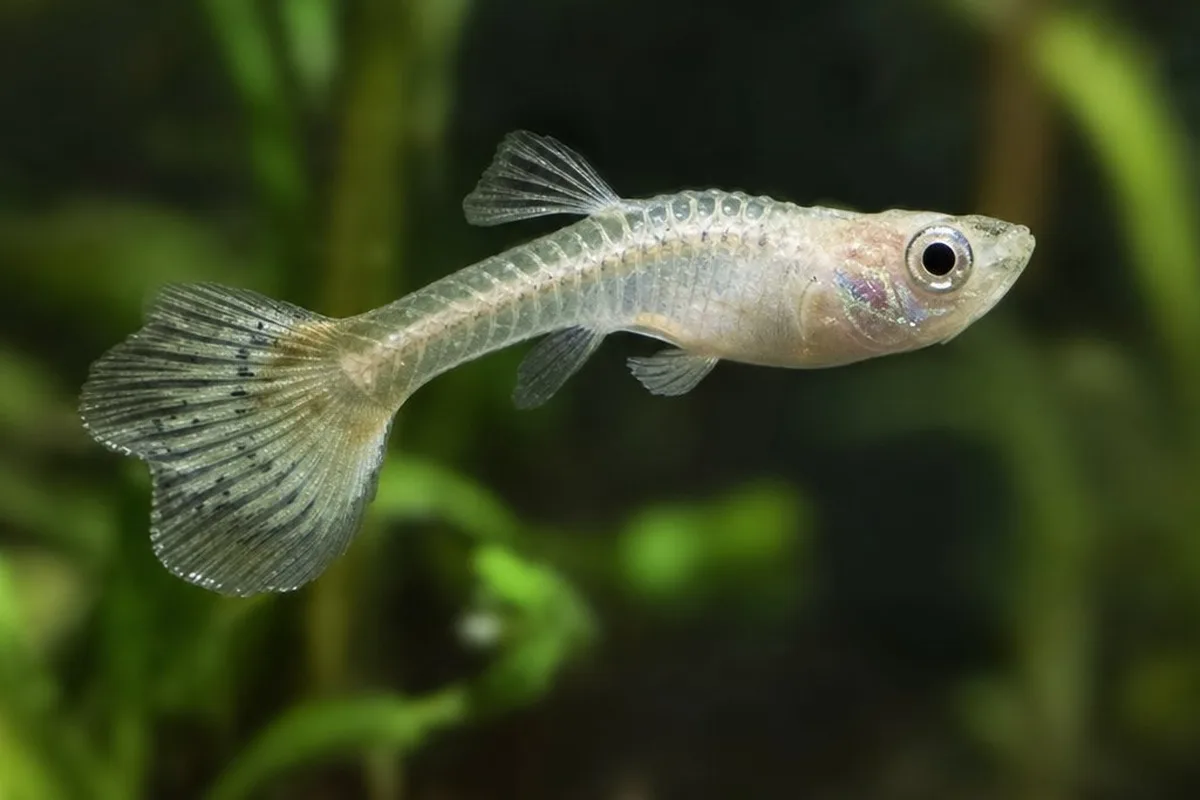
Highest risk — slow-moving, long-finned fish. Fancy guppies with elaborate tails (including double-tail/split-tail varieties) and sailfin mollies, with the male's large dorsal "sail," present large, slow-moving fin targets that a territorial flagfish may nip at. This doesn't mean these combinations never work — many keepers report success — but it's the combination most likely to result in visible fin damage if a flagfish is more assertive than average.
Lower risk — fast, robust, or armored fish. Quick-swimming fish that aren't easy to corner, and armored or spined fish (certain catfish) that aren't appealing targets, tend to coexist more easily with flagfish.
Other flagfish. As covered above, multiple males are the most likely source of conflict within the species itself.
Reducing Aggression in Your Tank
- More space. A larger tank (above the 20-gallon minimum from our care guide) gives territorial fish more room to establish separate spaces without constant overlap.
- Dense planting. Visual breaks reduce both the frequency of encounters and the intensity of territorial responses — a flagfish that can't constantly see a "rival" across open water has less reason to repeatedly engage with it.
- Manage sex ratio. Fewer males (or a single male, or an all-female group if breeding isn't a goal) reduces the most predictable source of intraspecies conflict.
- Introduce tank mates thoughtfully. Adding potential targets (long-finned livebearers) to an established flagfish territory is riskier than setting up the tank with all species present from early on, before territories are firmly established — though this isn't a guarantee either.
- Have an exit plan. If a particular flagfish proves consistently more aggressive than the tank can accommodate, rehoming it to a different setup (or to a tank with more robust tank mates) is a reasonable response — not every individual fish fits every tank, regardless of species-level generalizations.
Is a Single Flagfish Less Aggressive?
Often, yes — removing the most predictable source of conflict (other flagfish, particularly other males) tends to result in calmer overall behavior. A single flagfish in a community tank can still display territorial behavior toward other species, but without the added layer of intraspecies competition, many keepers find a single fish noticeably easier to manage than a group, especially in a tank that's on the smaller end of what's workable for the species.
This doesn't mean a group is a bad choice — groups can work well with adequate space and planning — but if you're specifically trying to minimize aggression-related issues and aren't pursuing breeding, a single flagfish (or a heavily female-skewed group) is a reasonable simplification.
Quick Reference
- Flagfish are semi-aggressive/territorial — more assertive than their size suggests
- Multiple males = most predictable source of conflict
- Breeding behavior commonly increases aggression, especially in males
- Highest-risk tank mates: long-finned livebearers (fancy guppies, sailfin mollies)
- More space + dense planting = fewer, less intense territorial encounters
- A single flagfish or female-skewed group is often calmer than a multi-male group
- Monitor new tank mate introductions closely — outcomes vary by individual fish