By Hektor Jorgo
Of all the things an anemone does that can send a new keeper running for a forum search, a wide-open mouth is one of the most common — and one of the most often misread, because it's frequently just the anemone doing exactly what it's supposed to do.
Short Answer
An anemone's mouth opening — sometimes widely — is a normal part of feeding, digestion, and periodic waste expulsion, and on its own isn't a cause for concern. These episodes typically last from a few minutes to a few hours and resolve as the anemone returns to its usual shape. What's worth paying attention to is a mouth that stays open for a day or more without an obvious feeding event, especially if it's paired with other changes like shrinking or paling — that combination points toward a more general health issue rather than a normal digestive moment.
Normal Reasons an Anemone's Mouth Opens
Anemones have a single opening that serves as both mouth and anus — everything that goes in for feeding, and everything that comes back out as waste, passes through the same central opening. This means a wide-open mouth shows up in a few entirely routine contexts:
- During and after feeding — the mouth opens to take in food, and may remain open during initial digestion
- Waste expulsion — periodically, anemones expel indigestible material (shell fragments, exoskeleton pieces from prey, or other waste) through this same opening
- Regurgitation of oversized food — if a piece of food was too large or wasn't broken down enough, the anemone may push it back out
In all of these cases, the expected pattern is: mouth opens, the relevant material goes in or out, and the mouth closes back down over a timeframe of minutes to a few hours.
When Regurgitation Signals a Feeding Adjustment
A single instance of an anemone spitting back a piece of food — especially after an unusually generous feeding — isn't typically a problem. If it's a repeated pattern with normal feeding amounts, though, it's worth treating as feedback:
- Reduce portion size — a smaller piece may be easier for the anemone to fully process
- Chop food more finely — particularly for larger meaty foods
- Reduce feeding frequency if the anemone seems consistently "full" between feedings
Repeated regurgitation isn't necessarily harmful to the anemone itself, but uneaten food breaking down in the tank is worth avoiding for general water quality reasons.
When a Gaping Mouth Looks Alarming but Might Not Be
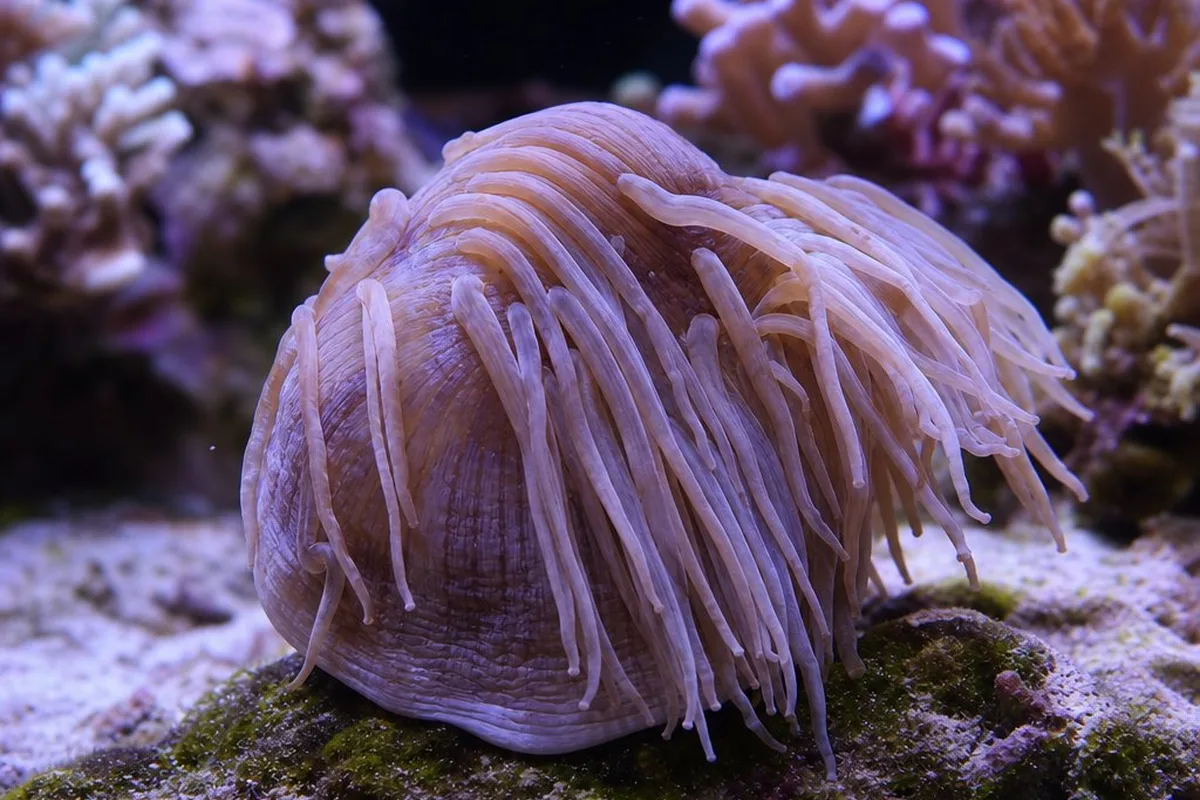
A very widely opened mouth can expose internal tissue that isn't normally visible — something that can look dramatic, particularly to someone seeing their anemone do this for the first time. On its own, visible internal anatomy during a wide gape isn't evidence of injury. What matters more is what happens next: does the anemone return to its normal closed, contracted shape within a reasonable time, and does it maintain its usual size and color over the following days?
When a Persistent Open Mouth Is a Signal Worth Acting On
The pattern worth investigating is a mouth that stays open for an extended period — generally a day or more — without a feeding or waste-expulsion explanation, particularly when paired with:
- Visible shrinking or deflation that doesn't resolve
- Paling or color loss, suggesting bleaching
- A general appearance that's different from the anemone's established baseline
In that combination, the open mouth is one symptom among several pointing toward an underlying health issue — water quality, lighting, or flow are the usual places to start looking.
Quick Reference
- An open mouth is normal during and after feeding, and during periodic waste expulsion
- Normal episodes typically resolve within minutes to a few hours
- Occasional regurgitation of oversized food isn't concerning; repeated regurgitation suggests adjusting feeding
- Visible internal tissue during a wide gape isn't, by itself, evidence of injury
- A mouth open for a day or more without a feeding explanation is worth noting
- Combined with shrinking or paling, a prolonged open mouth points toward a broader health issue
- Compare against the anemone's normal baseline appearance, not just a single moment