By Hektor Jorgo
The American flagfish (Jordanella floridae) occupies an odd niche in the hobby: it's frequently recommended as an algae solution, rarely recommended as a "first fish," and often overlooked entirely despite being one of the few species with a genuinely useful track record against hair and beard algae. Its small size (2-2.5 inches) undersells a temperament that's more assertive than its size suggests — which is the main thing to plan around.
Appearance and Natural Range
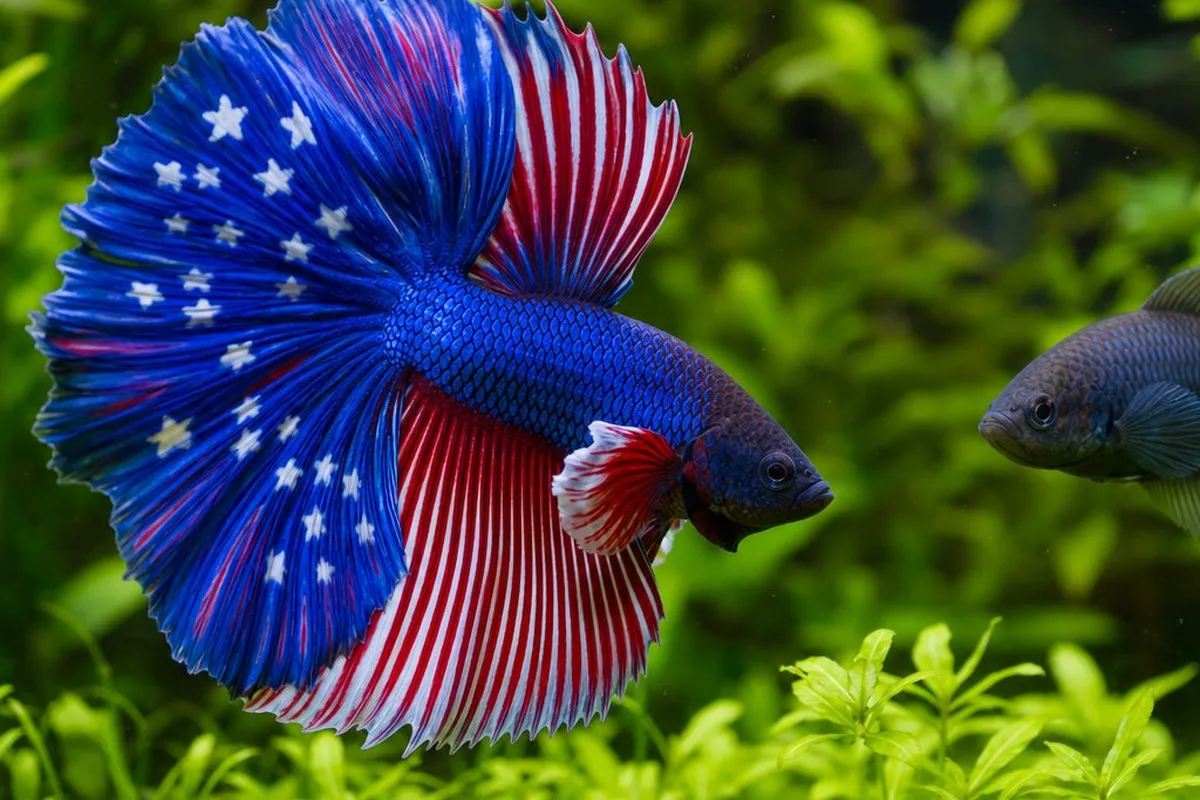
American flagfish are native to Florida and parts of the southeastern United States, found in vegetated, slow-moving freshwater habitats — a background that explains both their tolerance for cooler water and their algae-grazing tendencies. Males are the more colorful sex, with a pattern of red, blue-green, and orange-tinted scales often described as resembling the colors of certain flags (hence the common name), along with a dark spot near the tail. Females are comparatively plain, with duller coloration and less pronounced patterning.
The species is a killifish — egg-laying, not a livebearer like guppies or sailfin mollies — though it's often discussed alongside livebearers in community tank contexts because of similar small size and easy-care reputation.
Tank Requirements
Tank Size
20 gallons is a reasonable minimum for a pair or small group, providing enough space for territories to be established without constant conflict. Flagfish aren't large fish, but their territorial behavior benefits from more floor space and visual breaks (plants, decor) than the raw bioload of a 2-2.5 inch fish might suggest on its own.
Aquascaping
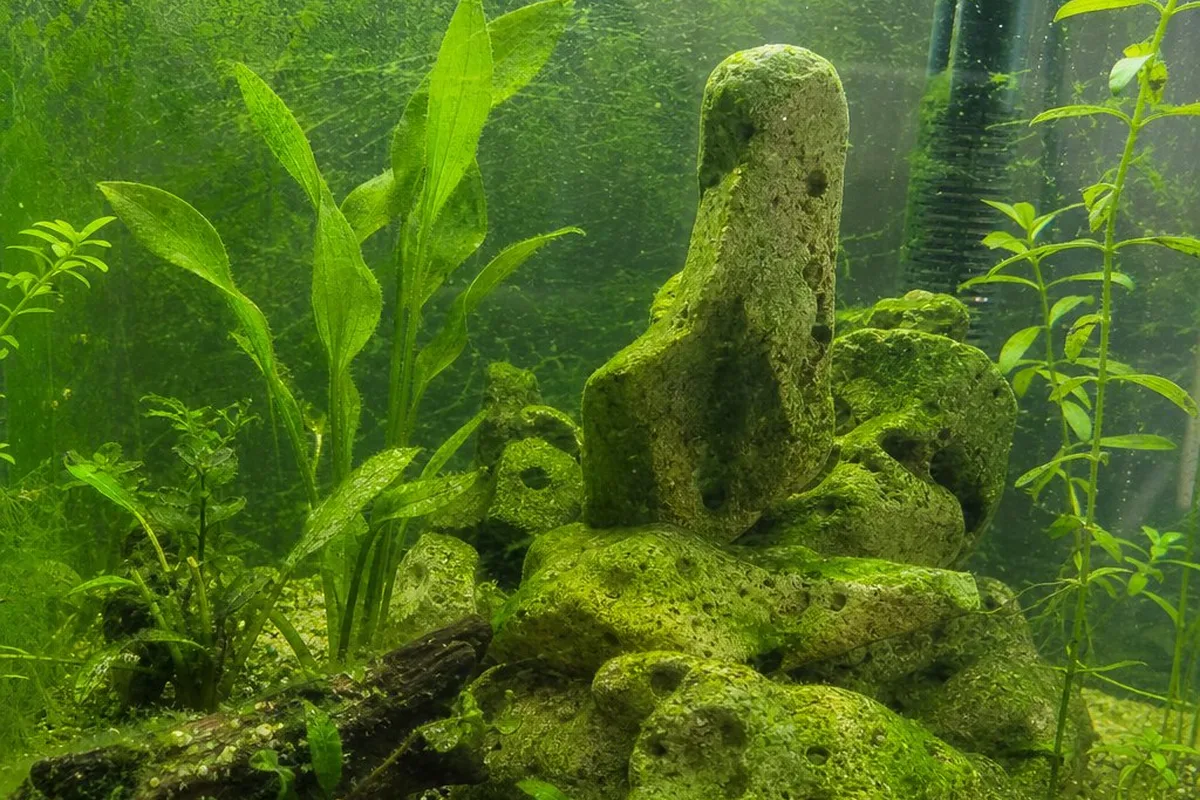
Plants are central to flagfish care — both because flagfish graze on algae that grows on and around plants, and because dense planting provides territory divisions that reduce conflict between flagfish (and between flagfish and tank mates). Java moss, java fern, and other low-light, hardy plants that tolerate some grazing work well. Open swimming space should be balanced with planted areas rather than a fully open tank.
Water Parameters
| Parameter | Target Range |
|---|---|
| Temperature | 64-80°F (18-27°C) |
| pH | 6.5-8.0 |
| Ammonia / Nitrite | 0 ppm |
| Nitrate | <20 ppm |
| Water hardness | Soft to moderately hard (5-20 dGH) |
The wide, cool-tolerant temperature range is one of American flagfish's most distinctive traits — many tropical fish guides (including our guppy care guide) specify a heater as close to mandatory, while flagfish can do well in an unheated tank in many home environments, provided room temperature doesn't drop below roughly 64°F for extended periods.
Diet and Feeding
American flagfish are omnivores with a genuinely useful algae-grazing habit:
- Hair algae and beard/brush algae — flagfish are among the more reliable fish for grazing on these specific algae types, which are notoriously resistant to many other "algae eater" species
- Quality flake or pellet as a dietary staple beyond algae alone — algae grazing supplements but doesn't replace a complete diet
- Occasional live/frozen foods (bloodworms, daphnia) for variety, particularly useful for conditioning before breeding
Don't rely on flagfish as a sole algae solution — they contribute to algae management but won't resolve an underlying lighting or nutrient imbalance driving excessive algae growth in the first place. Our algae guide covers what actually drives algae growth and why algae-eaters are a management tool rather than a fix on their own. The saltwater-side equivalent of this fish is the lawnmower blenny, which faces the same hair/turf-algae grazing role — and the same starvation risk once it's done its job too well. That risk ties into how quickly algae eaters grow generally — flagfish reach their adult size within a few months, and their appetite grows along with them.
Tank Mates and Compatibility
This is the section that matters most for avoiding surprises. American flagfish have a reputation — not universal, but common enough to plan around — for territorial and sometimes fin-nipping behavior, especially from males, especially around breeding. Covered in more detail in our American flagfish aggression guide, but the short version:
- Same-species groups need adequate space and plant cover to manage territorial disputes, particularly between males
- Slow-moving, long-finned tank mates (fancy guppies, sailfin mollies) are at some risk of fin-nipping from a territorial flagfish
- Robust, similarly-paced community fish tend to coexist more easily — fast or armored species that aren't easy targets
A single flagfish or a well-managed group in a sufficiently large, planted tank can work well in a community setting — but "small fish, must be peaceful" isn't a safe assumption with this species.
Common Health Issues
American flagfish are generally hardy and disease-resistant, partly reflecting their tolerance for a wider range of conditions than many tropical species. Standard freshwater health concerns apply:
- Fin damage — more often inflicted by flagfish on tank mates than the reverse, though flagfish can also be injured during territorial disputes with each other
- Standard parasitic/bacterial issues (ich, fin rot) — flagfish aren't unusually susceptible, and good water quality and quarantine practices (relevant across livebearers too, including the tuberculosis risk in guppies) apply here as well
Quick Setup Checklist
- Tank: 20+ gallons for a pair/small group
- Densely planted with hardy species (java fern, java moss) for territory + algae grazing
- Heater optional — tolerates 64-80°F, can suit unheated tanks in many homes
- Diet: flake/pellet staple + algae grazing + occasional live/frozen food
- Plan tank mates carefully — avoid assuming "small = peaceful"
- Provide territory divisions (plants, decor) to reduce conflict between flagfish
- Monitor closely after introducing slow-moving or long-finned tank mates